The FAQs are AI-generated, and Fortune India is not responsible for its content or any associated copyright issues.
From cloud kitchens to cafes: Curefoods charts its next growth chapter
/ 3 min read
With over 500 service locations across 70 cities, the Bengaluru-based food-tech company is scaling pizza and dessert brands while building a more diversified, omnichannel food platform.
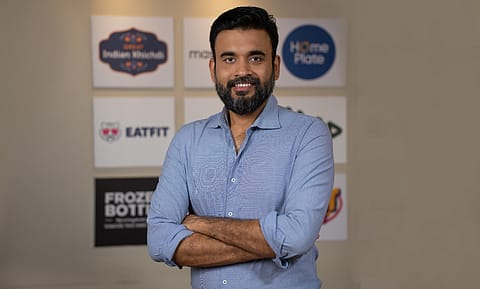
Ankit Nagori, CMD & CEO, Curefoods India Limited.
Bengaluru-based food-tech company Curefoods is sharpening its focus on pizza, desserts and offline retail formats as it enters its next phase of growth, betting that a strong supply-chain backbone and technology-led operations will help it expand profitably across India’s increasingly competitive food services market.
Founded by former Flipkart executive and Cure.fit co-founder Ankit Nagori in 2020, Curefoods has grown rapidly into one of India's largest multi-brand food platforms, operating more than 500 service locations across over 70 cities. The company’s portfolio spans brands such as EatFit, CakeZone, Sharief Bhai, Olio Pizza, Frozen Bottle and Krispy Kreme, serving consumers across multiple cuisines, occasions and dayparts.
“The biggest reason behind our growth has been the supply chain backbone that we've built over the last few years,” Nagori tells Fortune India. “We've created a hub-and-spoke model where central manufacturing units power kitchens across metros and non-metros. Quality is controlled at the production level, while the last-mile kitchens focus primarily on finishing and assembly.”
That centralised approach, he says, has enabled Curefoods to scale rapidly without compromising consistency. It has also shaped the company's acquisition strategy, which has seen it add multiple brands over the years.
What drives Curefoods' acquisition and expansion strategy?
Rather than chasing every emerging food trend, Curefoods evaluates potential acquisitions based on gaps in its existing portfolio and whether a brand can be integrated into its supply chain architecture.
“There may be great brands, but if they can't fit into our multi-layer supply chain and be industrialised at scale, we won't acquire them,” says Nagori. “The ability to run efficiently across multiple locations is a critical filter.”
As India's online food delivery market matures, Curefoods is increasingly seeing growth patterns that resemble those of the broader organised food services sector. Pizza has emerged as one of the company's fastest-growing categories, driven by its Olio brand, which now operates in around 200 locations.
At the same time, desserts are becoming a significant growth engine. Krispy Kreme, whose India operations are managed by Curefoods, has expanded to more than 100 locations within a relatively short period.
“Pizza and desserts are categories where we're seeing very strong consumer demand,” says Nagori. “Olio and Krispy Kreme will be two of our biggest growth drivers over the next few years.”
The company is also steadily increasing its presence beyond delivery-only formats. While cloud kitchens remain central to the business, Curefoods is investing more aggressively in dine-in and takeaway outlets through brands such as Krispy Kreme, Sharief Bhai and Frozen Bottle.
According to Nagori, nearly 30% of the company's orders now originate from its own offline stores, helping reduce dependence on third-party delivery platforms while strengthening customer engagement.
{{#most-powerful-women-snapshot-individual.slug}} {{/most-powerful-women-snapshot-individual.slug}} {{^most-powerful-women-snapshot-individual.slug}} {{/most-powerful-women-snapshot-individual.slug}} {{#showRanking}} {{current-rank}} {{/showRanking}} {{#photo.0.url}}
{{name}}
“Consumers interacting directly with our brands is strategically important,” he says. “Offline stores allow customers to dine in, pick up orders and build a deeper connection with the brand.”
Interestingly, Curefoods sees strong demand emerging not just from metros but also from Tier-II and Tier-III markets. While smaller cities continue to witness robust growth in food delivery, consumers there still show a stronger preference for dining out compared to their metropolitan counterparts.
How is technology helping Curefoods improve efficiency and profitability?
Despite strong demand, the sector continues to grapple with rising input costs, including higher LPG prices and inflation in imported ingredients. Nagori acknowledges that the environment remains challenging but says operational efficiencies and tighter inventory management are helping cushion the impact.
Technology, meanwhile, remains at the heart of Curefoods' strategy. The company is increasingly deploying artificial intelligence across demand forecasting, inventory planning, logistics optimisation and marketing.
“Technology is the backbone of everything we do,” says Nagori. “AI is helping us make smarter decisions, whether it's understanding consumer behaviour, creating marketing campaigns or ensuring the right products are available in the right locations.”
As India's organised food services market continues to consolidate, Curefoods is positioning itself as a diversified, technology-led food platform—one that aims to balance growth with operational discipline while expanding its footprint across both digital and physical channels.
Follow Fortune India
Frequently Asked Questions
NEXT STORY