Apple’s MacBook Neo could help capture 15% market share in the entry level laptop space by 2026: Report
/ 3 min read
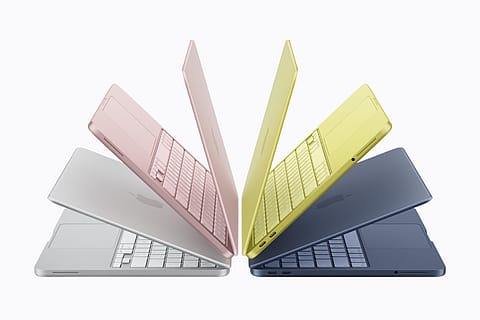
Apple MacBook Neo | Credits: Apple
Apple’s MacBook Neo could help capture 15% market share in the entry level laptop space by 2026: Report
Apple's launch of the MacBook Neo at $599, with a $100 student discount, marks a strategic move to capture the entry-level laptop market. Aimed at increasing its market share from 2% to 15% by 2026, the affordable pricing challenges Google's dominance in the education sector, offering students a competitive alternative to Chromebooks.
This summary is AI-generated, and Fortune India is not responsible for its content or any associated copyright issues.
By launching the MacBook Neo for $500 for students, this marks one of the company’s most aggressive pushes into the education computing market in more than a decade
Apple MacBook Neo | Credits: Apple
When Apple launched the MacBook Neo last week, it sent people in a frenzy, as it was priced the same as the iPhone 17e, sharing the price tag of $599. Students could avail it with a $100 discount. This move finally helps Apple to enter the segment it has been trying for years. In a way, the MacBook Neo is not the company’s first attempt to make affordable laptops. According to sector researchers, this would help increase Apple’s market share in the affordable space from 2% in 2025 to 15% in 2026.
Why did Apple launch an affordable laptop?
Till now, low-cost Windows and Chromebook laptops dominate classrooms today. While Apple does offer student discounts on iPads and MacBooks, it still does not bring it down to competitive pricing that Windows and Google offer.
By launching the MacBook Neo for $500 for students, this marks one of the company’s most aggressive pushes into the education computing market in more than a decade, according to Counterpoint Research.
“The launch comes at a time when Google has established overwhelming dominance in the K-12 education (Class 5 to Class 12) market, largely through Chromebooks, Google Workspace and Chrome/Windows Interactive Flat Displays (IFDs) for education,” the report said.
How has Google captured the student market?
Over the past decade, Google’s Chromebook has effectively captured the K-12 computing ecosystem, through its low device costs, often between $200 and $400, and simple cloud-based management for IT administrators. Another factor that works in favour of Google is seamless integration with Google Classroom and Workspace.
As a result, Chromebooks have become the default student device across many school districts, thereby historically limiting Apple’s presence in classrooms despite its earlier leadership in the educational market.
MacBooks are still a student’s favourite
The report stated that university and college students typically purchase their own laptops rather than receiving school-issued devices, which shifts the purchasing decisions from institutional and centralized procurement to individual preferences. Here Apple wins, as college students have a strong brand loyalty, and the macOS is popular among creative and engineering students. MacBooks are also able take over larger and heavier workflows such as media creation and production, coding and development tools, design software such as Adobe Creative Cloud and CAD and data science and AI workloads.
What does this mean for Apple over the long run?
Counterpoint Research says that by lowering the entry price of macOS hardware, Apple may capture students earlier and retain them through college and into professional careers. While Google’s advantage stems from its complete hardware, software and cloud management ecosystem, Apple too is banking on its trust on using older parts such as the A18 chip, liquid retina display with a 2408-by-1506 resolution and 500 nits of brightness, and no biometric in the 256 GB model.
While Apple might not disrupt Google’s student market share right away, it could surely cause a minor dent.
Follow Fortune India
NEXT STORY