The FAQs are AI-generated, and Fortune India is not responsible for its content or any associated copyright issues.
Iran ‘obliterated’, no ceasefire extension: Trump warns of fresh bombing as talks hang in balance
/ 3 min read
Oil prices remain elevated, with Brent crude surging to nearly $100 a barrel, while WTI Crude also rose above $90, reflecting concerns over potential disruptions in supply.
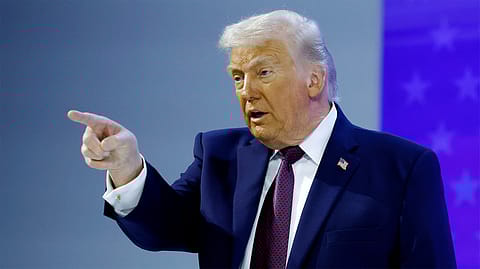
United States President Donald Trump. | Credits: Getty Images
Uncertainty deepened over the future of U.S.-Iran peace talks on Tuesday, with Tehran yet to formally confirm participation even as U.S. President Donald Trump escalated rhetoric, warning that military action could resume if negotiations collapse.
The developments come just hours before the expiry of a fragile two-week ceasefire, with both diplomacy and conflict now running on parallel tracks.
Talks in limbo, Pakistan prepares
As of the latest updates, Iran has not officially confirmed whether it will send a delegation to Islamabad, despite mounting pressure and ongoing backchannel signals. Iranian media reports maintain that no delegation has yet travelled, while Pakistan has stepped up security in the capital and secured key venues, indicating preparations are underway.
The U.S. delegation, led by Vice President JD Vance, is still expected to travel, although the timing remains fluid amid last-minute consultations in Washington.
Trump: ‘They have no choice’
Trump struck a combative tone in an interview to Squawk Box, asserting that Iran has little room to manoeuvre.
“They have no choice but to send them,” he said, referring to Iranian participation in talks.
The U.S. President went further, claiming that American military action had substantially weakened Iran’s capabilities.
“We’ve taken out their navy, we’ve taken out their air force… their leaders,” Trump said, adding that Washington was now negotiating from a position of strength.
“We’re in a very strong negotiating position to do what other presidents should have done.”
Despite indicating openness to talks, Trump made it clear that the military option remains firmly on the table.
“I expect to have bombing… we’re ready to go,” he said, when asked about the consequences of failed negotiations. He also indicated that he was reluctant to extend the ceasefire beyond its current deadline, raising the stakes for a potential breakthrough.
{{#most-powerful-women-snapshot-individual.slug}} {{/most-powerful-women-snapshot-individual.slug}} {{^most-powerful-women-snapshot-individual.slug}} {{/most-powerful-women-snapshot-individual.slug}} {{#showRanking}} {{current-rank}} {{/showRanking}} {{#photo.0.url}}
{{name}}
Trump also mentioned that U.S. strikes could extend to infrastructure targets, arguing that such action would also have military implications.
“It’s not my choice, but it will also hit them… they use the bridges for their weapons, for their missile movements.”
Pressure tactics intensify
On the ground, the U.S. continues to maintain a naval blockade, tighten pressure on Iranian-linked shipping, and assert control over strategic routes.
Trump claimed that Washington has effectively taken control of the Strait of Hormuz, a critical global oil artery, stressing the extent of U.S. leverage in the standoff.
At the same time, Iran has maintained that it will not engage in negotiations under coercion, reiterating that talks cannot proceed “under the shadow of threats.”
Conflict risk remains high
The situation remains highly volatile, with both sides continuing to exchange warnings even as diplomatic channels remain open.
The ceasefire, due to expire within hours, has already come under strain, with Trump accusing Iran of multiple violations, while Tehran has indicated it is prepared to respond if hostilities resume. Meanwhile, global markets are closely watching developments.
Oil prices remain elevated, with Brent crude surging to nearly $100 a barrel, while WTI Crude also rose above $90, reflecting concerns over potential disruptions in supply.
Dow Futures has fallen nearly 0.2% at the time of publication, while S&P 500, Dow Jones and Nasdaq Composite have each fallen nearly 0.2%, erasing the gains they made earlier in the day.
GIFT Nifty is also trading over 0.6% lower as of 10:15 pm IST, despite the Indian markets ending on positive note on Tuesday.
Critical hours ahead
With no formal confirmation from Tehran, a delayed U.S. delegation, and a ceasefire on the brink of collapse, the next few hours are likely to prove decisive.
Whether the standoff moves towards negotiation or renewed conflict now hinges on last-minute decisions — in Tehran, Washington and Islamabad — as the region stands on edge.
Follow Fortune India
Frequently Asked Questions
NEXT STORY