
Auto component industry turnover hits ₹7.6 lakh crore in FY26; OEM supplies up 16.3%
ADVERTISEMENT
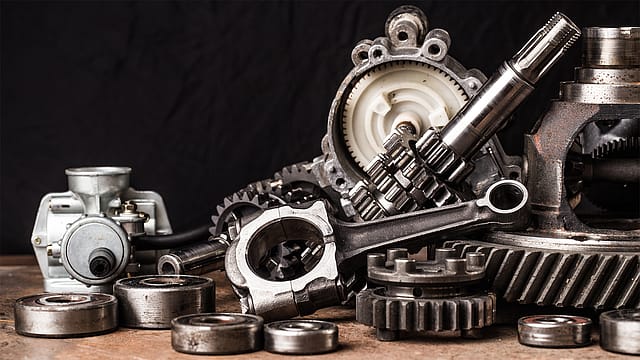
India’s automotive component industry clocked a record turnover of ₹7.60 lakh crore in FY2025-26, registering a 12.7% year-on-year growth, buoyed by robust domestic vehicle production, rising exports and sustained investments in capacity expansion and technology. The industry has more than doubled in size over the past five years, posting a Compound Annual growth rate (CAGR) of 17%, according to the latest Industry Performance Review released by the Automotive Component Manufacturers Association (ACMA).
Commenting on the industry’s performance, Vinnie Mehta, Director General, ACMA, said, "FY26 reaffirmed the resilience of India’s auto component sector, with strong domestic demand, continued investments in technology and growing confidence among global customers helping the industry deliver healthy growth despite international headwinds."
He added that as global supply chains diversify, India is steadily strengthening its position as a trusted manufacturing and sourcing hub, while stressing that deeper localisation, innovation and supply-chain resilience will be critical for long-term competitiveness.
Supplies to original equipment manufacturers (OEMs) emerged as the biggest growth driver during the fiscal, rising 16.3% to ₹6.63 lakh crore, while the aftermarket expanded 9% to ₹1.08 lakh crore, supported by a growing vehicle parc and increasing formalisation of the repair ecosystem.
EV components accounted for 4.6% of domestic OEM supplies (excluding lithium-ion batteries), highlighting the sector's gradual transition towards electric mobility. The association said the aftermarket also benefited from rising demand for used vehicles, consumers shifting towards larger and more powerful vehicles, and greater formalisation of the repair and maintenance market.
Exports remain resilient despite trade deficit
Auto component exports grew 5% to ₹2.12 lakh crore, despite a challenging global environment, with Europe recording the strongest growth. Higher procurement by European OEMs and expectations surrounding the proposed India-EU Free Trade Agreement supported export growth to the region. Engine components, along with drive transmission and steering systems, continued to account for more than half of outbound shipments.
Imports, meanwhile, climbed 13% to ₹2.24 lakh crore, reflecting higher demand for advanced technology products and specialised components sourced primarily from China, Japan and Germany. As imports outpaced exports, the sector slipped into a trade deficit of around $1.37 billion in FY26—the first in two years. China remained the largest sourcing market, accounting for nearly 36% of India’s auto component imports, while drive transmission & steering and engine components together contributed 56% of total imports.
Commenting on the widening trade deficit, Mehta said higher imports of electronics and EV-related components, where localisation levels remain relatively low, were primarily responsible. “This time around we had a modicum of a trade deficit from the earlier past two years, where we had a trade surplus,” he said.
Industry sees strong long-term growth prospects
Looking ahead, Vikrampati Singhania, President, ACMA, stated that the industry's medium- to long-term outlook remains positive, driven by rising domestic demand, infrastructure-led economic growth, manufacturing investments, Free Trade Agreements (FTAs) and increasing global sourcing from India.
However, he cautioned, ""Geopolitical uncertainties, supply-chain disruptions, the availability of rare earth magnets, logistics costs and raw material volatility will require sustained strategic focus."
The industry body expects the sector to grow 8-10% in FY27, supported by resilient domestic demand and exports despite geopolitical uncertainties.
“The first quarter has been a very strong quarter. If we continue to grow as is, there should be no reason why we shouldn’t be able to maintain the growth rate that we have,” added Mehta.