
Budget 2026: Auto industry backs capex push, manufacturing thrust and EV ecosystem, flags demand tailwinds
ADVERTISEMENT
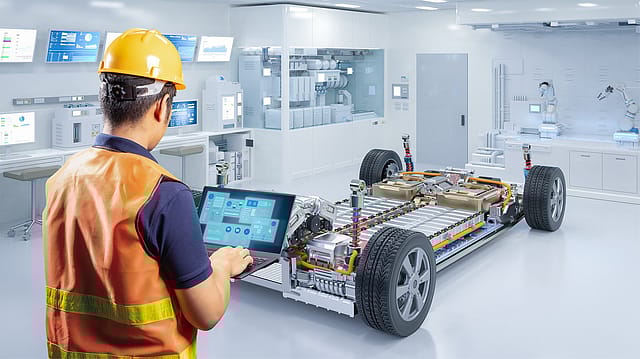
India’s automobile and mobility industry broadly welcomed the Union Budget 2026–27, citing policy continuity on electric vehicles, battery manufacturing, infrastructure spending and supply-chain localisation as key positives that could support demand, investment and long-term competitiveness.
Industry leaders said the government’s decision to raise capital expenditure to ₹12.2 lakh crore for FY27, alongside continued customs duty exemptions for lithium-ion batteries and components, sends a strong signal of stability as automakers scale investments in electric and advanced mobility technologies.
EV and battery manufacturing get policy continuity
Shailesh Chandra, president of the Society of Indian Automobile Manufacturers (SIAM) and managing director and CEO of Tata Motors Passenger Vehicles, said the Budget’s focus on manufacturing, infrastructure and fiscal prudence would provide momentum to demand creation and industrial activity, including the automobile sector.
He highlighted the continued exemption of basic customs duty on capital goods used for manufacturing lithium-ion batteries and the extension of concessional duty benefits for lithium-ion cells and parts used in electric and hybrid vehicles until March 2028 as critical to building a robust EV ecosystem. Support for electronics manufacturing, rare earth corridors and container manufacturing, he said, would strengthen supply-chain resilience and streamline exports. The allocation of 4,000 electric buses for the Purvodaya states is also expected to accelerate sustainable public mobility.
Mahindra Group CEO and managing director Anish Shah described Budget 2026 as reinforcing India’s global manufacturing ambitions and atmanirbharta agenda. He welcomed the emphasis on frontier sectors such as electronics, semiconductors and critical minerals, and said higher capital expenditure would help crowd in private investment, support job creation and drive growth in tier-2 and tier-3 cities. Shah also flagged the proposed ₹10,000-crore SME growth fund as a meaningful step to enable enterprise scaling.
Dr. Raghupati Singhania, Chairman & Managing Director, JK Tyre & Industries stated that the Budget reinforced India’s push towards manufacturing-led growth, noting that higher capital expenditure and infrastructure spending above ₹12 lakh crore strike a “prudent balance between growth stimulus and macroeconomic stability.”
Global automakers see stability, trade tailwinds
Global automakers echoed similar views. Hyundai Motor India managing director and CEO Tarun Garg said the Budget presents a long-term roadmap to position India as a global manufacturing hub, with a strong focus on EV batteries, electronics, MSME empowerment and rare earth corridors. Higher public spending and improved ease of doing business, he said, would spur economic activity across mobility and logistics.
European carmakers welcomed the emphasis on policy stability and trade facilitation. Piyush Arora, managing director and CEO of Škoda Auto Volkswagen India, said the Budget strengthens India’s role in global supply chains and reinforces its position as an automotive manufacturing and export base. Progress on trade agreements such as the India–EU FTA, combined with renewed focus on SME growth and industrial clusters, would deepen supplier ecosystems, he added.
Mercedes-Benz India managing director and CEO Santosh Iyer said the India–EU FTA could have a positive cascading impact on customer sentiment in the luxury segment. Gradual tariff reductions and liberalised automotive parts trade would improve access to global models and technology, even as local manufacturing remains central to value creation.
Capex, macro stability support sector outlook
Premium carmakers also underscored the importance of macro stability. BMW Group India president and CEO Hardeep Singh Brar said lower fiscal deficit projections, rising capital expenditure and logistics reforms reinforce confidence, improve mobility ecosystems and create conditions for sustained growth in the auto market.
Auto component manufacturers echoed the sentiment. The Automotive Component Manufacturers Association of India (ACMA) said the Budget’s focus on MSMEs, clean mobility, exports and localisation of critical components such as batteries and power electronics would strengthen supply chains and enhance global competitiveness.
Offering a more measured assessment, credit rating agency ICRA said the Budget was neutral to mildly supportive for the auto sector. Jitin Makkar, senior vice president and group head, corporate ratings at ICRA, said the continued focus on rural infrastructure and farmer welfare should sustain rural demand, a key driver for two-wheelers, tractors and entry-level vehicles. Higher PLI allocations, PM-Edrive support for EVs, rare earth corridors and TReDS-related measures, he added, should improve manufacturing competitiveness, supply security and MSME liquidity.