
West Asia tensions may disrupt India’s car exports in near term, but long-term impact limited: Crisil
ADVERTISEMENT
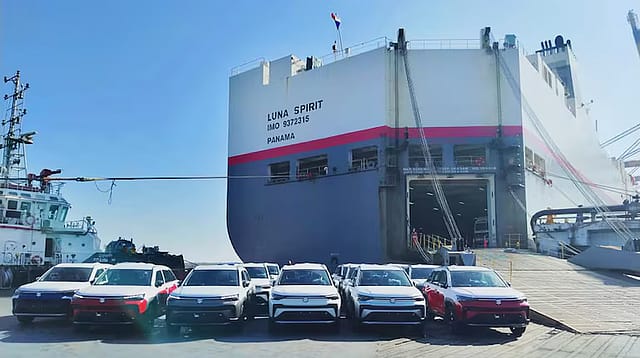
Rising geopolitical tensions in West Asia could create short-term disruptions for India’s passenger vehicle (PV) exports to the Middle East, mainly through higher logistics costs and shipping uncertainties. However, the long-term impact on India’s automobile exporters is expected to remain limited due to their diversified global export footprint, according to Hemal Thakkar of Crisil.
India’s passenger vehicle exports are primarily driven by demand from Africa and Latin America, which together account for more than half of the country’s overseas shipments, as per CRISIL. These regions have steadily emerged as key markets for global auto giants such as Maruti Suzuki, Hyundai, Skoda-VW, Renault, Nissan, etc.
Middle East remains an important export market
The Middle East remains another key market, contributing a double-digit share to India’s total PV exports.
“Within the region, Saudi Arabia and the United Arab Emirates are the dominant destinations, together accounting for more than 80% of India’s passenger vehicle exports to the Middle East,” Thakkar said.
Indian automakers ship a wide variety of models to these markets, including sport utility vehicles (SUVs), sedans and hatchbacks. A significant proportion of these vehicles is also deployed in commercial or fleet operations across Middle Eastern countries.
“The country’s competitive manufacturing ecosystem, diverse product portfolio and strong cost advantage have helped India strengthen its position as an export hub for global automakers. Strategic trade relationships with key markets in the region have further supported export growth,” stated Thakkar.
India has also emerged as a global production and export base for several multinational original equipment manufacturers (OEMs), including Volkswagen, which has further strengthened the country’s export potential.
Export growth story faces near-term headwinds
Vehicles manufactured in India are now exported to more than 100 global markets. Industry data show that India shipped around 7.7 lakh passenger vehicles overseas in FY25, marking the highest level on record and underlining the growing importance of exports for the domestic automobile industry.
Despite the Middle East’s importance, major exporters such as Maruti Suzuki India Limited and Hyundai Motor India have diversified their export destinations across multiple geographies. This diversification helps cushion the potential long-term impact of regional geopolitical disruptions.
However, in the near term, exporters could face logistical challenges as uncertainty surrounds shipping routes through the Strait of Hormuz. The situation could push up freight and insurance costs while also affecting vessel and container availability.
Geopolitical tensions could also temporarily weigh on vehicle demand across parts of the Middle East, according to CRISIL.
Thakkar noted that while the current conflict may pose short-term disruptions, the longer-term outlook for exports remains intact. “Once the situation stabilises, vehicle demand in the region could rebound, supported by pent-up demand, although the trajectory of the conflict and its impact on regional economies remain a key monitorable,” he noted.