
Israel-Iran War: Maruti Suzuki flags limited export exposure as Middle East accounts for 12.5% of shipments
ADVERTISEMENT
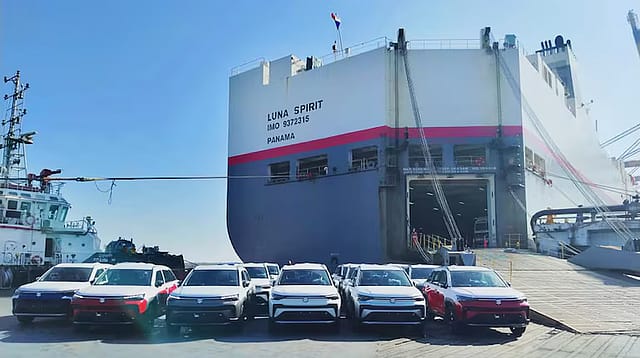
Maruti Suzuki India Limited (MSIL) continues to post robust overseas shipments despite rising geopolitical risks. Exports rose 33.75% year-on-year to 400,734 units in April–February FY26, compared with 299,617 units a year earlier. The company has already hit its full-year export target, with March shipments expected to add incremental volumes.
Maruti Suzuki is India’s second-highest car exporter after Hyundai, having shipped over 3.5 lakh vehicles in FY25. Its overseas footprint spans major continents including Europe, Latin America, Africa, and Asia, with key markets such as the UK, Germany, Norway, Denmark, Switzerland, Brazil, South Africa, and Australia.
Notably, the e Vitara, Maruti’s first electric vehicle, has crossed 21,000 exports, reaching 39 countries including the UK, Norway, Denmark, Germany, and Switzerland — signalling strong traction in developed markets.
Middle East exposure remains moderate
In the Middle East, the company primarily exports to Saudi Arabia, the UAE, Kuwait, Oman, and Qatar, reflecting a well-diversified strategy that spreads risk across multiple regions and customer bases.
Rahul Bharti, Senior Executive Officer at Maruti Suzuki India Limited, said shipments to the Middle East account for about 12.5% of total exports, or roughly 50,000 units for April–February FY26.
“We are closely monitoring the evolving situation in the Middle East. While it is natural for global events like these to raise concerns, our exposure to the region is relatively limited. Over the years, we have built a geographically diversified export portfolio, shipping to nearly 100 countries across Latin America, Africa, Europe, and Asia. This diversification helps us mitigate concentration risks and ensures that short-term regional disruptions do not derail our overall growth.”
When quizzed about the risk mitigation efforts taken by Maruti Suzuki, Bharti stated, “We are not just increasing exports; we are expanding them in a broad-based and strategic manner, continuously evaluating markets, adjusting shipments, and balancing demand to remain resilient. In times like these, the depth of our planning and leadership comes into play — our teams are focused on ensuring that operations continue smoothly, shipments reach customers on time, and any risks arising from geopolitical tensions are carefully managed to safeguard both our business and our partners.”
Israel-Iran conflict spurs global uncertainty
The conflict escalated after coordinated US and Israeli strikes on Iranian military sites, triggering retaliatory actions. Analysts warn that the hostilities threaten stability along the Strait of Hormuz and the Red Sea, crucial for energy and cargo shipments. Industry experts reckon that prolonged disruption could affect freight schedules, insurance premiums, and global logistics.
Sehul Bhatt, Director at CRISIL Intelligence, said the Middle East developments could push up crude oil and LNG prices. India depends on imports for over 85% of crude oil and about 50% of LNG, making supply-chain and energy costs a concern. According to him, “Freight route diversions around Africa could extend transit times and raise shipping costs further.”