
Govt proposes E85, E100 fuels post E20 rollout; 20-billion litre ethanol capacity set for next leap
ADVERTISEMENT
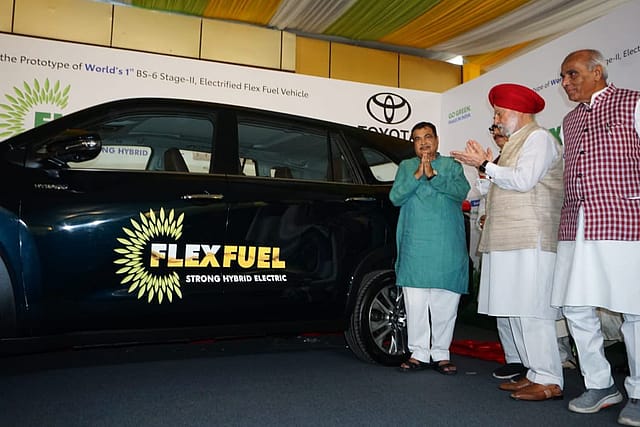
India is moving beyond its E20 milestone, with the government proposing draft amendments to formally introduce E85 (85% ethanol) and E100 (near-pure ethanol) fuels into the automotive ecosystem.
The move comes weeks after the nationwide rollout of E20 on April 1, 2026, and is aimed at unlocking utilisation of the country’s 20-billion-litre ethanol production capacity, nearly double the current domestic demand of around 10 billion litres—marking the next phase of the country’s ethanol strategy.
The Ministry of Road Transport and Highways’ (MoRTH's) draft notification seeks to amend the Central Motor Vehicles Rules to incorporate higher ethanol blends, standardise fuel classifications and update emission-testing norms. The proposal is open for public comments for 30 days, after which a final framework will be notified.
Regulatory reset expands ethanol playbook
At the core of the draft is the formal inclusion of E85 and E100 within the fuel framework, alongside a broader overhaul of alternative fuel definitions. Petrol classification is proposed to be standardised beyond the current E10/E20 nomenclature, while biodiesel references are set to be upgraded from B10 to B100.
The notification also aligns technical terminology and emission-testing parameters with higher ethanol blends, creating a regulatory foundation for vehicles capable of running on significantly higher alcohol content fuels. The broader objective remains reducing dependence on crude oil imports amid volatile global energy markets.
Flex-fuel shift gathers pace, but costs loom
For consumers, the transition introduces both flexibility and constraints. Existing E10 and E20-compliant vehicles are not compatible with E85 due to ethanol’s corrosive nature, which can damage conventional engine components. This makes flex-fuel vehicles (FFVs)—equipped with sensors to adjust fuel injection and ignition—central to the next phase.
Japanese carmakers such as Toyota, Maruti Suzuki and Honda have already showcased flex-fuel prototypes, while two-wheeler makers are preparing compatible models. However, these vehicles are expected to be more expensive due to engine recalibration and material upgrades.
Ethanol’s lower energy density also implies a potential 27–30% drop in fuel efficiency when running on E100, though lower fuel prices could partly offset the impact for end users.
Surplus capacity meets infra challenge
India’s ethanol production capacity has scaled up to around 20 billion litres, while current demand is estimated at roughly 10 billion litres. Higher blending and adoption of E85/E100 could help bridge this gap, supporting farmer incomes linked to sugarcane and maize-based ethanol production.
However, infrastructure remains a key constraint. The rollout of higher ethanol blends will require dedicated storage, transportation and dispensing systems at fuel stations, alongside supply chain expansion.
The draft rules signal a clear shift from incremental blending targets to a multi-fuel strategy. Their success will depend on how quickly vehicle technology, fuel availability and retail infrastructure evolve in tandem.