
The City made Honda popular in India. Can its facelift revive its dwindling fortunes?
ADVERTISEMENT
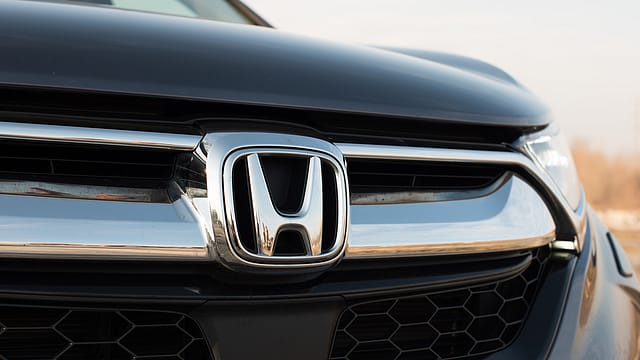
Almost certainly, Honda, one of the world’s largest carmakers, hopes that the launch of the facelift, alongside a new SUV, will revive its dwindling fortunes in the country. Honda, which was among the first foreign automakers to enter India in the 1990s, has struggled in the country’s fast-growing automotive market, with its market share dropping to around 2%.
Expectations are high that when Honda rolls out the second facelift of the fifth-generation City, it will feature significant changes to the hood and front profile. The update is crucial for the City — Honda’s first model in India — which remained a bestseller for years. Since its launch in 1998, the company has sold nearly 10 lakh units of the City in India.
“Honda has positioned North America, Japan, and India as priority markets for its future growth strategy and will strategically allocate its resources to these markets,” the company said in a statement. “However, currently Honda has presence in only a limited range of product segments and has not been able to fully expand unit sales due to an insufficient number of competitive products in each segment,” said Toshihiro Mibe, Director, President and Representative Executive Officer of Honda Motor Co.
In 2028, Honda plans to introduce India-focused models in two categories — sub-4 metre and mid-size vehicles. “Honda will leverage the solid foundation of its motorcycle business in India, which sells nearly 6 million units annually,” the company said.
The strategy targets first-time car buyers, a segment that has seen a steady slowdown. “By steadily capturing demand from customers upgrading from motorcycles to automobiles, Honda will strive to grow its business in India,” the company added. As part of the push, Honda has set up Honda Digital Innovation India, a digital platform company, and plans to launch a captive finance arm before the end of FY27 to strengthen retail financing and sales.
This year, the Japanese automaker reported a loss of 414.3 billion yen ($2.62 billion) for the fiscal year ended March — its first annual loss since its founding in 1948 — due to a write-down linked to its electric vehicle (EV) investments.
The City affair
Honda entered India in 1995, although it had already partnered with the Hero Group to manufacture two-wheelers.
Following India’s economic liberalisation, Honda entered the passenger vehicle market through a joint venture with the Delhi-based SIEL Group, led by Siddharth Shriram of the Shriram Group, which also owned the Usha appliances brand.
Honda’s entry coincided with a wave of foreign collaborations in India’s automobile industry. Mahindra partnered with Ford, Tata Motors tied up with Daimler, Hindustan Motors collaborated with General Motors, and Toyota joined hands with the Kirloskar Group.
The Honda-SIEL venture began production in 1997 with a capital base of ₹130 crore, with Honda holding 60% and SIEL 40%. The company launched the Honda City with 1.3-litre and 1.5-litre engines, making India Honda’s 18th automobile production base globally.
Initially, Honda targeted annual sales of 10,000 units, with plans to scale up to 30,000 units. By 2000, the VTEC-powered version of the City had become a cult favourite in the Indian market.
In 2003, Honda introduced the next-generation City, admired for its space, fuel efficiency, and practicality, even though opinions on its styling and performance remained divided. The company also expanded its premium portfolio with models such as the Accord and CR-V, and later introduced the Jazz hatchback in 2009. During this period, the third-generation City emerged as a segment leader.
Over the past decade, Honda launched newer versions of the City, but India’s market gradually shifted toward SUVs, reducing sedan demand. Even so, brands such as Skoda, Volkswagen, and Hyundai have continued to see traction in sedans through new launches. Honda, however, has struggled to maintain momentum across its broader India portfolio.
“India needs a dedicated India playbook,” said Harshvardhan Sharma, Group Head, Automotive Tech & Innovation Group at Nomura. “Global brand strength alone is not enough. Carmakers need the right body styles, localized cost structures, relevant powertrains, strong aftersales confidence, and a clear price-value equation.”
Honda’s revival strategy hinges on the City facelift and the upcoming ZRV SUV, while also increasing its focus on India-specific product development. “India’s passenger vehicle market is entering a phase where the pecking order below Maruti Suzuki may remain fluid,” Sharma added. “OEMs with relevant SUVs, hybrid or EV options, strong trust, and disciplined pricing will likely outperform.”
That is why Honda is stepping up its India offensive with new launches planned for 2028. The company’s captive finance business is also expected to support vehicle affordability and customised financing options.
Still, cracking the mid-size SUV segment will not be easy. The category has become intensely competitive, with players including Kia, Maruti Suzuki, Toyota, Renault, Tata Motors, and Skoda competing aggressively. Despite the competition, the Hyundai Creta continues to dominate the segment with a 34% market share. Most recently, Tata Motors launched the Tata Sierra, which garnered over 70,000 bookings in a single day.
Yet, after nearly three decades in India, Honda appears convinced that a turnaround may still be within reach.