
Himadri Speciality’s Birla Tyres plans foray into passenger-car radials, EV tyre segments in 12–18 months: CEO Anurag Choudhary
ADVERTISEMENT
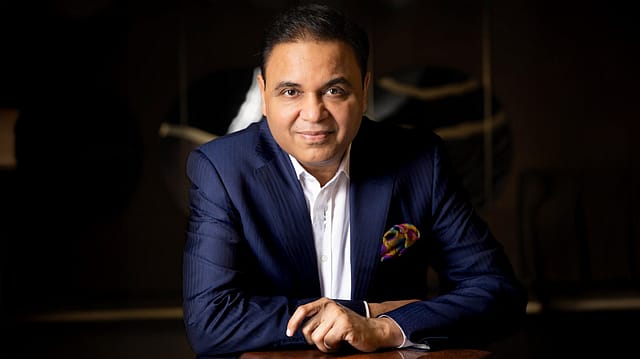
In an exclusive interview with Fortune India, Anurag Choudhary, CMD and CEO of Himadri Speciality Chemical Ltd , shared the company’s plans to transform itself from a carbon and coal-tar business into a global advanced materials solutions company. At the centre of this transformation is battery materials. Himadri has been investing in the sector for more than 14 years and is building capabilities across anode and cathode chemistries. It is also expanding its global footprint, strengthening in-house R&D, and pursuing forward integration through Birla Tyres.
Localising battery supply chains
Himadri has incorporated Ardent Impex, a wholly-owned subsidiary in Dubai, to tap growing opportunities for specialty products in West Asia. Choudhary says the company expects several products to find strong markets in the region.
“We have many products which have good potential markets in West Asia,” he says. “To have a focused marketing approach, where customers can interact with the company directly from the geography, we have incorporated this company.” But the larger opportunity lies in batteries. Choudhary points out that anode and cathode materials account for around 65% of a battery cell’s cost, making them critical to the localisation of India’s battery supply chain.
Himadri’s anode portfolio spans synthetic graphite, silicon-carbon, and natural graphite. The company believes its ability to offer different combinations of these materials can give it an edge with battery manufacturers. “We are the only company which is positioning itself in all three varieties—synthetic graphite, silicon-carbon, and natural graphite,” says Choudhary.
“As a customer, when you come to us, you will get a hybrid material, which is a combination of all three of them, or either two of them, or only one of them, depending on your requirement. So, it is a tailor-made material as per the requirement of the customers.”
Himadri expects its battery-chemicals business to reach around ₹30,000 crore over the next six years, with anode materials forming a major part of the opportunity.
Reducing dependence on China
China currently dominates the global battery-materials supply chain, accounting for around 94% of anode-material capacity and virtually all LFP cathode capacity, according to Choudhary. He believes India must avoid repeating a pattern seen across previous industrial revolutions, where the country became primarily an assembler while importing critical components.
“Over the last 20-30 years, many industrial revolutions have taken place. Look at electronic components, smartphones, and solar. India has primarily been an assembler in all these evolutions,” he says.
Himadri, he adds, made an early decision to invest in lithium-ion battery chemistry, well before the opportunity became mainstream. “We decided long back—before this chemistry was actually well known—that lithium-ion cells were going to play a big role in tomorrow’s growth story, whether it was renewable power or EVs.”
That early investment is now translating into a broader battery-materials platform. “We are at the forefront of technological evolution and innovation in battery chemistry,” says Choudhary. “We have uniquely positioned ourselves, and we are going to lead this from India.”
R&D as the competitive edge
Choudhary considers proprietary technology to be one of Himadri’s biggest advantages. The company, he says, has never purchased technology from a third party.
“Entire technology, entire product, whatever we are making, is through our in-house R&D,” he says. “We have not bought any technology from any third company in the entire life of the company.”
Himadri spends around 2.7% of its top line on R&D, which Choudhary says is more than 10 times the average spending by Indian companies.
Its R&D network spans Australia, South Korea, Japan, Europe, and the US. In Australia, the company has a laboratory and pilot plant while in South Korea it operates a 50 MW cell-manufacturing facility in partnership with IBC. The combination of material and cell capabilities allows Himadri to test its products in commercial applications.
“You have component manufacturing, but at the same time, cell manufacturing also. You can see the actual demonstration of your product in the commercial space,” says Choudhary.
The technology-first approach also reduces the company’s dependence on China amid geopolitical tensions and supply-chain disruptions.
“Technology is my own,” he says. “So, there is no pressure. Sourcing will be from different geographies. We are not dependent on China.”
Birla Tyres: A ₹3,000-crore target
Himadri’s acquisition of Birla Tyres is another part of its forward-integration strategy. Carbon black accounts for around 26% of a tyre, making the business a natural extension of Himadri’s existing operations.
Choudhary says he would not have entered the tyre industry by building a company from scratch because of the sector’s return profile. The Birla Tyres acquisition, however, provided an established brand and manufacturing infrastructure. “We got the brand name, which is very important for any B2C business, in addition to a huge manufacturing facility,” he says.
Himadri is modernising and automating the facility and gradually ramping up production. It is targeting ₹3,000 crore in revenue from Birla Tyres over the next five years.
The company plans to strengthen its position in off-highway and highway tyres and launch passenger-car radial and EV tyres over the next 12-18 months. The tyre business also complements Himadri’s wider EV strategy, which encompasses battery materials, cells, and tyres.
From carbon to advanced materials
Ultimately, Choudhary wants to change the way Himadri is perceived. “Today, if you look at historically, Himadri is a carbon company. Now we are making a transformation from a carbon company to an advanced material solutions company.”
The ambition is to move beyond selling individual products and instead solve customer problems through chemistry and materials science. “Whatever problem you have in terms of advanced chemistry, advanced material, we will give you a solution, not a material,” he says.
Choudhary describes Himadri as an Indian, home-grown battery-materials and technology company built around Indian R&D, innovation, and manufacturing. “Everything is Indian; Indian company, Indian people, Indian mindset, Indian technology, Indian innovation.”
The Kolkata-headquartered company sees significant growth potential in West Bengal. According to Choudhary, the state’s geographical position, proximity to the Northeast, access to neighbouring countries, and talent pool could make it a major investment destination. “Geographically, it is a land of opportunity,” he says while adding, “We are the gateway to the Northeast. We have three countries bordering us and we are very near to Southeast Asia.”