
India must move beyond ‘Make in India’ to create, engineer and innovate for the world: ACMA Prez Vikrampati Singhania
ADVERTISEMENT
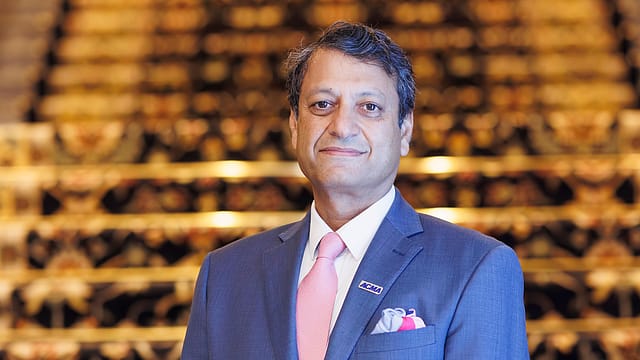
India’s automotive component industry needs to move decisively beyond manufacturing and take greater ownership of design, engineering, technology and product development if the country is to establish itself as a leading global automotive supply-chain hub, Automotive Component Manufacturers Association of India (ACMA) President Vikrampati Singhania said.
Singhania said the next phase of India’s manufacturing journey should go beyond the achievements of the Make in India programme, with greater emphasis on developing technology and intellectual property domestically for both the Indian and global markets.
“For years, we have spoken about Make in India. The next phase must increasingly be about create in India, engineer in India and innovate in India, for India and for the world,” Singhania said while addressing ACMA’s annual session.
Singhania, who is also Managing Director of JK Fenner, said Indian component makers must move higher up the value chain and assume greater ownership of design, technology and product development.
“We must invest in ideas and intellectual property that will shape tomorrow’s vehicles,” he said.
₹7.6 lakh crore industry eyes a bigger global role
The comments come as India’s auto component industry expands its scale and looks to capture a larger share of global sourcing opportunities amid a restructuring of international supply chains.
The sector crossed ₹7.6 lakh crore, or around $86 billion, in FY26, registering 12.7% growth, while exports stood at $24 billion, Singhania said.
“These numbers give us confidence, but they should not define the limits of our ambition,” he said.
According to Singhania, India already has several of the building blocks required to become a preferred global automotive partner — a large domestic market, an established manufacturing ecosystem, engineering capabilities, entrepreneurial talent and the ability to operate at scale.
Global supply chains are also being reconfigured, creating an opportunity for Indian suppliers to deepen their presence with international automakers and component manufacturers.
But capturing that opportunity will require Indian companies to compete not only on manufacturing cost but also on technology, quality, productivity and innovation.
Technology push must be matched by skills
Singhania said Indian manufacturing facilities need to evolve into global benchmarks for productivity and quality as the country seeks to compete with established automotive manufacturing centres.
The shift will also require companies to invest simultaneously in technology and people, particularly as vehicle architectures undergo rapid transformation.
“Investment in technology must go hand in hand with investment in people, giving our workforce the skills to turn new capabilities into better outcomes,” he said.
Electrification, electronics, software and connected vehicle systems are rapidly changing the requirements for suppliers, making engineering and technology capabilities increasingly important across the component ecosystem.
For Indian companies, this means moving beyond supplying individual components towards developing higher-value systems, technologies and products that can compete across global markets.
MSMEs need a bigger share of the next growth phase
Singhania also stressed that India’s automotive ambitions cannot be achieved if the gains from technology and productivity remain concentrated among a handful of large suppliers.
The country’s extensive base of smaller suppliers and MSMEs will need access to technology, skills and opportunities to participate in emerging automotive supply chains.
“Our MSMEs and smaller suppliers must have the opportunity to grow with us,” he said.
The emphasis on strengthening the broader supplier ecosystem comes as the industry navigates rapid technological change as well as recurring disruptions in global supply chains.
Singhania said resilience had helped the sector navigate the pandemic, supply-chain disruptions, geopolitical tensions and commodity volatility. The next challenge, however, is to move from responding to disruption to actively shaping the industry's future.
“Resilience is about responding to change. Leadership is about changing,” he said.
“The last decade demonstrated that India can manufacture for the world. The decade ahead must demonstrate that India can lead, not merely by surviving uncertainty or adapting to change, but by having the confidence, capability and ambition to shape what comes next,” Singhania added.
He summed up the industry's ambition in a simple message: “Build deeply in India. Compete confidently in the world.”
Singhania said achieving that shift would require sustained collaboration between the government and industry, with policy support for manufacturing and localisation matched by greater private-sector investment and innovation.
“Our responsibility as industry is to match that commitment with investment, innovation and a determination to raise our own standards,” he said.
With India's market scale, engineering talent, manufacturing capabilities and entrepreneurial base increasingly coming together, Singhania said the opportunity for the component industry was no longer one of incremental expansion.
“The opportunity before us is no longer incremental, it is generational,” he said.