
India’s auto production nears 31 million units as PLI boosts component ecosystem: H.D. Kumaraswamy
ADVERTISEMENT
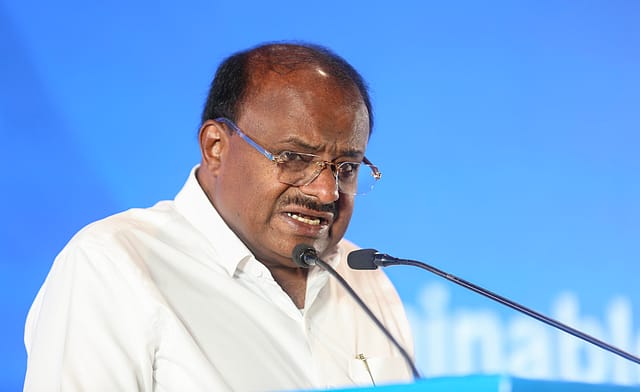
India’s automotive industry is approaching a new production milestone, with annual output rising to nearly 31 million units in FY25 from 28.4 million units in FY24, Union Minister for Heavy Industries and Steel H.D. Kumaraswamy said on Wednesday, underlining the role of policy support in accelerating the sector’s expansion.
Speaking at the 60th ACMA Excellence Awards and Technology Summit in New Delhi, the Minister said vehicle exports also climbed from 4.5 million units to over 5.3 million units during the same period, reflecting India’s strengthening position in global automotive trade.
Production and exports gather momentum
Kumaraswamy described the rise in output and overseas shipments as evidence of the sector’s scale and resilience, adding that India is now among the fastest-growing automotive manufacturing hubs globally.
PLI schemes anchor manufacturing push
He highlighted the Ministry of Heavy Industries’ Production Linked Incentive (PLI) scheme for automobiles and auto components, with an outlay of nearly ₹26,000 crore, aimed at promoting advanced automotive technologies and higher domestic value addition. Complementing this is the ₹18,100-crore PLI scheme for Advanced Chemistry Cell (ACC) batteries, designed to create 50 GWh of domestic battery manufacturing capacity and strengthen the electric mobility supply chain.
Technology-led transition underway
At the summit, the Minister launched the Bharat Mobility Component & Technology Show 2027, signalling continued emphasis on advanced manufacturing. Industry body ACMA also unveiled a BCG report, “Bolts, Bits & Bytes: Factory of the Future,” outlining the sector’s shift toward electronics integration, lightweight materials and digitally connected production systems.
Trade alignment and global integration
Kumaraswamy said India’s ongoing trade engagements with partners such as the United States and the European Union are focused on addressing non-tariff barriers and aligning regulatory standards in advanced automotive technologies.
As India sharpens its manufacturing ambitions, the Minister noted that the auto component industry will be central to integrating the country more deeply into global value chains, particularly in areas such as power electronics and intelligent mobility systems.