
India’s EV charging stations rise nearly six-fold to 29,151 since 2022, but utilisation remains stuck at 1-5%: Report
ADVERTISEMENT
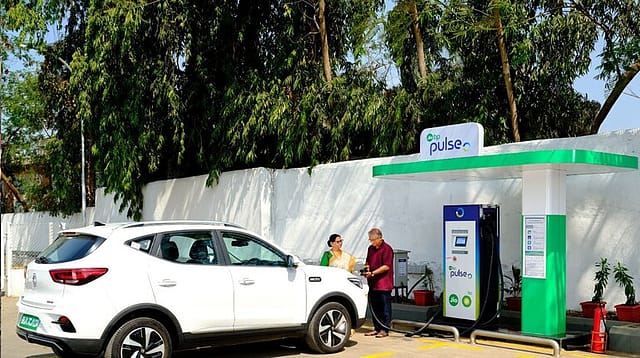
India’s electric vehicle charging infrastructure has expanded nearly six-fold since 2022, but persistently low utilisation of charging stations is emerging as the biggest challenge for operators seeking to turn the infrastructure build-out into a viable business.
India had 29,151 EV charging stations installed as of December 2025, compared with around 5,000 in 2022, according to a new report by Rubix Data Sciences. Of the total, 8,805 were fast chargers and 20,346 were slow chargers. More than 200 charge point operators (CPOs) are estimated to be operating across the country, alongside e-mobility service providers, charging aggregators and franchise partners.
Charging network expands, but usage lags
The charging network, including battery swapping stations, had reached 67,657 chargers as of August 7, 2026. Nearly 73% of these chargers have a rated capacity below 30 kW, highlighting the potential requirement for higher-power infrastructure as passenger EV adoption increases.
The concentration of charging infrastructure is also significant. The top 10 states account for nearly 78% of the installed base, with Karnataka contributing 21% and Maharashtra 14%.
EV penetration varies sharply across vehicle categories. As of mid-August 2026, electric three-wheelers had the highest penetration at 60.77%, followed by two-wheelers at 8.88% and four-wheelers at 5.70%.
However, station utilisation remains low. An SBI report has estimated utilisation at just 1%-3%, while S&P Global has put it at around 5%.
“The paradox at the heart of India's charging story is this: stations have grown six-fold since 2022, but utilisation is still stuck at 1%-5%,” Tushar Bhaskar, President, Rubix Data Sciences, said.
“That gap is where CPOs will either make money or burn through it. The winners will be the ones who pick the sites that fleets and high-traffic corridors actually use, instead of trying to increase their presence on the map,” he added.
Tariffs, site costs squeeze CPO economics
The sector is being supported by rising EV registrations, easier licensing norms, government incentives and fleet electrification. India recorded 28.2 million vehicle registrations in 2025, including more than 2.3 million EVs.
The PM E-DRIVE scheme, with an outlay of ₹11,900 crore, including ₹2,000 crore earmarked for public charging infrastructure, is another key demand driver.
Yet operators face electricity tariffs ranging from ₹6-15 per kWh, expensive site acquisition and the operational burden of maintaining 98% mandated uptime. Third-party host arrangements can further complicate electricity billing, GST compliance and visibility into energy costs.
Public charging requirement set to surge
The longer-term infrastructure requirement remains substantial. India has targeted 30% EV penetration in new vehicle sales by 2030, while a CII estimate cited by IBEF indicates that the country could need at least 13.2 lakh public charging points by 2030.
That would be nearly 20 times the current installed base, underscoring the scale of the opportunity—but also making utilisation, site selection and operating efficiency increasingly critical to the economics of India's charging network.