
JSW Group enters electric commercial mobility with Ampstar brand
ADVERTISEMENT
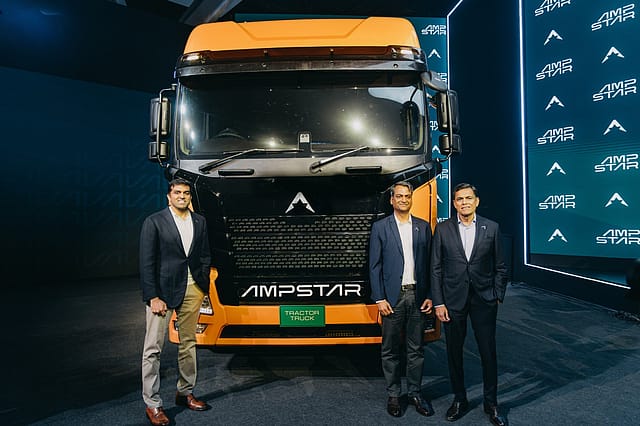
JSW Group has entered India’s electric commercial vehicle market with the launch of Ampstar, a new brand under JSW Greentech that will design, manufacture and sell electric buses and trucks in the country.
The launch marks JSW Group’s entry into commercial mobility and expands its presence in the automotive sector. Ampstar will operate as a full-stack commercial mobility business, offering electric vehicles alongside charging infrastructure, operating solutions, financing, and after-sales support.
The company said customers will be able to choose power configurations ranging from 150 kW to 500 kW. Ownership and operating options will include outright purchase, leasing and Battery as a Service (BaaS), among other models.
Sajjan Jindal, chairman, JSW Group, said the company wants Ampstar to act as a catalyst for changing the way India moves its people and goods. “When we decided to enter electric commercial mobility, I saw it as an act of nation-building - moving India’s people and goods on power generated within India, rather than fuel sourced from outside,” Jindal said at the launch.
Ampstar to build electric buses and trucks in India
Ampstar vehicles will be manufactured at JSW Greentech’s greenfield facility spread across 90 acres at AURIC, Chhatrapati Sambhajinagar, Maharashtra. The facility will have an annual production capacity of 15,000 electric buses and trucks.
The plant will feature India’s first pre-treatment and electro-deposition (PT-ED) process for bus manufacturing, along with an automated truck-cabin line and an integrated battery ecosystem, according to the company.
The company said its vehicles have been engineered in-house for Indian operating conditions. JSW Greentech has developed the base logic, software and algorithms for the electric drivetrain, while the vehicles will use a double-cooling battery system and high-strength monocoque chassis designed for India’s climate and road conditions.
Sumit Mittal, CEO, JSW Greentech, said the company is developing its electric commercial vehicles from the ground up in India. “We are designing, engineering and building these vehicles in India, from the ground up - our own drivetrain, our own software, using the best of technologies available, and built for Indian roads and operating conditions,” Mittal said.
The initial bus portfolio will span 7 metre to 18 metre vehicles for applications including staff transportation, city, intercity and school mobility. On the truck side, Ampstar will begin with a 55-tonne tractor-trailer, with plans to expand into tippers and fixed-body dumpers.
Parth Jindal, JSW Group, said the company had designed Ampstar around the broader customer journey rather than just the vehicle. “We spent months listening to customers and stakeholders, and one thing was clear, real barriers to adoption go well beyond the vehicle itself,” he said.