
Petrol car share falls 5.5 percentage points YoY; what’s driving the shift in buyer preferences?
ADVERTISEMENT
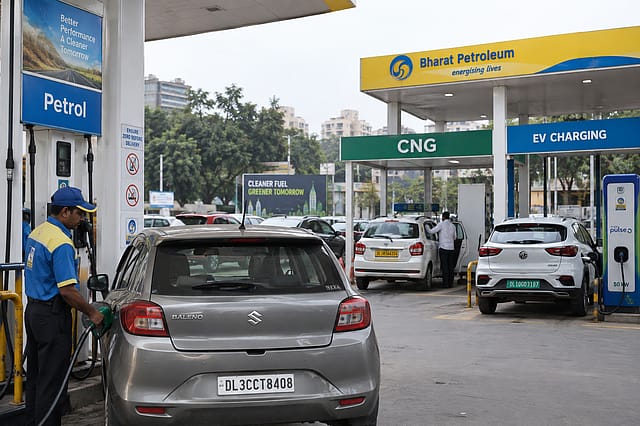
Petrol-powered cars are losing share in India’s passenger vehicle (PV) market even as overall demand expands. Petrol/ethanol accounted for 40.85% of PV retail sales in August, down from 46.37% in August 2025—a decline of 5.52 percentage points, according to the Federation of Automobile Dealers Associations (FADA).
The shift is notable because the PV market itself is growing. PV Retail sales rose 16.14% year-on-year to 4,02,398 units in August, crossing the four-lakh mark for the first time in the month. The share of petrol-powered vehicles is therefore being squeezed within an expanding market as buyers get more powertrain choices.
The running-cost equation is also becoming harder to ignore. In Delhi, petrol currently costs ₹102.12 a litre, compared with ₹95.20 for diesel and ₹86.98 per kg for CNG. Meanwhile, Brent crude, which was around $70 a barrel before the West Asia conflict began, is now trading at about $107 a barrel, keeping fuel-price and ownership-cost concerns in focus.
A wider choice is changing the equation
CNG/LPG, hybrids and EVs all gained share over the past year. CNG/LPG rose to 25.28% in August from 21.47% a year earlier, while hybrid share increased to 9.04% from 7.96% and EVs to 7.63% from 5.83%. Together, the three alternatives accounted for 41.95% of PV retail, marginally ahead of petrol/ethanol at 40.85%. Experts, however, caution against interpreting this as a wholesale rejection of petrol.

Saket Mehra, Partner and Auto & EV Industry Leader, Grant Thornton Bharat, said the change reflects a broadening of consumer choice.
“The shift in India's passenger vehicle powertrain mix is better understood as a broadening of consumer choice than as a wholesale rejection of petrol,” Mehra said.
“The composition of this shift is also telling: CNG's share has risen to 25.28%, while hybrids and EVs have reached 9.04% and 7.63%, respectively, indicating that the gains are being spread across technologies serving different consumer needs and use cases,” he added.
Economics increasingly at the centre
Vehicle ownership economics is an important factor behind the changing mix. CNG has strengthened its proposition through lower running costs and wider availability.
Maruti Suzuki remains the dominant player in factory-fitted CNG passenger vehicles, with an estimated 71% share, followed by Tata Motors at around 17% and Hyundai at about 9%.
Vinkesh Gulati, former FADA President, said CNG’s economics and convenience had improved its appeal.
“The growing preference for CNG and EVs reflects a clear shift in consumer priorities. CNG has become a compelling economic choice—lower running costs, a wider filling network and significantly reduced queues have addressed earlier concerns around convenience,” Gulati said.
Naveen Soni, Independent Automotive Expert and Past President, Lexus India, said improvements in CNG technology had also addressed an earlier drawback.
“Evolution of CNG technology, especially the bedside CNG tank location, has had a positive impact as the previous boot-loaded CNG tank used to compromise the luggage space in CNG vehicles,” Soni said.
He also pointed to the expanding CNG supply network as an enabler for adoption.
E20 and petrol prices add another layer
The transition to E20 petrol has also entered the consumer conversation, although experts differ on its weight in the shift.
Soni said doubts about the possible effects of higher ethanol blending on petrol engines had created “unfavourable headwinds” for petrol vehicles. He also pointed to higher petrol prices amid the continuing Middle East conflict as another factor affecting sentiment.
Gulati said confusion and misinformation around E20, despite many concerns being misplaced, had “played a spoilsport” by influencing sentiment towards conventional petrol vehicles.
Mehra, however, said E20 was better viewed as a factor reinforcing an existing shift rather than its primary cause, with the economics and usage advantages of alternative powertrains playing a larger role.
Petrol remains largest individual fuel
Petrol/ethanol remains the largest individual fuel category in India’s PV market, but its share has fallen from 46.37% to 40.85% in a year.
Affordability could further influence the mix. Gulati said the issue was less about salary increments and more about how much additional disposable income consumers had available to take on a vehicle EMI.
Soni also pointed to GST 2.0, saying it had given automakers greater headroom to introduce higher-cost alternative-fuel technologies into the price-sensitive mass market.
Mehra expects petrol’s share to remain under pressure over the next 12–24 months as manufacturers expand CNG, hybrid and EV offerings across segments and price points. He said a move below 40% was plausible if the current pace of mix shift continues, while cautioning that the decline may not be linear.
The bigger change, he said, could be petrol’s role in the market—from the default choice for a broad set of consumers to one of several powertrain options, with running economics, driving patterns and product availability increasingly shaping the decision.