
Uber CEO Dara Khosrowshahi bets on India EV push, tier II expansion as drivers on platform quadruple since 2022
ADVERTISEMENT
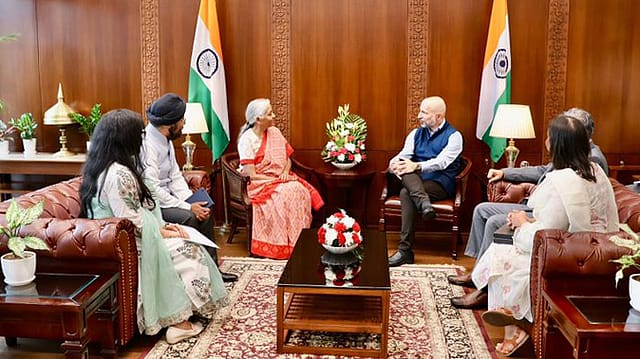
Uber Inc. CEO Dara Khosrowshahi has unveiled an aggressive India expansion strategy focused on electrification, shared mobility and deeper penetration into Tier II and III cities, as the American ride-hailing major looks to strengthen its foothold in one of its fastest-growing markets amid mounting competition from Rapido and shifting government priorities on fuel conservation.
The renewed India push comes at a time when the Centre has intensified its messaging around energy efficiency and reduced fossil fuel dependence following the ongoing West Asia crisis. Prime Minister Narendra Modi recently called for austerity measures, urging citizens and businesses to cut fuel consumption, adopt electric mobility and increase reliance on public transport to reduce pressure on India’s import bill.
Last year, Khosrowshahi, in a podcast with Zerodha co-founder Nikhil Kamath, has called India an “absolute must-win” market for the ride-hailing giant, telling that the country’s rapid growth and 1.4 million-strong driver network make it critical to Uber’s long-term strategy.
Uber deepens India investment play
During his week-long India visit, Khosrowshahi met Union Finance Minister Nirmala Sitharaman in New Delhi to discuss Uber’s long-term investment roadmap and mobility strategy for the country. In a post on X after the meeting, the Uber chief highlighted the scale of Uber’s expansion since his previous India visit in 2022.
“Honored to meet with Finance Minister @nsitharaman today in Delhi,” Khosrowshahi wrote. “When we last met in 2022, we made a promise. I’m proud to share we’ve kept it — the number of earners on Uber’s platform in India has quadrupled since we last met.”
He added: “We had a rich conversation about Uber’s strategic investment roadmap for India and how platforms like ours can be genuine partners in the journey toward #ViksitBharat2047. We’re just getting started.”
The Uber CEO also met aviation minister Ram Mohan Naidu and consumer affairs minister Pralhad Joshi. Joshi later said the government had strongly urged Uber India to accelerate the transition of its fleet towards electric vehicles and submit a self-auditing report on dark patterns and corrective measures.
Tier II, III markets become growth engine
Uber’s latest India strategy signals a sharper focus on affordable and shared mobility formats beyond metros, including bike taxis, auto-rickshaws and last-mile connectivity services. The company sees significant headroom for growth in smaller cities where organised app-based mobility remains underpenetrated.
Former NITI Aayog CEO and ex-G20 Sherpa Amitabh Kant said Uber had evolved “from a premium cab service into a true mobility platform for every Indian through offerings like Uber Bike & Autos bringing affordable last-mile connectivity to millions.”
Industry executives tracking the sector say non-metro markets are emerging as the next battleground for mobility platforms as users increasingly shift towards lower-cost transport options and shared rides.
India emerging as Uber’s technology hub
Khosrowshahi also used the India visit to reinforce Uber’s technology and infrastructure commitments to the country. Following a meeting with Gautam Adani in Ahmedabad, he announced plans to set up Uber’s first India data centre in partnership with the Adani Group.
“This investment will help us build at scale — from India, for the world,” Khosrowshahi said in a post on X.
Kant said Uber had moved beyond merely operating in India by building technology capabilities out of its engineering centres in Bengaluru and Hyderabad. “Uber is an example of not just serving India but Create in India,” he noted, adding that “Uber’s best chapter in India is still ahead.”