
Will rising fuel prices and monsoon risks dent the growth of India’s passenger vehicle segment in FY27?
ADVERTISEMENT
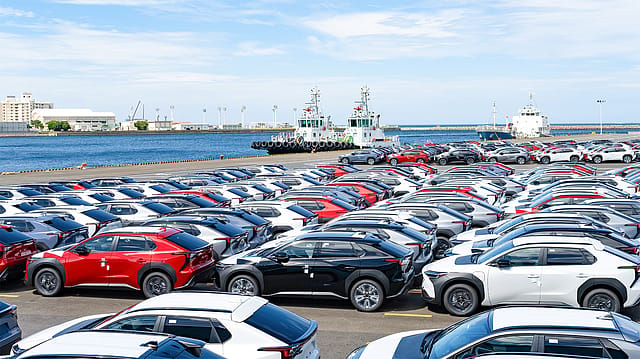
India's passenger vehicle (PV) industry is expected to grow at a moderate rate of 4-6% in FY27, but rising fuel and commodity prices, along with an uncertain monsoon outlook, could challenge the sustainability of this momentum, according to ICRA.
The rating agency said demand fundamentals remain strong, supported by GST rate cuts, healthy consumer sentiment, and continued traction in utility vehicles (UVs). However, it cautioned that higher ownership costs and a potential slowdown in rural demand due to weak monsoon conditions could act as headwinds for the industry in the coming quarters.
"ICRA expects industry volumes to expand by 4-6% in FY27, led by the likelihood of sustained demand momentum. The moderation in growth considers the elevated base of FY2026 and the weak monsoon outlook," the agency said in its latest report.
Notably, the India Meteorological Department (IMD) has projected southwest monsoon rainfall at about 90% of the long-period average during June-September, indicating a below-normal season.
The caution comes despite a strong start to the fiscal year. Passenger vehicle wholesale volumes surged 27% year-on-year (YoY) to 4.4 lakh units in May 2026, while retail sales grew an even faster 33%, aided by demand for newly launched models, an extended summer wedding season, and the continuing benefits of GST rate reductions.
"The wholesale and retail volumes grew at a strong pace in May 2026 on a YoY basis, with demand continuing to be supported by GST rate cuts, the low base of May 2025, and the extended summer wedding season," ICRA noted.
Weak monsoon and rising fuel costs remain key risks
A key concern for the industry remains rural demand, which is closely linked to the progress of the monsoon. Any delay in rainfall or uneven distribution could dampen consumer sentiment in rural markets, impacting vehicle purchases.
At the same time, rising fuel prices and higher commodity costs could put pressure on affordability and increase input costs for automakers. While manufacturers have so far managed these challenges, persistent cost inflation could weigh on both margins and demand.
Key growth drivers remain intact
Despite these risks, utility vehicles continue to underpin industry growth. UVs accounted for nearly 68% of overall passenger vehicle volumes in FY2026 and remain the preferred choice among consumers. ICRA also noted signs of recovery in mini, compact, and super-compact car segments following the reduction in GST rates.
Inventory levels have improved significantly, indicating a healthier demand-supply balance. Dealer inventory stood at around 31-33 days in May 2026 compared with 52-53 days a year earlier and nearly 60 days in September 2025, supported by stronger retail offtake.
The export market also remained resilient. Passenger vehicle exports rose 13% YoY in May 2026, reflecting growing overseas demand and increased supply from Indian automakers. Maruti Suzuki India retained its leadership position with a 49% share of passenger vehicle exports in FY2026, followed by Hyundai Motor India .
Another emerging trend is the increasing adoption of electric vehicles. EV penetration in the passenger vehicle segment rose to around 6% in the first two months of FY27, partly driven by rising fuel prices and improving consumer acceptance of electric mobility.