
25-30% of luxury real estate sales at risk as geopolitics, AI weigh on demand
ADVERTISEMENT
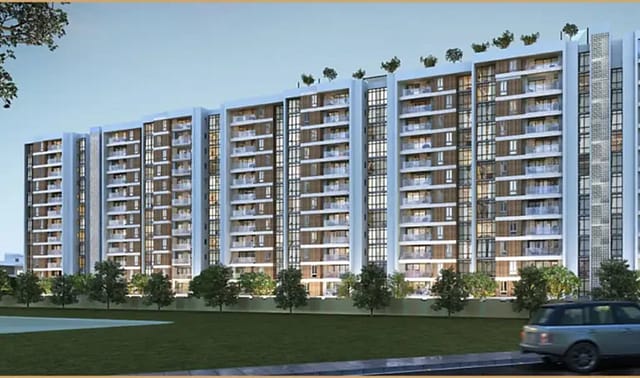
India’s residential real estate sector is facing a fresh wave of uncertainty as escalating geopolitical tensions and rapid AI-led disruption weigh on demand sentiment, particularly in the luxury and mid-premium housing segments, according to a latest report by HDFC Securities.
The brokerage noted that the sharp correction in domestic equity markets, with frontline indices declining 12-15% from their peaks, has had a disproportionate impact on the luxury and mid-luxury residential segments, where a meaningful share of buyers rely on portfolio wealth and stock market gains to fund home purchases.
As a result, a growing share of buyers reliant on stock market-linked gains are deferring purchases, leading to longer deal cycles and slower closures. “We are observing a notable increase in sales deferrals, elongated deal closures and a cautious wait-and-watch stance among prospective buyers, as they await market recovery to part-fund home purchases,” HDFC Securities said in its report.
25-30% of sales may be deferred
HDFC Securities, in its Q4FY26 preview, said that nearly 25-30% of sales could be deferred due to the combined impact of geopolitical risks and market volatility.
“Iran war and stock market correction have impacted the wealth effect negatively and resulted in delays in deal closures. Our analysis suggests 25-30% of sales are getting deferred owing to the above,” the report noted.
The brokerage highlighted that NCR and the Mumbai Metropolitan Region (MMR) are the most affected markets, particularly in the luxury segment, while Bengaluru remains relatively resilient, supported by stable demand trends among key developers such as Sobha, Prestige Estates, and Godrej Properties.
AI disruption to weigh on commercial real estate
On the commercial real estate side, HDFC Securities flagged emerging risks from AI-led workforce restructuring, especially among global capability centres (GCCs) and IT occupiers. This could prompt companies to reassess office space requirements, adding uncertainty to pre-commitments in the leasing pipeline.
“On the commercial side, AI-led workforce restructuring is prompting select GCC and IT occupiers to reassess their space requirements, introducing incremental uncertainty in office pre-commitments,” it said.
Developers, meanwhile, are responding with cautious strategies—delaying new launches, maintaining prices, and offering incentives such as relaxed payment plans and stamp duty waivers to sustain demand momentum.
Against the backdrop of near-term headwinds, the brokerage expects H1FY27 sales velocity to moderate, with a sharper slowdown in luxury housing, while affordable and mid-income segments are likely to remain comparatively resilient due to end-user-driven demand.
“The slowdown is expected to be more pronounced for luxury-focused and equity-market-funding-exposed presales, while affordable and mid-income segments with strong end-user demand should prove relatively resilient,” it added.
Sector fundamentals still strong, say analysts
Sectorally, the Nifty Realty Index has been one of the worst-performing sectors in 2026, down 14% as of today, as disappointing FY26 pre-sales guidance from major developers, along with sustained selling by foreign institutional investors, triggered a sell-off in the sector.
Kotak Securities’ Pankaj Kumar noted that while residential real estate stocks have corrected sharply since early 2026, the sector remains structurally stronger compared to past downturns such as demonetisation and COVID-19, citing lower developer leverage and growing annuity income streams.
“While the impact of the current uncertainty on home sales remains unclear, stock prices already reflect expectations of a sharp decline in demand. Certain pockets may face execution and margin challenges from labour shortages, supply chain disruptions, and input cost inflation,” he said.
He added that although uncertainty persists, stock valuations already factor in a sharp slowdown, with select developers trading at 3–8x FY27E EV/EBITDA, below historical averages. Kotak maintains preference for Prestige Estates, Lodha Developers, and DLF for the long term.