
₹79,000 crore on the line as gas crunch eats into restaurant business
ADVERTISEMENT
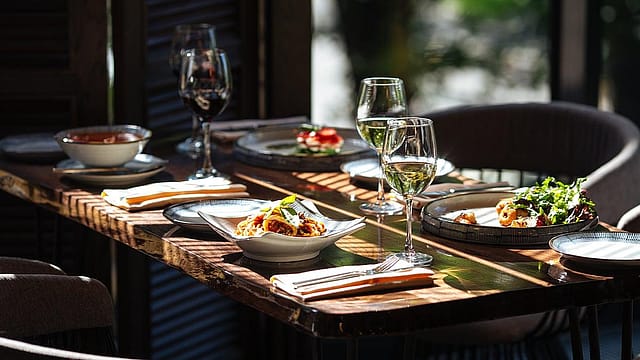
Even as the Centre signals a recovery in LPG supplies with restoration at around 70%, restaurants across India say the crisis is far from over. On the ground, uneven state-level implementation and patchy distribution mean kitchens are still operating below capacity, forcing businesses to adapt menus, workflows and cost structures.
Supply has improved from the peak of the disruption, but remains well short of normal. “It’s not normal at all. Supply is still at about 50-75% depending on the state,” Pranav Rungta, vice president of National Restaurant Association of India told Fortune India. “Overall, there is still a 25-50% shortfall, and this will take time to normalise.”
Industry executives say the impact is now reshaping how restaurants function day to day, even as they try to shield customers from price shocks.
Overall business activity has already fallen 15-20%, according to an internal survey conducted by the National Restaurant Association of India, with restaurant chains staring at potential losses of approximately up to ₹79,000 crore. The hit is coming less from the cost of gas itself and more from the operational constraints it has triggered.
According to the association's estimates, which covers over 500,000 restaurants across India, only around 10% outlets have temporarily closed, mostly the legacy or veteran restaurants that didn't have the agility to adapt. On the other hand, a majority of around 60–70% have switched to induction and other alternative fuels, running limited hours and offering a reduced menu.
“Unless state governments give parity on ground, the situation will not change. Distributors are still waiting for clear notifications in many states,” Rungta said. However, he added that since gas is only 1-2% of the overall business costs, at the moment restaurants are not passing on price increases to consumers.
While diners are still stepping out, average order values have softened, and missing menu favourites are prompting second thoughts.
Menus shrink, kitchens adapt
Restaurants across formats are recalibrating their kitchens in real time. LPG disruption, coupled with hoarding and a growing black market for cylinders, has made supply unpredictable.
Restaurants are increasingly relying on a mix of induction cooking, electric equipment and alternative fuels to reduce dependence on LPG. This has helped bring some stability back to operations and improved menu availability.
“People have adopted alternate sources. You’re seeing menu availability slowly come back,” Rungta said, adding that consumer experience, which had taken a hit earlier due to limited choices, is gradually improving.
That said, the transition is uneven across cuisines. High-flame formats such as Chinese and curry-based Indian dishes remain heavily dependent on gas, while cold kitchens, beverages and salad-led formats have seen little disruption.
“The disruption forces you to rethink menus,” said Riyaaz Amlani, managing director at Impresario Handmade Restaurants. “You push items that rely less on gas, lean on electric equipment, or temporarily go back to coal and wood where permitted.”
Ashish Dev Kapur, managing director at White Hat Hospitality, said nearly 50-60% of kitchen operations are typically gas-dependent. “You can’t make a curry without gas, and cuisines like Chinese rely heavily on high flame. So we are adapting menus, focusing on charcoal, cold sections like sushi, and anything that reduces gas load.”
Short-term fixes include pruning gas-intensive dishes, limiting menu depth, and tweaking preparation techniques. Longer-term adjustments may involve replacing gas-based equipment with electric alternatives, though that requires capital and time.
Sentiment, supply and survival
Beyond the kitchen, sentiment is turning cautious. Dining out is discretionary spend, and uncertainty around supply chains and the broader environment is beginning to weigh on consumer behaviour.
“There is a little bit of slowdown, driven by sentiment,” Amlani said. “If the situation continues, sentiment will worsen, and that directly impacts restaurants.”
According to industry estimates, the Indian food services market valued at ₹5.69 lakh crore in 2024 and projected to reach ₹7.76 lakh crore by 2028 is expected to reach an estimated ₹6.46 lakh crore in 2026, translating into approximately ₹17,700 crore in daily economic activity across the sector.
Even a 15-20% dip in business, translates into significant revenue impact for the sector.
The disruption has also exposed structural gaps. While pipeline gas offers some relief, its reach remains limited. Only about 25-30 cities have partial coverage, and even there, restaurants face restrictions. Gas companies have capped usage at 80% of past averages, with penalties for exceeding limits.
“There is about a 15% disruption in gas supply, and pipeline infrastructure is still not widespread,” Rungta said, adding that faster rollout of piped gas connections could ease pressure on LPG demand.
In the meantime, both metro and smaller cities are feeling the strain. Tier 2 and Tier 3 markets, initially insulated due to lower dependence, are now seeing shortages as the situation persists.
As of April 11, 2026, a fragile two-week ceasefire is in place between the United States and Iran to pause a six-week conflict. However, Rungta estimates it could still take 2-3 months for the situation and operations to return to complete pre-war normalcy.
“That requires uninterrupted supply, normal distribution and stable pricing. Only then can restaurants fully return to their earlier systems and menus.”