
Adani’s new operating model aims to cut site-level decision time from days to hours
ADVERTISEMENT
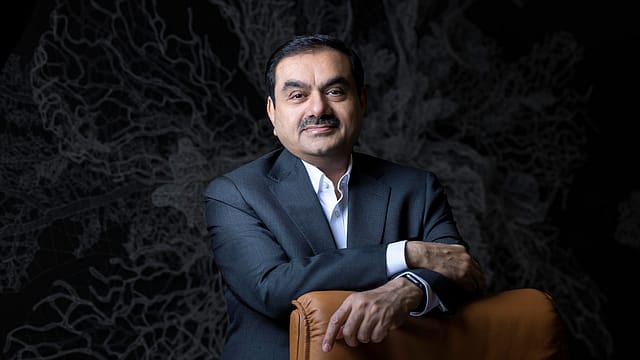
Billionaire Gautam Adani has outlined a new operating model for the Adani Group, built around a flatter structure, fewer execution layers, stronger project partners and a formal training pipeline, as the conglomerate prepares for another large phase of asset creation.
Speaking to employees on International Labour Day, Adani said the group has begun work on “three major transformations” — a 3-layer model, a partnership model, and a stronger learning and development framework. The speech gives the clearest internal articulation so far of the restructuring plan reported by Bloomberg, which said the group is simplifying its internal structure to speed up decisions and support a faster growth cycle.
Three-layer model to speed up decisions
The core of the new model is a flatter organisation structure. Adani said that as organisations grow larger, decisions tend to slow down and work takes longer to move across levels.
“The three-layer model aims to flatten the organization so that responsibility is clear and decisions can be made quickly,” Adani said in the speech. He added that when layers are reduced, “decisions are made faster, work speed increases, and the entire organization is filled with new energy.”
The target is explicit: site-level decisions that currently take three days should be made in three hours.
“In today’s world, the difference is not just in capability, but of speed,” Adani said. “We want decisions that currently take three days to be made at a site to be made in just three hours.”
The restructuring is aimed to create a simplified three-layer organisational structure with fewer decision-makers, aimed at improving project execution and capital deployment. This is considered as one of the group’s biggest internal overhauls since 2015, when Adani separated ports and power into distinct listed entities.
Fewer, stronger partners
The second pillar is a partnership model aimed at reducing coordination complexity at large project sites. Adani said many sites now have more than 100 contractors working simultaneously, creating additional layers and slowing decision-making.
“We intend to change this,” he said. “Our endeavour is to work with a selected group of strong and reliable partners, who can take responsibility for the entire task and complete it better, faster, and more effectively.”
He framed the shift as more than an execution change. “The Partnership Model isn’t just about changing the structure. This is a change in mindset; this is a change in culture,” Adani said, adding that the group’s commitment is to stand by partners “from start to end.”
The group plans to reduce and consolidate contractors, working with fewer but larger partners to simplify coordination and support financing.
Training, homegrown talent and worker welfare
The third pillar is learning and development. Adani said workers should have a defined career path from unskilled to semi-skilled, skilled, supervisor, manager and eventually leader. He also announced the setting up of the Adani Training Academy, saying it will create a system for every individual to learn and enhance skills.
In one of the sharper people-strategy signals, Adani said he wants the group to eventually rely only on internal talent. “I wish for a time — very soon — when lateral hiring at the Adani Group stops completely, and we rely solely on homegrown talent,” he said.
The speech also included a worker welfare push. Adani said the group is constructing air-conditioned accommodation for 50,000 colleagues in Mundra and Khavda, and building a cloud kitchen in Mundra that will provide one lakh servings of clean and nutritious meals every day.
Bloomberg added that the group is spending around ₹50 billion to build a township across more than 175 acres in Mundra for workers.
₹2 lakh crore asset addition in one year
Adani linked the operating model to the group’s scale of expansion. He said the group built assets worth around ₹2 lakh crore over its first 35 years, and is now set to add another ₹2 lakh crore in new assets in a single year.
Bloomberg reported that Adani Group has doubled the pace of its capital spending plan, aiming to spend $100 billion over five to six years instead of spreading it over a decade. In earlier comments, Adani Group CFO Jugeshinder Singh said the group raised $2 billion from the local market last year and plans to scale that to $10 billion over three years.
Copper plant and earnings overhang
The restructuring comes at a time when Adani Enterprises , the group’s flagship incubator, has reported a quarterly loss. The company posted a ₹221 crore loss in Q4 FY26, compared with a profit of ₹3,845 crore a year earlier, even as revenue from operations rose 20.3% to ₹32,439 crore. Reuters said the loss was partly driven by higher depreciation expenses from newly operational assets, including the Navi Mumbai airport and the 500,000-tonne-per-year copper plant in Gujarat.
The copper plant has also come under scrutiny. In a separate report, Bloomberg said that Adani’s $1.2 billion Kutch copper plant faced technical setbacks in its first year and produced 94,000 tonnes of refined copper from April 2025 to February 2026, against its 500,000-tonne annual capacity. The report also said Adani denied engineering challenges and said the plant was making steady progress in ramp-up and stabilisation.
How Adani Group companies have reported earnings so far
The earnings picture across listed Adani companies has been mixed.
Adani Enterprises reported a Q4 loss despite 20% revenue growth, hurt by higher depreciation from recently commissioned assets and cost pressures in ramp-up businesses. Adani Ports reported a 10.4% rise in Q4 net profit to ₹3,329 crore, with revenue up 26.5%, and also crossed the 500 MMT annual cargo milestone.
Adani Power posted a strong quarter, with consolidated PAT rising 64% to ₹4,271 crore, while consolidated continuing EBITDA rose 9% to ₹5,573 crore. Adani Energy Solutions reported Q4 profit growth of 5.66% to ₹684 crore, with revenue up 16.8%, though margins came under pressure.
Adani Total Gas reported a 9% rise in Q4 profit to ₹168 crore and revenue growth of 16.6%, while Adani Green Energy ’s Q4 profit rose 34.2% to ₹514 crore, with revenue from operations up 14%.
The new structure is ultimately an execution bet. Adani is trying to cut delays, simplify accountability and build a partner ecosystem capable of handling a larger project pipeline. The challenge is that this transition is happening while the group is accelerating capex, managing ramp-up issues in new businesses, and facing uneven earnings across its listed entities.