
Applause Entertainment MD Sameer Nair flags a ‘reset phase’ for India’s streaming industry
ADVERTISEMENT
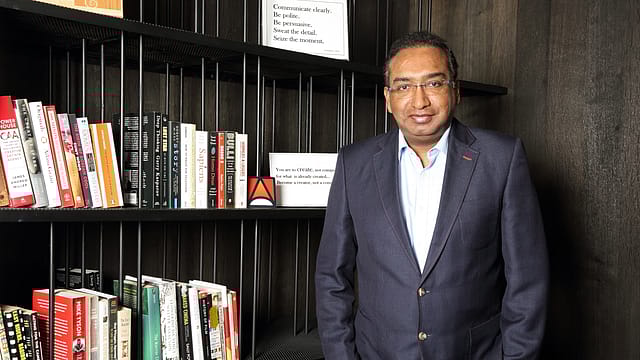
The exuberance that defined the first decade of streaming is giving way to caution, consolidation, and a search for sustainable growth. For Sameer Nair, managing director of Applause Entertainment, the industry is in the middle of a structural reset—one that will determine how Indian stories are created, distributed, and monetised in the years ahead.
Speaking at Content India 2026 in Mumbai, Nair described the current mood as “midway”—neither pessimistic nor euphoric, but marked by a clear recognition that the old growth playbook no longer applies. “The first phase—from zero to scale—is always the easiest. Now we’re at a plateau where everyone is recalibrating,” he said.
The recalibration is visible across markets. Streaming platforms, after years of aggressive commissioning and subscriber acquisition, are tightening budgets and becoming more selective. For creators and studios, that translates into fewer opportunities and greater scrutiny on costs and returns. “There is opportunity, but there is also caution,” Nair noted.
Is the era of premium streaming content losing steam?
One of the clearest shifts is in the kind of content being commissioned. Premium, big-budget dramas—the genre that helped define the streaming boom—are beginning to show signs of fatigue. In their place, platforms are leaning towards what Nair described as “hard-working programming”—content that delivers higher engagement relative to cost. This includes formats reminiscent of television’s telenovelas, unscripted shows, and emerging short-form storytelling formats.
Among these, microdramas—short, mobile-first narratives—are gaining traction globally and beginning to influence thinking in India. Dismissing the idea that audiences have lost their attention spans, Nair argued that engagement is still driven by storytelling quality. “If a story hooks you, you stay. It’s not about attention span—it’s about relevance,” he said, pointing to the success of bite-sized narratives that keep viewers engaged over extended viewing sessions.
Can AI and new formats unlock the next phase of content creation?
At Applause Entertainment, this shift is accompanied by a growing focus on technology, particularly artificial intelligence. The studio is now exploring AI-led production workflows, especially in animation, to reduce costs and speed up development cycles. The move reflects a broader industry trend where technology is increasingly central to content creation, not just distribution.
Yet, for all the innovation, the underlying challenge remains unchanged: building a viable business model. Streaming, despite its scale, is still grappling with monetisation. Advertising models are evolving, subscription growth is uneven, and premium audiences remain difficult for brands to access. “Content creation cannot be a charitable exercise,” Nair said, underlining the need for profitability in an increasingly competitive market.
This tension is also reshaping the relationship between creators, platforms, and advertisers. While brand partnerships are being explored, they are yet to become a mainstream revenue driver in streaming. The industry, Nair suggested, must first ensure that platforms themselves achieve financial stability.
Will Indian stories finally travel beyond domestic and diaspora audiences?
For audiences, the explosion of content has created a paradox of choice. Unlike linear television, where programming was finite and time-bound, streaming platforms host vast libraries that never disappear. Discovery, rather than access, has become the primary challenge. Nair believes that recommendation algorithms, social buzz, and word-of-mouth will continue to play a critical role in guiding viewer behaviour.
Even as the domestic market expands, Indian content is still finding its footing globally. Nair attributed this partly to India’s scale, which allows the industry to thrive without depending heavily on international audiences. However, with improving production quality and increased collaboration, he expects more Indian stories to travel beyond the diaspora.
“The effort now is to create stories that are rooted here but can connect anywhere,” he said, pointing to the need for a balance between cultural specificity and universal appeal.
The larger backdrop to these shifts is a rapidly evolving media ecosystem. Traditional television continues to lose ground, younger audiences are migrating to digital platforms, and new forms of storytelling—from creator-led content to short-form video—are reshaping consumption patterns. At the same time, advancements in technology are lowering barriers to entry, enabling a wider range of voices to participate in content creation.
For Nair, this moment of disruption is both challenging and necessary. “It’s a good time because there is so much change and so much opportunity. But it’s also a time when we are still trying to figure out what works,” he said.
As the industry navigates this transition, one thing is clear: the next phase of growth will not be driven by scale alone, but by the ability to balance creativity with commercial viability. For Indian storytelling to succeed on the global stage, it will have to do both.