
GalaxEye launches Mission Drishti, world’s first OptoSAR satellite
ADVERTISEMENT
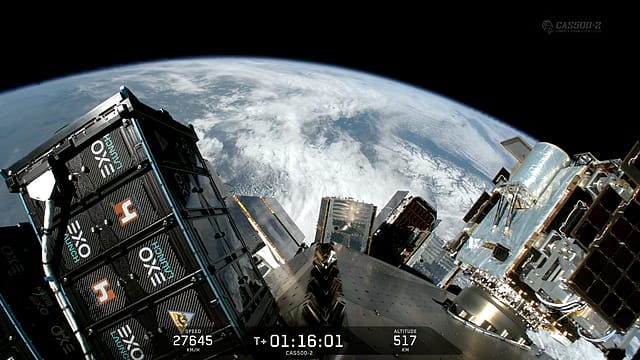
Bengaluru-based space-tech startup GalaxEye has successfully launched Mission Drishti, a 190-kg Earth observation satellite that combines synthetic aperture radar (SAR) and electro-optical (EO) imaging on a single platform—an industry first. The satellite was deployed aboard a SpaceX Falcon 9 rocket from Vandenberg, California.
The integration of SAR and optical sensors allows Mission Drishti to capture high-resolution imagery regardless of weather or lighting conditions, addressing a long-standing limitation in satellite imaging. While optical satellites struggle with cloud cover and darkness, SAR can penetrate both—combining the two enables consistent, high-frequency data capture.
At 190 kg, the satellite is also the largest privately developed Earth observation satellite in India. The mission is the result of over five years of in-house research and development, reflecting a broader shift toward IP-led innovation in India’s private space ecosystem.
Commercial potential and strategic use cases
Following deployment, the company is now focused on commissioning the satellite, with initial imagery expected to be delivered to customers in the coming weeks. Early interest has emerged from both government and commercial clients globally, particularly for applications requiring reliable geospatial intelligence.
Mission Drishti is positioned as a dual-use satellite, with applications spanning defence surveillance, agriculture monitoring, disaster response, maritime tracking, and infrastructure planning. The ability to generate uninterrupted data streams strengthens its relevance in intelligence, surveillance, and reconnaissance (ISR) operations.
GalaxEye has also partnered with NewSpace India Limited (NSIL), the commercial arm of ISRO, to distribute its satellite imagery globally. This move is expected to accelerate market access and monetisation of its data capabilities. Looking ahead, GalaxEye plans to build a constellation of OptoSAR satellites over the next five years.
“Mission Drishti marks our first mission and the culmination of over five years of sustained R&D to develop this breakthrough technology. With the satellite now successfully in orbit, our immediate focus is on completing its commissioning. As we move through this phase, we are already witnessing strong global interest in the differentiated datasets enabled by our OptoSAR payload." said Suyash Singh, Founder & CEO, GalaxEye.
How the leaders reacted to the launch
Prime Minister Narendra Modi congratulated GalaxEye, saying that the launch was a “testament” to nation-building. “Mission Drishti by GalaxEye marks a major achievement in our space journey. The successful launch of the world’s first OptoSAR satellite and the largest privately-built satellite in India is a testament to our youth’s passion for innovation and nation-building. Heartiest congratulations and best wishes to the founders and the entire team of GalaxEye,” the PM said in an X post.
Echoing similar sentiments, External Affairs Minister, Dr S Jaishankar said in an X post, “The success of Mission Drishti, world’s first OptoSAR satellite by GalaxEye reinforces, India’s growing capabilities in the global space sector. It also highlights the role being played by our entrepreneurs, strengthening nation’s technical and innovation ecosystems.”
Even ISRO extended congratulations to the company. “ISRO is proud to support this achievement by enabling access to its satellite testing facilities fostering innovation and handholding India’s emerging private space sector. Best wishes to the team at GalaxEye for continued success in strengthening the nation’s space ecosystem and advancing cutting-edge technology,” said the X post.