
Broadway bets big on experiential retail with Mumbai flagship, targets ₹2,000 crore revenue in five years
ADVERTISEMENT
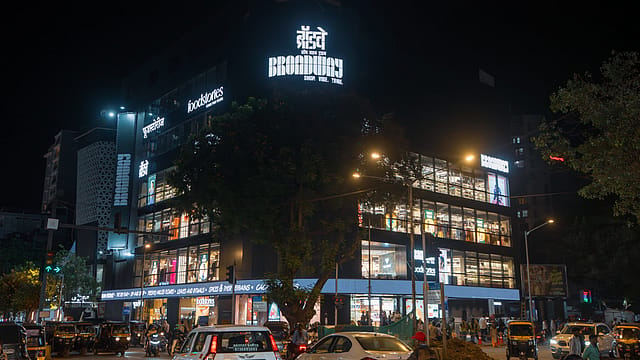
As India’s retail sector grapples with slowing discretionary spending in some categories and rising online competition, a new generation of retail players is betting that consumers still want physical spaces—provided they offer more than transactions.
Broadway, the experiential retail platform backed by entrepreneurs and investors including Vivek Biyani, Rana Daggubati, Apurva Salarpuria, Nikhil Kamath and Gruhas Proptech’s Abhijeet Pai, has opened its largest outlet yet in Mumbai’s Bandra West. Spread across 40,000 sq. ft. across four floors, the flagship brings together more than 200 brands across fashion, beauty, wellness, sneakers and lifestyle.
But for Broadway, the store opening is less about adding retail square footage and more about testing a broader thesis around how India’s next generation of consumers wants to shop.
“We’re not a marketplace and we’re not a mall,” Sankalp Kathuria, co-founder and CEO of Broadway, tells Fortune India. “Broadway is a point of view on new-age consumption in India.”
The Mumbai launch marks Broadway’s fourth location after Delhi, Hyderabad and Pune and signals a larger expansion push at a time when consumer brands are increasingly looking beyond online channels for growth.
How is Broadway building retail for the digital-first consumer?
Broadway’s model sits at the intersection of online brand discovery and offline experience.
Over the last decade, hundreds of Indian consumer brands have built communities online, but scaling beyond digital acquisition has remained expensive and increasingly difficult. Physical retail, meanwhile, continues to struggle to attract younger consumers accustomed to convenience and personalisation.
Broadway wants to bridge that gap.
“Mumbai is where these brands are born, where founders live, where this culture originates,” says Kathuria. “But there wasn’t a single destination designed around that ecosystem.”
According to him, Bandra offered the ideal consumer profile—discovery-driven, culturally engaged and already familiar with emerging brands.
The result is a store designed less like a traditional department store and more like a curated retail platform.
Why is curation—not assortment—becoming Broadway’s moat?
Kathuria believes one of the biggest shifts in Indian consumption is that consumers are becoming more deliberate in how they buy.
“The consumer is moving from mass to considered much faster now,” he says. “People understand brands, follow founders and know the difference between something built with conviction and something built for distribution.”
That shift has also shaped Broadway’s pricing architecture. The company is positioning itself in the premium-to-accessible luxury segment rather than mass-market or traditional luxury retail. According to Kathuria, the target consumer has moved beyond value-led buying but is not necessarily driven by legacy luxury labels or status signalling. Instead, purchase decisions are increasingly influenced by product quality, brand philosophy, design and discovery.
That shift has shaped Broadway’s brand mix.
The Mumbai flagship houses over 200 brands across fashion, beauty, skincare, wellness, sneakers, accessories and lifestyle categories. While the majority are Indian labels, Broadway has also attracted global and international-first brands looking to enter or expand in India.
Beautytech, for example, has chosen Broadway as its exclusive India retail destination, while brands such as Birdeye and Behno have used the platform to deepen their offline presence.
Other labels span categories including premium fashion, streetwear, beauty, Korean skincare, footwear and consumer electronics.
“Brands aren’t just getting shelf space,” says Kathuria. “They’re getting an audience, context and infrastructure to grow.”
How does Broadway plan to turn stores into destinations?
Broadway’s strategy extends beyond product discovery.
The company plans to activate its stores through founder interactions, launches, workshops, wellness experiences and recurring community-led formats including Founders on the Floor and Broadway Afterhours.
The idea is to create repeat engagement rather than depend purely on retail conversion.
“We want people to come back for reasons that have nothing to do with making a purchase,” Kathuria says. “A store that consumers visit once every season isn’t what we’re building.”
That approach reflects a broader challenge facing physical retail globally: competing not just with e-commerce, but with consumer attention.
Broadway’s answer is to make curation itself the product.
“There isn’t a direct comparable in India right now,” Kathuria says. “The experience of walking into Broadway comes from how we think about brands—not just what we stock.”
What are Broadway’s expansion plans and revenue ambitions?
The company’s ambitions extend well beyond Mumbai.
Broadway is targeting ₹1,500–2,000 crore in revenue over the next five years and plans to expand to a network of 25 stores across India. Additional locations have already been signed, including another outlet in Delhi and one in Gurugram.
Kathuria says growth will remain selective.
“The appetite exists, but each city and each location has to fit. We’re building for the long term.”
Even amid concerns around geopolitical tensions, logistics costs and supply-chain uncertainty, Broadway expects limited direct exposure because most of the brands it works with are India-origin businesses with domestic supply chains.
For Broadway, the larger bet is clear: India’s next retail winners may not be those offering the most products—but those creating environments consumers actively choose to spend time in.