
Budget 2026 could recast agriculture as growth engine, not welfare sector, say experts
ADVERTISEMENT
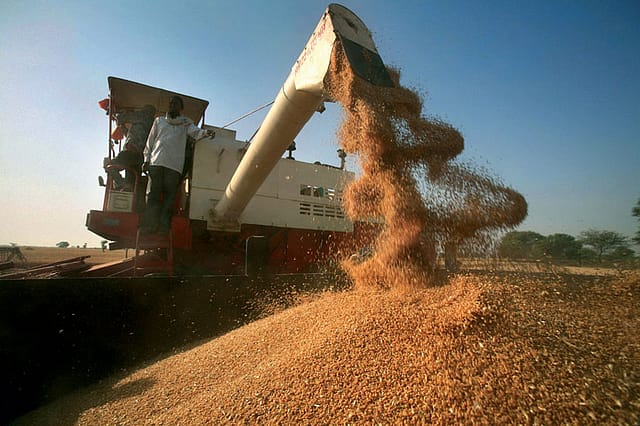
As the Union Budget 2026 approaches, expectations are building that agriculture will be positioned as a key growth driver rather than a sector reliant on welfare measures. Policymakers and industry leaders believe the Budget could mark a turning point in India’s medium-term growth strategy, placing agriculture at the centre of the country's economic agenda.
High employment, low output
Agriculture remains the largest employer in India, engaging nearly 45% of the workforce, but contributes less than one-fifth to the country’s gross value added (GVA). This stark disparity highlights longstanding structural and productivity challenges that experts say the upcoming Budget must address.
From MSP to productivity and income growth
Phanisekhar Ponangi, Co-founder and Head of Investments at Mavenark, said agricultural policy has moved beyond a “cereal-obsessed, volume-driven, Minimum Support Price-based approach” towards productivity-led, income-enhancing measures across non-cereal crops, pulses, vegetables, and allied sectors such as livestock, fisheries, horticulture, and food processing.
“The farm economy expects the Budget to capitalise on emerging trends such as biofortified seeds and nutrition-driven farming practices,” Ponangi said. He added that green infrastructure initiatives like watershed development, aquifer recharge, and micro-irrigation will be critical to build climate-resilient agricultural assets.
In the context of rising protectionism and tariff barriers globally, Ponangi said farmers are looking for policy support to improve market access, strengthen farm credit, and modernise agricultural value chains to boost exports.
In the last Union Budget, the allocation for the agriculture and allied sectors was pegged at ₹1.52 lakh crore in FY25 and ₹1.37 lakh crore in FY26 while the effective spending on the sector, including outlays on MSP and input subsidies, amounted to over ₹3.91 lakh crore.
The hidden constraint on growth
Azhaan Merchant, Co-founder and CEO of Bharat Intelligence, said India’s agricultural policy largely focuses on farmers while overlooking the 14 crore agricultural workers who directly determine farm outcomes.
“In high-value crops, cultivation is time and quality sensitive,” Merchant said. Delays in labour activities such as pruning, thinning, harvesting or fruit care can lead to lower yields, reduced quality, and missed export standards. He argued that subsidies or MSP support cannot offset poor execution at the farm level.
Merchant called for the Budget to recognise agricultural labour as “core productivity infrastructure” through formal recognition, structured upskilling, access to modern tools, guaranteed minimum wages, and year-round employment systems.
Climate resilience and sustainability
In its pre-Budget report, EY stated that agriculture employs nearly half of India’s workforce, making systemic reforms essential. The report said Budget 2026 is likely to focus on balancing immediate needs with broader economic priorities.
With almost 80% of the agricultural workforce consisting of smallholders, the Budget is expected to address income security, market access, credit availability, and incentives for modern farming. At the same time, sustainability and climate resilience remain critical concerns.
Experts expect the government to build on previous announcements and push for a climate-smart agriculture policy. They anticipate more detailed action on the July 2024 framework for climate-resilient agriculture across 50,000 villages, as climate change is projected to cause average production losses of 15–20% over the next 15 years.
To increase resilience, experts suggest incentives for agroforestry, soil and water conservation, and sustainable farming practices. They also expect stronger integration of agriculture with the National Action Plan on Climate Change, including solar adoption, energy efficiency, water conservation, and ecosystem protection.