
CAFE-III moves closer to clearance as proposal reaches PMO; auto industry split over small car concessions
ADVERTISEMENT
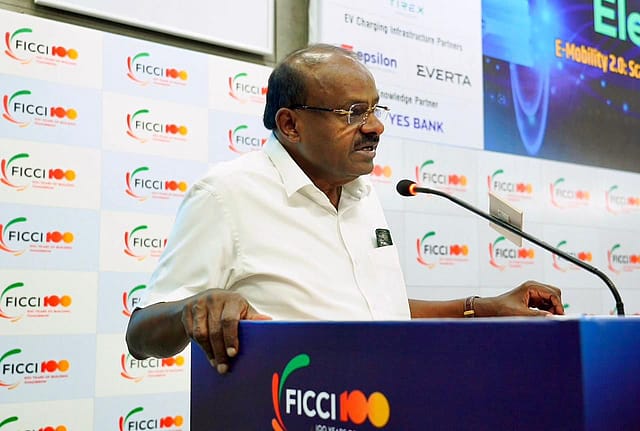
The proposal to implement the third phase of Corporate Average Fuel Efficiency (CAFE-III) norms has been sent to the Prime Minister’s Office after consultations with industry stakeholders, Union Heavy Industries Minister H.D. Kumaraswamy said on Wednesday.
Speaking on the sidelines of the 3rd FICCI National Conference on Electric Vehicles in New Delhi, Kumaraswamy said the Ministry of Power had concluded discussions with industry representatives before forwarding the proposal for further consideration.
“After holding meetings with stakeholders, the power ministry has sent the proposal to the PMO,” he said, indicating that the policy has entered a crucial stage of review.
The conference — organised by the Federation of Indian Chambers of Commerce and Industry (FICCI) under the theme “E-Mobility 2.0: Scaling Infrastructure, Supply Chains & Global Competitiveness” — brought together policymakers, automakers and technology players to deliberate on the next phase of India’s electric mobility transition.
In his address at the event, Kumaraswamy described electric mobility as central to India’s broader industrial and environmental strategy, framing it not merely as a climate intervention but as a manufacturing and supply-chain opportunity aligned with the country’s long-term development goals.
Industry divided over small car treatment
The proposal moves ahead even as divisions within the automobile industry deepen over how CAFE-III should treat small cars and whether certain technical definitions under the framework warrant changes.
A section of manufacturers has argued that entry-level vehicles — which form the backbone of mass mobility — require calibrated concessions to protect affordability. They contend that without flexibility, tighter targets could disproportionately affect compact cars and price-sensitive buyers.
Safety vs sustainability: The counterpoint
Others, however, have opposed any relaxation. For instance, Shailesh Chandra, Managing Director and CEO of Tata Motors Passenger Vehicles Ltd., has cautioned that granting leniency to small cars based on weight or affordability could compromise safety standards and dilute the push toward meaningful emissions reduction. In his view, exemptions risk slowing the structural transition to cleaner mobility.
Maruti Suzuki’s case for calibration
Market leader Maruti Suzuki India Ltd. has taken a contrasting position. Its Chairman, R.C. Bhargava, has maintained that the fundamental objective of CAFE norms is to push larger vehicles to improve fuel efficiency and reduce emissions. Smaller cars, he argues, already operate within relatively efficient parameters and should not be subjected to uniform benchmarks that may distort the market.
What CAFE-III could mean for the market
Introduced in 2017, the CAFE framework sets limits on the average fuel consumption and carbon dioxide emissions across a manufacturer’s fleet, compelling automakers to progressively improve overall efficiency.
With the CAFE-III proposal now before the PMO, the final contours of the policy are expected to shape product strategy, technology investments and pricing across the passenger vehicle segment. The government’s decision will determine whether the framework tilts toward stricter environmental compliance or seeks a calibrated balance between sustainability and affordability.