
MSMEs feel New Labour Codes to fasten formalisation: SIDBI's MSME Outlook Survey
ADVERTISEMENT
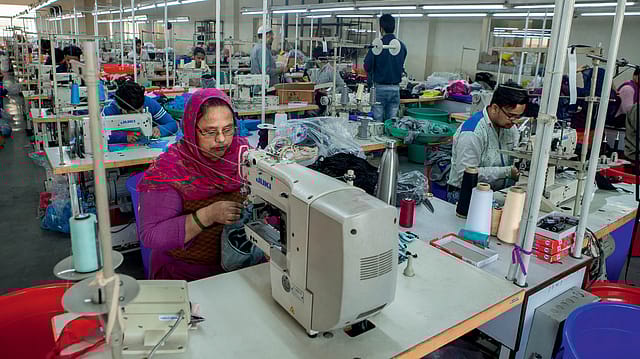
India’s New labour codes can help Micro, Small, and Medium Enterprises (MSMEs) take formalisation of their businesses to the next level, the results of the quarterly survey of MSMEs carried out by the Small Industries Development Bank of India (SIDBI) indicates.
While 34–36% of surveyed firms anticipate a short-term rise in compliance costs, many also identified areas where targeted support could ease the transition—particularly clearer guidance on specific provisions (16–21%) and stronger training and awareness initiatives (17–19%). With focused capacity-building for smooth and successful adoption, the new labour codes will offer MSMEs an opportunity to strengthen their operational frameworks and advance formalisation, the respondents said.
SIDBI’s MSME Outlook Survey
The fifth edition of SIDBI’s “MSME Outlook Survey,” released today showed year-on-year improvement in sentiments driven by a favourable domestic macroeconomic environment despite the external headwinds and supportive policies on credit access. A year-on-year analysis of the MSME Business Confidence Index (M-BCI) at both composite and sectoral levels found availability of working capital finance and overall finance to have recorded the strongest improvement. Sales/revenue and overall business scenario also improved, indicating resilient demand and a stable operating outlook.
The quarterly publication provides key insights into the current business sentiment and future outlook among Indian MSMEs through a lead as well as a lag indicator- the MSME Business Expectations Index (M-BEI) and MSME Business Conditions Index (M-BCI). These indices, which range from 0 to 100, reflect MSME sentiment, with values above 50 indicating a positive expansionary outlook.
Composite M-BCI for Oct-Dec quarter stood at 60.8
The composite M-BCI for October-December 2025 quarter stood at 60.8 marginally lower than the previous quarter at 61.6. Sector-wise, manufacturing witnessed improvement in the sentiment with M-BCI rising to 64.1 in the quarter from 62.9 in the previous quarter while trading and services witnessed moderation. The composite M-BEI projects a positive outlook, with the composite index expected to rise to 63.7 in the next quarter and further to 65.0 in the quarter one-year ahead (October-December, 2026) signalling an optimistic business outlook in the near term.
The findings of the survey also suggest that the manufacturing sector witnessed stronger sales sentiment and higher expectations for future sales growth. While sales sentiments don’t reveal any material improvement in the current quarter (Oct-Dec’2025) compared to the previous quarter in the services and trading sectors, respondents remain fairly optimistic about sales prospects in the forthcoming periods.
Similarly, in the current quarter, optimism about availability of working capital finance rose significantly, with 46% of manufacturing respondents expressing positive sentiment; an increase from 35% in the previous quarter. Similarly, optimism regarding overall finance availability in that sector improved to 47%. In case of services, sentiments on finance indicators improved marginally between the quarters; for trading enterprises, however, sentiment around working capital finance moderated, even as sentiments regarding overall finance strengthened significantly.
There were some concerns on profit margins particularly in services and trading sectors also that were reflected in the survey.