
Can DMart outpace quick commerce without digital execution?
ADVERTISEMENT
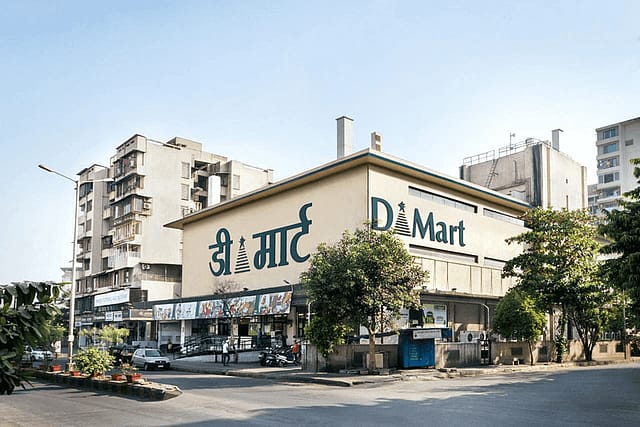
DMart built India's most successful grocery retail business on a simple formula: own real estate, buy directly from brands and pass on the savings to consumers. That model remains intact, but analysts believe the next phase of competition will be decided less by price and more by convenience, digital execution and speed of delivery.
The pressure is becoming increasingly visible. Avenue Supermarts , which operates DMart, reported consolidated revenue of ₹18,794.5 crore for the June quarter, up 14.9% year on year, while net profit rose 11.3% to ₹860.4 crore. Gross margins expanded by 50 basis points, but higher operating expenses from accelerated store additions weighed on profitability.
More importantly, DMart Ready's growth slowed sharply to 5.5% from around 20% a year ago, prompting brokerage firm Nuvama Institutional Equities to retain its 'Hold' rating while lowering its price target to ₹4,383 from ₹4,974.
"The slowdown in both the core and DMart Ready format and pressure in sales growth in metro cities prompted us to trim the target multiple from 70x to 60x," said Abneesh Roy, managing director, Nuvama Institutional Equities.
According to Karan Taurani, executive vice president at Elara Capital, DMart's long standing competitive strengths remain relevant, but are no longer sufficient in a market increasingly dominated by online grocery and quick commerce.
That strategy has enabled the retailer to scale across both metro and non-metro markets. However, Taurani believes competing with quick commerce now requires a stronger digital presence.
"The playbook to compete with quick commerce obviously is that they have to expand DMart Ready," he said, adding that the company instead has been scaling back the business, partly because it has remained reluctant to lease properties for fulfilment centres.
Physical expansion alone may not be enough
Nuvama's latest report suggests the slowdown is already visible. DMart Ready's growth dropped to 5.5% in the June quarter from a roughly 20% growth profile earlier. During the quarter, the company exited seven cities, reducing its presence to 11 cities while continuing to focus on large metropolitan markets. Losses in the online business also widened to ₹75.3 crore from ₹56.9 crore a year earlier.
The brokerage also highlighted that growth in stores older than two years slowed to 5.5% from 7.1% a year ago. Mature metro stores, which generate significantly higher sales per square foot, delivered flat growth during the quarter, while non metro markets continued to perform better. DMart's network stood at 503 stores after opening three new outlets during the quarter.
"The company's ethos was very clear that they do not want to spend on rentals. They want to buy the land and buy the asset," Taurani said. He added that DMart's second moat has been its ability to offer prices that competitors struggle to match because it procures directly from brands. The third is its focus on mass market consumers rather than premium merchandising.
Those advantages have helped the retailer scale across metros as well as smaller towns. However, Taurani argues that the next phase of competition requires a different approach.
"Online grocery penetration in India is only about 2% to 3%, whereas globally it is over 14% to 15%," he said. "Nearly 70% of India's online grocery market today comes from quick commerce."
According to him, modern retailers failed to aggressively build digital capabilities even as they led organised retail. That created an opening for quick commerce platforms to dominate online grocery.
The competitive landscape is also becoming more crowded. Taurani expects the expansion of Amazon and Flipkart in quick commerce to intensify pressure on DMart's metro market like for like growth. "It is not only quick commerce anymore. It is also e-commerce competing in online grocery," he said.
That has implications beyond revenue growth. Taurani believes DMart is already facing pressure on like for like sales, margins and pricing leadership, while its limited focus on Gen Z shoppers and emerging direct to consumer brands could weigh further on growth.
Even so, analysts believe DMart's nationwide expansion remains its biggest advantage. Nuvama expects the retailer to continue adding around 100 stores annually over the next few years, taking its network to nearly 800 stores by FY29, with revenue projected to cross ₹1.14 lakh crore.
For now, that physical expansion continues to underpin DMart's growth. But as online grocery penetration rises and convenience increasingly shapes consumer behaviour, analysts say the retailer's next phase of growth will depend on whether it can replicate its offline success in the digital marketplace.