
Cocoa at crossroads as India meets just a third of demand domestically
ADVERTISEMENT
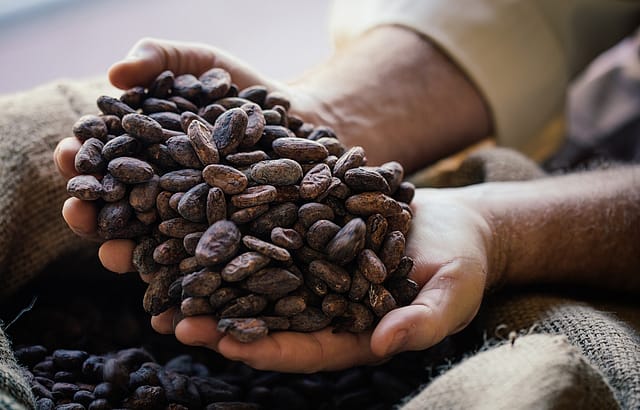
India’s cocoa story is at an inflection point, and the gap between what the country consumes and what it produces is now too large to ignore.
A new knowledge paper released at a FICCI–Grant Thornton Bharat roundtable argues that India meets just 25–30% of its cocoa demand domestically, while imports have ballooned to over $866 million annually. That widening deficit, stakeholders say, is not only a vulnerability but also an opportunity.
The report lays out a long-term vision to turn India into a self-sufficient and globally competitive cocoa economy by 2040–41. The conversation around cocoa, typically overshadowed by staples, is now shifting toward strategy, scale and policy urgency.
Naveen Kumar Patle, additional commissioner at the Ministry of Agriculture and Farmers Welfare, acknowledged the structural challenges. “As a predominantly import-dependent crop, cocoa faces critical challenges across production and post-harvest management in India. The insights shared provide a strong foundation to address these gaps,” he said, adding that the ministry will use these inputs to shape a dedicated policy framework in line with Union Budget 2026–27 announcements.
Industry leaders including Mondelez, Barry Callebaut, Olam Food Ingredients, CAMPCO and Harisons Malayalam pointed to the absence of a cohesive national programme. In a joint view, they said a “redefined policy architecture with a dedicated national programme for cocoa is the need of the hour,” arguing that a focused ecosystem backed by policy support can unlock farmer incomes and accelerate value-added growth.
What are the structural gaps?
At the core of the issue is a structural imbalance. India’s cocoa sector is constrained by limited access to quality planting material, fragmented policy support, underutilised processing capacity and weak traceability systems. On the economic front, an inverted duty structure continues to favour imports of finished cocoa products over raw beans, discouraging domestic processing.
The report also flags fundamental barriers at the farm level. Cocoa has a long gestation period and requires significant upfront investment, making it a tough entry crop for small farmers despite its promise of long-term income stability. At the same time, gaps in region-specific research and extension services limit productivity gains.
Yet, the upside is hard to miss. Cocoa is seen as a high-potential diversification crop, offering climate resilience and compatibility with intercropping systems. That positions it well for India’s push toward more sustainable and diversified agriculture.
Chirag Jain, partner at Grant Thornton Bharat, stressed the importance of coordination across stakeholders. “We emphasised the need for stronger collaboration across the value chain. The Cocoa Stewardship Forum can serve as a critical platform to bring together industry, government and other stakeholders to drive aligned action,” he said, adding that an industry-led platform could help bridge gaps and support policy formulation.
Among the key recommendations is the creation of a National Mission on Cocoa, alongside expansion of polyclonal seed gardens to 250 hectares by 2028, particularly in tribal and rainfed regions. The report also calls for a Centre of Excellence, stronger subsidies delivered through a single-window system, and investments in primary processing infrastructure such as fermentation and drying.
Trade reforms are another critical lever. Rationalising tariffs to correct inverted duties, alongside improving quality standards and certification systems, could incentivise domestic processing and attract investment.
Evidently, India’s cocoa sector is not short on demand or potential but what it lacks for now is proper alignment.