
El Niño may not hit FMCG now, but H2 could paint a different picture
ADVERTISEMENT
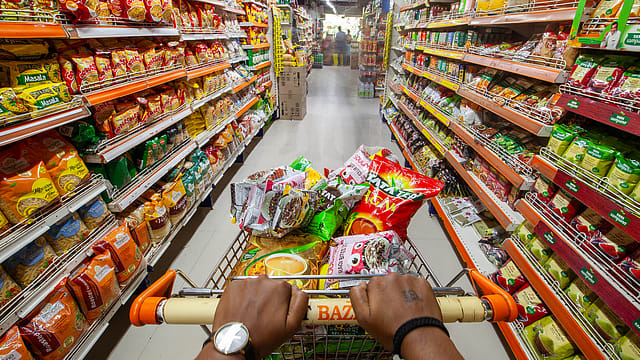
As concerns over El Niño and a potentially weaker monsoon gather pace, investors are increasingly questioning whether the rural consumption recovery that has underpinned India's FMCG sector over the past year can sustain its momentum.
The worry stems from the outsized role rural India plays in driving demand for many consumer goods companies. Stocks such as Colgate-Palmolive , Hindustan Unilever (HUL), Jyothy Labs , Marico , Britannia and Godrej Consumer derive roughly 30% to 45% of their revenue from rural markets. Lower rainfall could translate into weaker farm incomes, potentially denting spending in villages and small towns.
The concern comes as the India Meteorological Department (IMD) recently revised its monsoon forecast to 90% of the long-period average from an earlier estimate of 92%, signalling a below-normal monsoon.
"El Nino is definitely a big risk for the entire country for consumption," said Abneesh Roy, executive director at Nuvama. However, he cautioned against assuming an immediate impact. "Our view is clearly rural sentiments will start deteriorating from Q3 end."
Rural demand has been one of the strongest pillars supporting the consumption sector over the last three to four quarters, helping offset patchier urban demand trends. Yet the impact, if any, may not be uniform across companies.
A prolonged summer could benefit players with strong seasonal portfolios. Emami , for instance, could see stronger demand for brands such as Navratna and Dermicool. Dabur's beverages business could also gain from higher temperatures. However, both companies have substantial rural exposure.
Nearly 40% to 45% of Emami's revenue comes from rural markets, while more than 50% of Dabur's sales are linked to rural consumers. Dabur also derives about 15% of its revenue from juices, creating a balancing act between summer-driven demand and potential rural weakness. Similar dynamics could play out for Tata Consumer Products and ITC .
Karan Taurani, executive vice-president at Elara Securities, opined that current pricing triggered by the West Asia crisis could act as a buffer against any negative impact from El Niño and monsoon-related uncertainty over the next two to three quarters.
Roy also points to several support mechanisms already in place, including healthy reservoir levels, a 6% MSP increase and state government cash transfer schemes of ₹2,000-3,000 for women in several election-bound states.
"The thing we need to watch is at that point, how is the gross margin, EBITDA margin profile. Slightly that El Nino risk will get negated by the margin profile," he said.
Narendra Solanki, head of fundamental research at Anand Rathi Share and Stock Brokers, believes concerns remain premature.
"Although the onset of the monsoon has been delayed and forecasts indicate below-normal rainfall this year, it is still too early to accurately quantify the impact on FMCG stocks," he said. "We do not foresee any significant risk to growth in the FMCG segment." While a marginal slowdown cannot be ruled out, the overall growth trajectory is expected to remain positive, supported by underlying consumption trends, he added.
According to Solanki, consumer durables could face a greater challenge because of their " higher sensitivity to rural demand and discretionary spending patterns."
How the FMCG giants weighed in
While the extent of the impact is unpredictable at the moment, FMCG companies themselves are not yet sounding alarm bells. HUL CEO and managing director Priya Nair said during the earnings call rainfall forecasts must be viewed alongside other indicators.
"The reservoir levels in the country are at significantly above the normal levels of last year. So that sort of bodes well for the country as well," she said, adding that factors such as rainfall distribution, minimum support prices and rural wage income would also influence outcomes.
Nair also downplayed inflation-related concerns, noting that even if inflation were to rise, it would likely remain within the 4-5% range. "As a staples company, we believe that our products are relatively low elasticity on price in comparison with other categories," she said.
Niranjan Gupta, HUL's executive director and CFO, highlighted what he called three counterbalances to a weak monsoon. Reservoir levels are around 10% higher than normal, MSPs have risen by 5-6%, and government grain stocks remain elevated following two consecutive years of record production.
"Effectively speaking, there are wherewithal available for equalizing, neutralizing the rural income dent part of it," Gupta said. Unless rainfall falls below 85% of normal levels, HUL does not currently expect a meaningful impact on rural demand in the second half of the fiscal year, he added.
Other FMCG companies have opportunities in a hotter summer. At Dabur, a hotter-than-usual summer could provide a meaningful boost to seasonal categories. Mohit Malhotra, CEO of the $1.2 billion company said the company's beverages and glucose portfolios are well positioned to benefit from elevated temperatures.
"If El Nino is what is to go by, then I'll be a happy guy. We will see a double-digit growth in beverages and glucose," he said during the company's earnings call. With beverages contributing around 15% of Dabur's revenue, a strong summer could support growth. However, more than half of Dabur's business comes from rural India, making the company equally exposed to any slowdown in farm-led consumption.
Emami is seeing a similar trend. Promoter director Mohan Goenka said summer-centric brands such as Navratna and Dermicool have already been performing strongly. "Overall, we are very confident in the first half. The summer brands definitely growing at double digits, both Navratna and Dermicool," he added.
Yet even companies benefiting from the summer demand are not immune to rural weakness. Nearly 40-45% of Emami's revenue comes from rural markets, creating a mixed outlook if rainfall remains below normal.
Marico CEO Saugata Gupta also flagged El Niño as a factor to watch, particularly because inflation and rural demand remain closely linked. "Historically, inflation is FMCG consumption's biggest enemy, especially in the bottom of pyramid or in rural," Gupta said. A strong El Niño event, he added, could impact consumption in the latter half of the year and potentially spill over into the first quarter of the next fiscal year.