
Hiring by Indian IT services will definitely continue in AI economy: HCL COO Rahul Singh
ADVERTISEMENT
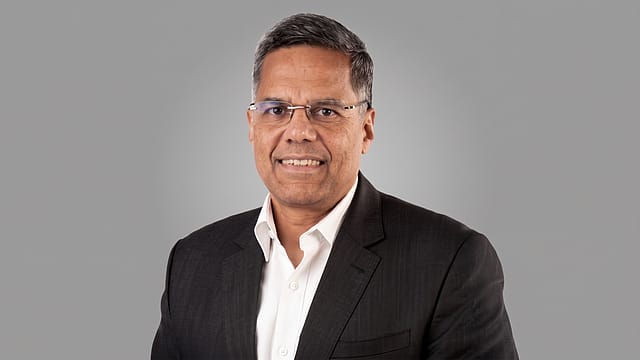
HCL Tech ’s Chief Operating Officer (COO) Rahul Singh on Thursday said that the Indian IT services industry will “definitely” continue to be one of the top employers in India. Speaking on the topic changing business models by 2030, at the “The AI Economy: From Disruption to value creation”, Singh said the clients and the industry will obviously still exist. “The way in which services are sold will change. There will be more products and outcome driven models, he added, speaking at the 13th annual SBI Banking & Economics Conclave.
Professor V. Kamakoti, director, IIT Madras, said the focus of hiring will be towards the AI auditor. “How do you audit an AI system for correctness, for responsibility, for accountability, safety? Today there is a big field of responsible AI that's going on. And I think there will be a good number of people that we need to hire, and I think already hiring has started in that direction,” he told the audience, virtually.
“Multiple industries now trying to adopt AI in a much more safeguarded, cautious manner. Today we see there is a lot of need for people who we may call as AI integrators,” Kamakoti said.
Professor Arya Kumar, dean of BITS Pilani said; “AI is transforming all aspects of business, including banking. A lot has already started happening in financial institutions and banking in the Western world, and a lot more is going to happen in the Indian banking system.”
“When it comes to value addition, I believe there will be value creation at all four levels. The greatest value addition could come from improving intelligence and productivity, for decision making. That, of course, has its own pros and cons, particularly in terms of the ethical and legal issues that AI raises. At the first two or three levels, we have already started seeing integration across multiple platforms. The third aspect of change is the ability to ask the right questions and obtain meaningful answers.”
“But the major change in terms of productivity and efficiency benefits will happen when we reach the fourth level—the stage where AI is able to take technology and the ideas behind it, where India needs to significantly further than where we are today,” Kumar said.
He added that if financial institutions spend around 2% of their revenue on technology, which in the Indian context could amount to ₹2–3 lakh crore over a three-year period, that would represent a very significant investment.
Kamakoti said that the growth of deep-tech startups is certainly being influenced by the presence of AI. A lot of decisions, including technology-oriented decisions, can be supported by some of the very good SMEs and AI tools, enabling companies to arrive at optimal decisions. “For example, in areas such as semiconductors and microfabrication, we are seeing increased use of AI, which can accelerate the process of designing and manufacturing a chip,” he said.
Nitin Bawankule, head of Enterprise at OpenAI, said they have “progressed significantly” as a company in the past two years. “If you look at 2024, we were largely at the testing stage—asking where AI could be used. Proofs of concept were being conducted across different parts of enterprises. But if I look at the last six to ten months, it has moved into production across different industries, including BFSI and banking,” Bawankule said.
“Whether it be processing a loan or processing an insurance claim, if the processing time was X hours, the ecosystem has seen improvements where X has effectively become half of X. That is the level of productivity improvement we are seeing very clearly in cycle times,” he told the audience.
“The second is quality. Fraud detection, for example, is one of the biggest cost factors affecting the bottom line for most institutions, including BFSI. We have seen significant improvements in the ability to detect fraud,” OpenAI’s Nitin added.
“Technology has moved from a stage where it was simply being tested to a stage where clear ROI is now being seen—either impacting the top line, because you can process more loans or more insurance documents, or impacting the bottom line by stopping or detecting fraud earlier,” he said.
Swaminathan Aiyer, Microsoft’s country head of data and AI said that the banking sector and financial sector has seen lot of active adoption of AI in production today.
Aiyer pointed to SME lending, which involves a lot of documents—financial statements, external data and numerous other documents. “Processing all of this and producing a credit-assessment memo takes a significant amount of time. You could have 180–200 pages of documents that need to be condensed into a much smaller abstract of what the case is actually about. We are seeing significant reductions in cycle time there, which helps make underwriting faster,” Aiyer said.
But he pointed out that AI adoption is cautious. Everyone is cautious about what they are looking at. Data shows that India has one of the highest percentages of people who pay attention to the quality of AI outputs. They look at the quality of the AI before relying on it.”
“So people are looking at AI outputs with caution and maintaining a quality-control check before adoption. It is essentially a triangle of caution, guardrails and then adoption,” he said.