
How Shoppers’ Stop, Nykaa, are growing India’s $23 billion beauty ecosystem through their B2B arm
ADVERTISEMENT
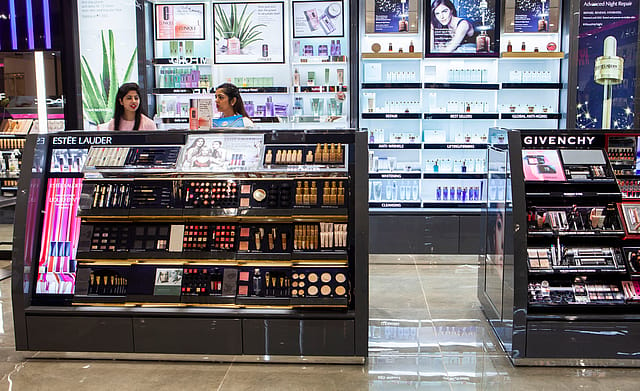
If you are one of those who loves to indulge in luxury skincare, fragrances or make-up, high-end shopping addresses in Mumbai or NCR could spoil you with choices. Apart from multi-brand beauty retailers such as Sephora, Nykaa Luxe and Tira, you could also shop at the standalone stores of Dior, Chanel, Armani, Estee Lauder, NARS, Clinique, Shiseido or Charlotte Tilbury. While some of these brands are being managed by the India subsidiaries of their global parents, the India journey of most of them are being driven by third-party local partners.
While Nykaa is the preferred ecommerce partner of Chanel and also has shop-in-shops at the Nykaa Luxe stores, the likes of Armani, NARS and Clarins are managed by Global SS Beauty Brands (GSSBB), the distribution arm of Shoppers’ Stop. Nykaa, which already has exclusive distribution rights of Charlotte Tilbury, recently opened the first flagship store of the brand in NCR. It also manages the brand’s online web site. While Nykaa and Purplle led the way of distributing global beauty and skincare brands in India, GSSBB, which was already the preferred retail partner of several international prestige brands such as Clarins, Estee Lauder and Shiseido through its retail store, Shoppers’ Stop entered into the distribution business as recently as 2022.
GSSBB’s focus has been on the prestige and luxury segment. Apart from Clarins and Armani, the company distributes around 55 to 60 brands such as Prada, Valentino and Azzaro. It has recently signed up with INTERPARFUMS SA to develop and build its portfolio of fragrances of brands such as Coach, Montblanc and Lacoste amongst others. It has also entered into an agreement with Kering Brands. Biju Kassim, MD & CEO, GSSBB, is eyeing a GMV (gross merchandise value) revenue of Rs 1,000 crore this fiscal. He is hoping to touch Rs 3,500 crore GMV, five years from now.
So why do global brands prefer Indian partners? The reason is straightforward – the diversity of the Indian market makes it imperative to have a local partner which understands the trade as well as consumers. A number of global brands entered India in the early 2000s and exited soon after because of India’s complex ecosystem. But with Europe, the US and also China stagnating, and geopolitical uncertainties in countries such as Russia, global brands see India as a huge opportunity for growth.
“When we sign brands, it is end-to-end. It's exclusive distribution for India (which in some cases includes running their stores). We want to be their eyes and ears in the country. Depending on whatever is their strategy, we are happy to work with them,” says Kassim.
“From being a purely online or omni-channel partner to brands, to then adding on a distribution layer for them across third party general trade and modern trade stores to now managing and operating freestanding stores as well as their website in India, we have become an end-to-end, integrated full services platform for a lot of our brands,” explains Anchit Nayar, CEO (beauty), Nykaa.
Nayar believes that going the extra mile for his strategic brand partners is a great way of building the beauty ecosystem in India. “We realised that we either wait for somebody else to grow the beauty market in India or, we grow it ourselves by bringing the best global brands into the country. A beauty ecosystem cannot consist of one multi-brand retail platform and 50-60 brand partners. It needs freestanding stores. It needs retail distribution. It needs a general trade presence. By investing in distribution, we are ultimately the biggest beneficiary. Because, as market leader, we will take a lion's share of that of the pie. So, the bigger the pie, the better for us,” Nayar adds.
With Shoppers Stop being a preferred retailer for most prestige skincare and make-up brands from early 2000s, most of them, claims, Kassim, were happy to give GSSBB a chance to be their distribution face. Coincidentally, many of those brands at that point were unhappy with their existing distribution partners and were looking at a change. Kassim remembers his conversation with Loreal. “When we approached them with a proposal to be a distribution partner, they told us to build our case and then they would evaluate.” GSSB today distributes Prada, Armani and Azzaro from the L'Oréal portfolio.
Handholding Global Brands
Ask the CEO of any global beauty brand how different is India from other markets, the most obvious is a comparison with China. Most say that India is at a similar growth phase where China was over a decade ago. However, the diversity of the country as well as paucity of quality retail space also nudges them to be careful about expansion.
Nykaa’s Nayar says that their conversation with Chanel happened over a few years. “Chanel has managed to maintain a certain appeal and a certain brand equity over decades. They are so deliberate in the choices that they make. There are a lot of things we did behind the scenes to prepare our platform from a design, service and from a product perspective. We upgraded the quality of our stores, the quality of our warehouses. Only when it was as per their specifications, then they decided to come. They were not impatient, they took their time, but when they came, they came in a very meaningful way.”
GSSBB’s Kassim says every brand has its own matrix for expansion. While the prestige skincare and make-up brands are selective and want to be present only in the top 50-60 stores, a prestige fragrance brand is slightly more flexible and doesn’t mind being available in the top 300-400 stores. But the moment it comes to setting up a standalone presence, the philosophy is ‘less is more’. “Store operations are not easy in India,” says Kassim. “You only have five or seven high-end malls in the country. Everybody wants to be only in those top malls, and it is not easy to get space there,” he explains.
GSSBB runs threes stores of NARS, four stores of Armani and one Prada store. While quality retail space continues to be a challenge, every prestige and luxury brand has certain guidelines which makes it further limiting. Prada, for instance, has a diktat that Prada Beauty can only be in those malls which have Chanel and Dior stores. Slightly more flexible is Armani, which is willing to retail Giorgio Armani and Emporio Armani in premium malls while Armani Beauty is only retailed out of luxury spaces. Armani’s willingness to penetrate deeper, according to Kassim, has helped their fragrances to be the most popular. “We support all these brands as per their guidelines, but we also constantly tell them not to see India through the lens of what they have seen in China or any other upcoming market. India has its own lens,” says Kassim.
Local Lens
If luxury and prestige beauty and skincare brands are picky about retail space, what happens to tier 2-3 India which is seeing demand for high-end skincare products and fragrances? “We are making these brands available in modern trade and through online in tier 2-3 India, because that’s where retail is moving to. Standalones are still a while away,” says Kassim.
But most of these brands are innovating for the local market. Brands such as Estee Lauder and Bobbi Brown have products such as kajal. NARS has 34 shades of foundations which are meant for different Indian skin tones. Kassim agrees that global brands are no longer copy-pasting what they do in mature markets. “Ten years back, if you would go and tell them I need something specific to India, they would say, we hear you, we'll come back, but they never came back. Today, global brands are willing to do differently for India.”
India’s $23 billion beauty market is certainly on a high with most international brands finding it impossible to ignore.