
India caps refinery margins after windfall export tax to cushion fuel losses
ADVERTISEMENT
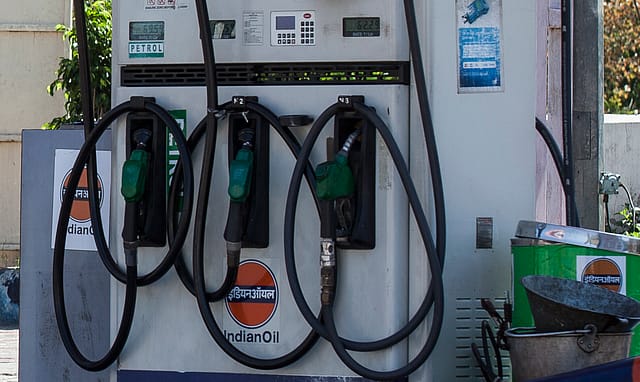
After imposing a windfall tax on fuel exports, India has moved to cap refinery margins in a bid to offset losses on domestic fuel sales, sources said.
The war in West Asia has had two prolonged impacts - spike in international oil prices that has led to record losses on petrol and diesel sales as retail rates have not changed in tandem. Secondly, it has given bumper margins to refineries, who irrespective of retail price freeze, price their products at imported cost.
The government last month imposed a Special Additional Excise Duty (SAED) on exports of diesel and aviation turbine fuel (ATF), as part of efforts to curb windfall gains by refiners and boost domestic fuel availability amid tight global markets.
Alongside, refining margins have been capped at $15 per barrel, with any earnings above that threshold treated as a discount on fuel sold to state-run marketing companies, effectively transferring excess gains to offset retail losses, sources said.
The oil marketing companies (OMCs) on March 26 fixed rates for petroleum products that are at a discount of up to ₹60 per litre to their imported cost. OMCs have decided to fix a discount on the refinery transfer price (RTP) - the internal price at which refineries sell fuel to marketing arms - to effectively pay refineries less than the import-parity cost of the fuels like petrol and diesel.
For the second half of March, a discount of ₹22,342 per kilolitre (₹22.34 per litre) was fixed on diesel to bring down the RTP of ₹85,349 per kl to ₹63,007 per kl.
For the first fortnight of April, the discount on diesel has been fixed at ₹60,239 per kl to lower RTP from ₹146,243 per kl to ₹86,004 per kl. On ATF, the RTP has been slashed to ₹76,923 per kl from ₹127,486 per kl after considering a discount of ₹50,564 per kl.
The RTP for kerosene after a discount of ₹46,311 per kl has been fixed at ₹77,534 per kl from ₹123,845 per kl, they said.
Traditionally, petrol and diesel in India have been priced on an import parity basis, meaning the fuels are valued as if they were imported, even though it is primarily crude oil that is brought into the country and refined locally. Refinery transfers of these products to oil marketing companies were based on import parity price (IPP) until June 2006, after which the government adopted trade parity pricing (TPP) - a benchmark that assigns 80% weight to import parity price and 20 per cent to export parity price.
This pricing protected refinery margins, particularly of standalone refiners who didn't have the cushion of marketing margins on petrol and diesel, whose pricing was deregulated by the government in 2010 and 2014, respectively.
Despite being freed, petrol and diesel prices have not exactly moved in line with cost and have been on a freeze since April 2022, with OMCs absorbing losses when crude oil prices rise and making bumper profits when rates fell.
The discount on RTP comes as under-recoveries or losses on petrol and diesel have widened, sources said adding unlike cooking gas LPG, the government does not compensate OMCs for losses on auto fuels.
Ministry of Petroleum and Natural Gas in a post on X on April 1 had stated that, "With global petroleum prices up by up to 100% in the last one month, PSU OMCs are incurring under-recoveries of ₹24.40 per litre on petrol and ₹104.99 per litre on diesel at retail selling price (RSP) level as on 01.04.2026."
OMCs feel the freezing RTP would effectively distribute the financial burden across the refining ecosystem, but analysts say it could disproportionately affect independent refiners with limited downstream marketing exposure.
Also, it will distort the commitment of market price to standalone and private refiners, sources added.