
India poised to emerge stronger amid geopolitical shifts, says Ashwini Vaishnaw at CII Summit
ADVERTISEMENT
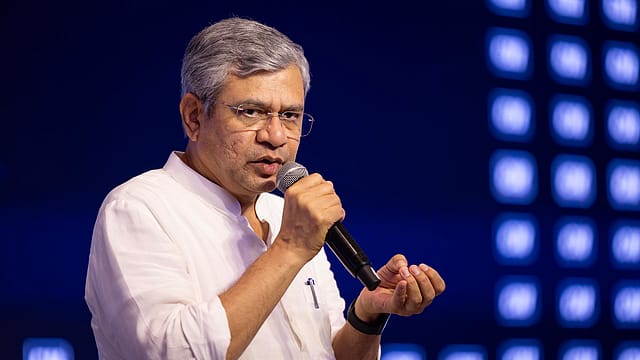
Union Minister Ashwini Vaishnaw on Monday urged investors to continue backing India during the ongoing geopolitical transition, asserting that the country is well-positioned to emerge stronger and offer significant long-term growth opportunities.
Speaking as the keynote speaker at the CII Annual Business Summit 2026, Vaishnaw said India is standing at a crucial global technology “inflection point” and must move swiftly to capitalise on emerging opportunities.
Vaishnaw said the world was going through “very turbulent times”, even though countries such as India were not directly responsible for the geopolitical tensions reshaping global markets.
“Truce still appears far away and difficult at this stage. That is why it is important for all of us, as citizens, to play our part in this effort. I urge everyone to take cognisance of the Prime Minister’s call to the nation and do whatever best they can within their homes and businesses,” the minister said.
His remarks came a day after Prime Minister Narendra Modi urged citizens to adopt fuel-saving and austerity measures amid concerns that the prolonged conflict in West Asia could disrupt global energy supplies, push up crude oil prices, and put pressure on India’s foreign exchange reserves.
The minister also said India could witness its first micro-LED production rollout within the next 22 months, highlighting the country’s growing ambitions in advanced manufacturing and next-generation technologies.
Highlighting the government’s digital infrastructure push, Vaishnaw said data centres in India would continue to enjoy a no-tax policy till 2047. He also revealed that the country is building three major subsea cable networks connecting India to Australia, the US, the Middle East and Europe, aimed at strengthening digital connectivity and data infrastructure.
He further called upon NASSCOM and industry bodies to accelerate skilling initiatives in artificial intelligence and emerging technologies to prepare India’s workforce for the future economy.
Highlighting India’s infrastructure transformation, Vaishnaw said the upcoming high-speed rail corridors could drastically reduce travel time across western India. He noted that the Mumbai-Ahmedabad bullet train journey would take just 1 hour and 7 minutes once operational.
According to the minister, regions such as Vapi, Thane, and Navi Mumbai are expected to evolve into a large integrated economic zone due to enhanced connectivity. He said that proposed rail corridors could cut Mumbai-Pune travel time to 48 minutes and Pune-Hyderabad travel time to 1 hour and 55 minutes.
“Nobody will fly, these sectors will be out for airlines,” Vaishnaw said in a lighter vein while cautioning investors looking at the aviation sector.
During the summit, the minister also congratulated the recipients of the Lifetime Achievement Awards, praising them for building globally competitive organisations and inspiring young entrepreneurs through innovation, quality and value creation while contributing to society.
"I extend my heartiest congratulations to both the Lifetime Achievement Award winners. Both of you truly deserve this honour, and I consider it a privilege to be associated with conferring this award upon you. Both of you have shown the world, our country, and especially our young entrepreneurs, many of whom are present here, that we can build organisations and enterprises that compete globally and outperform others by producing world-class products in terms of quality as well as cost, technology as well as innovation, and by creating value while also giving back to society,” he added.