
India should re-examine its WTO strategy to serve its digital trade interests, says ICRIER policy brief
ADVERTISEMENT
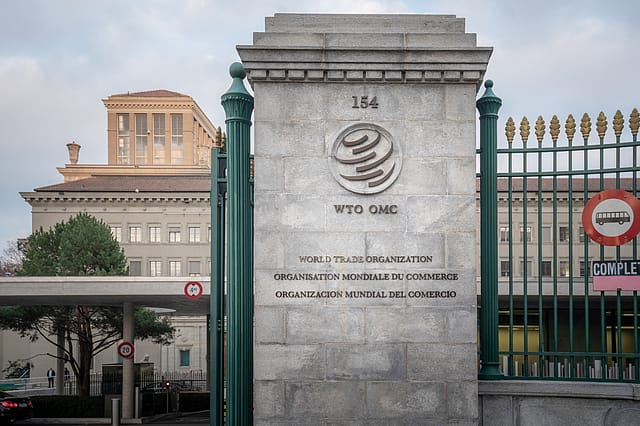
India should look beyond developing country coalitions and develop a proactive digital trade policy and align domestic reforms with its external negotiating strategy, states researchers associated with New Delhi based think tank Indian Council for Research on International Economic Relations (ICRIER).
In a policy brief that looks at the outcomes of the recently concluded Ministerial Conference of the World Trade Organisation (WTO), ICRIER researchers said that in the context of digital trade, India’s profile and interests differ markedly from those of a typical developing country. Stating that India’s role as a global supplier of ICT services has expanded significantly, they pointed out that India now accounts for roughly 35% of the global IT services market, ranks as the fourth-largest exporter of digitally delivered services, and recorded $257 billion in such exports in 2023—surpassing the combined total of all other low- and middle-income countries.
“Given this position, India has a clear strategic interest in an open digital trade environment and would benefit from adopting a more forward-leaning posture in negotiations, including positioning itself as a demandeur for the continuation of the e-commerce moratorium”, they say.
The policy brief titled “A Difficult Ministerial: Negotiations, Outcomes, and Strategic Implications from WTO MC14” also notes that India has made significant progress by pursuing ambitious Free Trade Agreements (FTAs) with partners such as the EU, the United Kingdom, EFTA, and the United States. “While this marks an important and forward-looking shift, India should also carefully consider whether bilateral agreements alone can substitute for active participation in a strong and modern multilateral trading system capable of addressing 21st-century challenges. For an economy that is expanding rapidly and undergoing substantial modernization, a robust multilateral framework remains essential. Its insistence on pure multilateralism, rather than adopting a more pragmatic approach that includes plurilateral engagement, increasingly appears to prioritize an idealized vision over achievable and beneficial outcomes”, it said.
According to ICRIER policy brief, India should adopt a dual-track strategy, engaging selectively in plurilateral initiatives while defending core interests, including through constructive engagement in developing ‘guardrails and legal safeguards’ with a view to preserving the foundational principles of the multilateral trading system. “By doing so, India can move from a reactive to a proactive role within the WTO”, the researchers say.