
Indian pharma to grow 9-11% in 2026; to focus on quality, sustainability and market diversification
ADVERTISEMENT
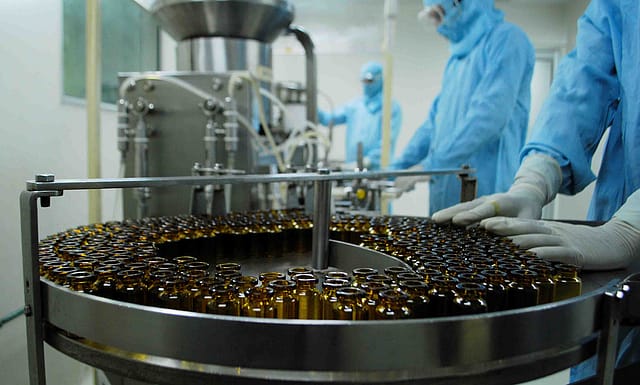
India's pharmaceutical industry, valued at nearly $60 billion and the world's third-largest by volume and a leading global supplier of generic drugs and vaccines, plans to focus on quality, sustainability, and market diversification as key export priorities in 2026. Experts say the industry is likely to grow 9-11% in 2006.
In FY25, India's pharmaceutical exports reached a record high, surpassing $30 billion (approximately $30.47 billion), a growth of around 9.4% over FY24.
The Indian pharmaceutical companies are expected to grow by 9-11% in FY2026, supported by healthy growth of 8-10% in the domestic market and 15-17% in the European markets, estimates rating agency ICRA. ''Pricing pressure on certain key drugs, such as Lenalidomide, will result in a moderation in the growth in the US market to 4-6%. The operating profit margin (OPM) for ICRA’s sample set is expected to remain stable at 24-25% in FY2026, supported by healthy performance in key markets, in addition to stable raw material costs,” says Mythri Macherla, Vice President and Sector Head, Corporate Ratings, ICRA Limited.
Though India’s pharmaceutical exports have crossed USD 30 billion, the global environment, particularly in the US generics market, has changed structurally. ''Pricing pressure, higher compliance costs and regulatory scrutiny have altered returns, and growth is no longer guaranteed by scale alone. Companies are being pushed to make sharper choices about where to compete and how to build sustainable portfolios,'' says Saloni Wagh, Managing Director, Supriya Lifescience.
Industry leaders who attended the recent 21st Annual General Meeting (AGM) of the Pharmaceuticals Export Promotion Council of India (Pharmexcil), emphasised that the sector’s strategic pivot should move from volume-led growth to value-driven, innovation-oriented, and sustainability-anchored manufacturing. They highlighted the growing relevance of green and sustainable chemistry, with particular emphasis on flow chemistry and continuous manufacturing as enablers of consistent quality, regulatory compliance, and long-term competitiveness.
Having earned global recognition as one of the largest producers of medicines by volume, the sector is now navigating a structural transition towards higher value and more complex products. The shift towards complex generics, speciality APIs and advanced therapeutic forms call for complex chemical processes, higher demands for process control, reproducibility, and quality assurance, say industry leaders.
''As India seeks to sustain growth while transitioning toward more differentiated and complex offerings, conventional manufacturing approaches are increasingly being tested not only by scientific realities but also by regulatory expectations,'' says Srinivas Oruganti, Director, Dr. Reddy’s Institute of Life Sciences (DRILS). Wider awareness, targeted technical guidance, and phased adoption are essential for bulk drug manufacturers to transition effectively toward greener and more efficient processes, says Ch.Rameswar Rao, National President, Bulk Drugs Manufacturers Association of India (BDMAI). Viranchi Shah, past National Director of Indian Drug Manufacturers’ Association (IDMA) says that the focus on targeted therapies and patient-centric formulations intensifies the need for robust development and manufacturing platforms supporting precision and stability.
“As Indian pharma moves up the value chain, our priority is to ensure exporters are equipped to meet rising global expectations on quality, complexity and sustainability. Pharmexcil will continue to play a catalytic role in enabling this transition through policy alignment, capability building and global engagement,” says Namit Joshi, Chairman of Pharmexcil.