
Iran war impact: Middle East crisis could hit low-value, high-volume exports, including rice and fresh produce, to the GCC region
ADVERTISEMENT
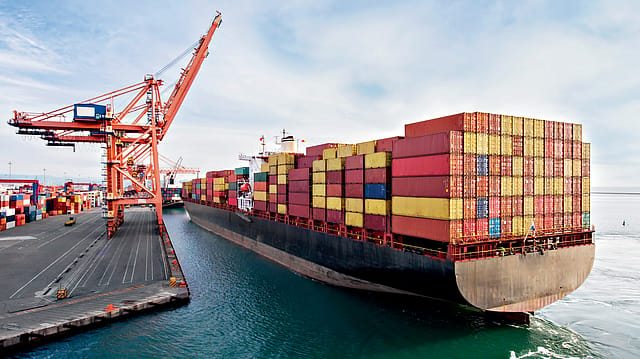
India’s low value, high volume exports to the Middle East will suffer the most if the current Iran and US-Israel conflict continue to disrupt freight movement across the region. Overall shipments to other destinations including to Europe and North America could become expensive, weaning off the competitive edge that India had in many other products, experts say.
“Our exports to the Middle East are substantial. It will be hit badly if the conflict prolongs. Logistically it will be difficult to reach these countries”, says Ajay Sahai, Director General & CEO, Federation of Indian Export Organisations (FIEO).
$1.5-bn basmati exports to Gulf at risk
India’s non-oil and non-gems and jewellery export to the Middle East is substantial. The country had exported over $1.5 billion worth of basmati rice and $380 million worth of non-basmati rice during April-January 2025-26 to the six Gulf Cooperation Council (GCC) countries that are caught up in the crossfire between Iran and the US-Israel combine.
The export of buffalo meat alone was worth $841 million to the GCC countries during the same time. Spices contributed $567 million, fresh fruits $233 million, fresh vegetables $232 million, marine products $211 million and dairy products $199 million as export earnings from the GCC region. Ceramics and allied product exports, mostly low value high volume, accounted for $363 million during April-January period of the current financial year.
According to Sahai, the biggest problem as of now is on the export of perishables. “First of all, perishables have a shelf life, secondly with Ramzan going on, there is much demand for perishable items in the Middle East. And as of now, even air freight is not possible, the air capacity is down by around 18% in the last one week. So even if the flight resumes, the air freight is expected to go exponentially”, he says. “The biggest challenge will be for low value, high volume cargo. For them freight will be very important. So, how ceramic industry in particular or granite, or tiles (they have very high weight), how they will be absorbing the freight, we will have to see”.
While the ongoing conflict is causing direct disruption in movement of goods to the Middle East, its disruption in most convenient sea route that is causing delay and adding cost to export to Europe and North America, as India exports will have to be routed through the longer route, the Cape of Good Hope, resulting in additional sailing of around 10-15 days with added cost.
Shipping delays hit global trade flows
The increase in insurance costs for shipping lines are also likely to get reflected in higher freight costs as the shipping companies will like to recover it from the customer. A related issue will be that of detention and demurrage. If containers are parked somewhere by the shipping lines, whey will like to recover that cost too.
The Ministry of Commerce & Industry has already held a consultation with all stakeholder ministries, key logistics and trade facilitation partners to review the emerging geo-political situation and its potential impact on India’s export-import (EXIM) cargo flows, including the export ecosystem.
While the ministry will look into all the challenges faced by the trade, liquidity concerns will remain central. “If the goods are not reaching the customer, the customer will not be making the payment. However, exporters have already paid for the raw materials, and the banks have already given loan with a due date”, Sahai explains. Missing due dates, bank penalties, can all aggravate the exporters’ problems.
If situation warrants, the Centre may have to explore ways to see RBI and banks provide temporary relief to the export sector to overcome the liquidity crisis.