
India’s renewable energy push to unlock $10-15 billion land investments by 2030: Colliers
ADVERTISEMENT
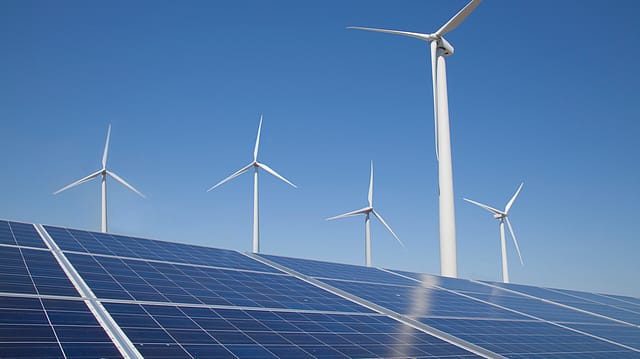
India’s renewable energy sector is set for rapid expansion over the next few years, driven by strong policy support, rising investments and the country’s long-term net-zero ambitions. According to a latest report by Colliers India, the scale-up in solar and wind energy projects is expected to create major opportunities for the real estate sector, particularly in land aggregation, industrial and warehousing spaces, and allied infrastructure services.
India’s installed renewable energy capacity stood at 251 GW in 2025, with solar and wind energy continuing to dominate the mix. Non-fossil fuel sources, including renewables and nuclear energy, now account for nearly 51% of the country’s installed power capacity. With around 146 GW of renewable projects currently under various stages of construction, India remains on track to achieve its target of 500 GW non-fossil fuel-based capacity by 2030.
India could add 270-300 GW of solar, wind energy capacity
Colliers estimates that India could add another 270-300 GW of solar and wind energy capacity by the end of the decade. This expansion is expected to attract investments worth nearly $110-120 billion over the coming years, primarily in solar and wind projects.
According to the report titled The Green Shift: Renewable Prioritization Reshaping Indian Real Estate, the upcoming renewable energy projects could generate a $10-15 billion opportunity in land aggregation and acquisition alone by 2030. Land-related costs typically account for around 10-12% of total project expenses in solar and wind developments.
The report highlighted that nearly 7 lakh acres of land will be required across India to support the projected 270-300 GW of additional renewable energy capacity. This is expected to significantly increase demand for land parcels across key renewable energy corridors and emerging investment destinations.
“India’s renewable energy capacity stands at 251 GW, and with another 270-300 GW of expected solar and wind energy additions by 2030, the sector is set to enter its next phase of accelerated growth,” said Badal Yagnik. “By 2030, solar and wind projects alone could require nearly 7 lakh acres of land, unlocking a $10-15 billion opportunity in land aggregation and acquisition,” he added.
Renewable energy boom is expected to boost industrial, warehousing spaces demand
The renewable energy boom is also expected to boost demand for industrial and warehousing spaces, particularly from Original Equipment Manufacturers (OEMs). Renewable energy OEMs leased around 6.1 million sq. ft of Grade A industrial and warehousing space across the top eight Indian cities between 2021 and 2025. Their share in overall industrial and warehousing demand rose from 3% in 2021 to 8% in 2025.
“Annual leasing by renewable energy OEMs has surged nearly fourfold over the last five years to around 3 million sq. ft in 2025,” said Vimal Nadar. Chennai and Pune emerged as the leading destinations, accounting for nearly two-thirds of the total space uptake since 2021, he added.
By 2030, annual Grade A industrial and warehousing demand from renewable energy OEMs is expected to rise to 4-7 million sq. ft, contributing 10-15% of the sector’s overall demand. The growth is expected to be driven by the expansion of domestic manufacturing of solar PV modules, wind turbines, battery storage systems, semiconductors and other renewable energy components.
Beyond industrial and warehousing assets, the report noted that rising renewable energy investments are likely to spur demand for affordable housing, rental accommodation, office spaces, training centres and industrial townships, particularly across Tier-II and Tier-III cities emerging as renewable energy hubs.