
Inside Toyota’s slow-burn resurgence and the lessons for global carmakers in India
ADVERTISEMENT
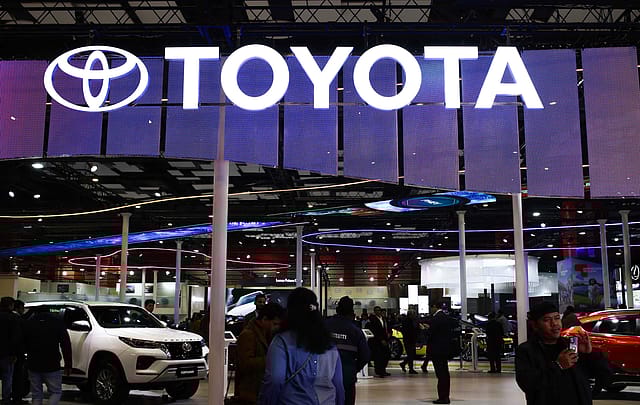
It had been a long time coming.
But finally, Japanese automaker Toyota seems to be having its moment in India. A little over two decades since it set foot in India, first with the legendary Qualis and later with the Innova, Toyota has finally established itself as a force to reckon with in the country.
With the likes of Honda, Kia and Renault making way in the pecking order, it’s the Japanese automaker that has come to cement its strong position as the country’s fifth largest automaker.
Fifth may not sound like much. But in India’s ultra-competitive automobile landscape, where the top five automakers account for as much as 88 percent of sales, a nearly 8 percent market share certainly looks like a dream. In fact, many European automakers are chasing a 2 percent market share in India, despite being in the Indian market for over two decades.
Even Toyota’s rivals, Honda and Nissan, have been struggling and attempting to reboot their strategies for the Indian market, one of the fastest-growing in the world. “Toyota’s rise to India’s fifth-largest carmaker is strategically significant because it shows that scale in India is no longer only about entry-level cars,” Harshvardhan Sharma, Group Head, Automotive Tech & Innovation Group at Nomura, says. “Toyota has built momentum through SUVs, MPVs, hybrids and alliance-led products, while preserving its core equity around reliability, durability and resale value.”
Maruti Suzuki leads India’s automobile pecking order, with Mahindra, Tata and Hyundai closely following. In fact, the coveted second spot has seen much seesaw between the three, thanks to Mahindra’s much-celebrated and fabled turnaround story over the past few years.
Toyota, meanwhile, has been scripting its own turnaround for a few years now, without much fanfare. In FY 26, the company sold as many as 366,896 vehicles, up almost 50 percent from 2024. In fact, in the two-year period between FY 24 and FY 26, Toyota is the fastest-growing carmaker in the top five, with Mahindra following at 43 percent. While Hyundai has seen degrowth, Tata Motors, the country’s largest automaker, and Maruti Suzuki have recorded only 11 percent and 3.5 percent growth, respectively, during this period.
The fast-paced growth is also why earlier this month, Toyota announced plans to invest in a new plant that will manufacture 100,000 vehicles and is expected to be operational by 2029. “Toyota’s success comes from strong product-market fit,” adds Sharma. “It has focused on segments where Indian consumers are willing to pay a premium: SUVs, MPVs, hybrids and family-oriented vehicles. The brand also benefits from a very strong ownership proposition around fuel economy, low lifecycle anxiety and resale confidence.”
“The introduction of new products and customer-centric initiatives during the year further helped position Toyota as a dynamic, technology-driven and youth-oriented brand,” Toyota said in a statement in April. “This momentum reflects the continued trust in Toyota’s quality, reliability and overall ownership experience. In a rapidly evolving market, such consistency underscores the strength of our fundamentals and positions us well for long-term sustainable growth.”
A three-decade-long wait
Toyota set foot in India, in partnership with the Kirloskar Group in 1997.
In 2000, Toyota launched the Qualis, a multi-utility vehicle, as its first product in India. India had only a few years before that opened the country’s automobile sector to foreign carmakers, and the likes of Honda, General Motors and Ford had already flocked to set up business in the country.
By 2003, the company had sold 100,000 units in the country and soon began selling the Toyota Corolla, which remains one of the world’s best-selling vehicles. By 2005, when the company had put 200,000 vehicles on the road, it introduced the Toyota Innova, which has come to redefine the company’s operations in India. While the Innova did find a preference among fleet taxi operators for its value proposition, private buyers, too, were flocking to buy the multi-utility vehicle that had come to replace the Qualis. In 2009, the company also launched the SUV, Fortuner.
That focus on MPVs and SUV's meant Toyota had largely stayed away from the country’s then-fast-growing small-car market and sedan segment. While the company did dabble in the small-car market and the sedan segment with the Etios Liva, Etios, and the Corolla, the last few years have seen a reboot of its product offerings in the country, thanks in part to the partnership it enjoys with Maruti Suzuki, and a steadfast focus on MPV's and SUV's.
In 2019, Toyota and Suzuki announced a long-term partnership to collaborate in new fields, including autonomous driving. That meant, for the Indian market, the company could now look at cross-badging products. Today, after struggling with a limited portfolio for many decades, Toyota offers a diverse portfolio ranging from the small hatchbacks Glanza and Urban Cruiser Taisor to the hybrid mid-size SUV Hyryder and the large MPV Hycross, as well as the Innova Crysta and SUVs such as Fortuner and Hilux.
“Toyota gained faster access to high-volume segments and local cost efficiencies, while Maruti Suzuki benefited from Toyota’s hybrid technology and premium engineering credibility,” adds Sharma. “It is an alliance where the capabilities are genuinely complementary.”
With a diverse product offering, the company also ensured that it offered an array of powertrain options such as petrol, CNG, diesel, and hybrids across models; Toyota is one of only a handful of automakers that offer such a diverse portfolio. Glanza and Urban Cruiser models are offered in petrol and CNG, while the Hyryder and Hycross are offered in petrol and hybrid. Innova Crysta and Fortuner are available with diesel engines, while the Camry is available as a hybrid. This year, the company also launched its first electric vehicle offering in India today, the Urban Cruiser Ebella, marking the automaker's entry into India's electric vehicle market.
That’s a lesson for many of its rivals, and even compatriots from Europe who are struggling to make a mark here. In fact, barring Maruti Suzuki, the top four carmakers in the country offer multiple powertrain options, including diesel, while the likes of Honda, Skoda, and Nissan have moved away from diesel, focusing largely on petrol. “India needs a dedicated India playbook,” Sharma adds. “Global brand strength alone is not enough. Carmakers need the right body styles, localized cost structures, relevant powertrains, strong aftersales confidence, and a clear price-value equation.”
With India's car market now entering a phase where the pecking order below Maruti Suzuki may remain fluid, the likes of Toyota, which can offer relevant SUVs, hybrid or EV options, backed by strong trust and disciplined pricing, might even have a shot at challenging Tata, Mahindra and Hyundai in the pecking order. After three decades in India, Toyota, seems ready for that fight.