
Farewell 2025: Legacy consumer leaders leave behind a culture of people centricity and long-term value creation
ADVERTISEMENT
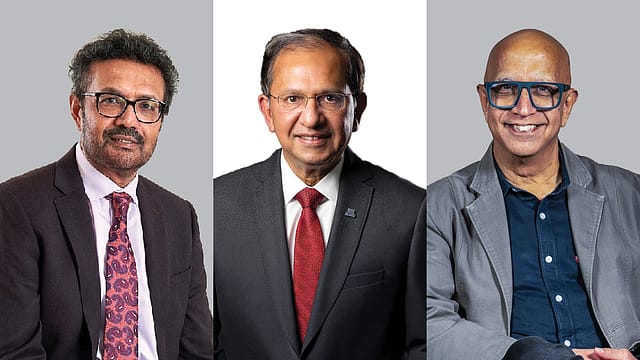
The year 2025 saw three stalwarts of consumer products goods companies hang their boots – Suresh Narayanan (Nestle India), Varun Berry (Britannia Industries) and C.K. Venkataraman (Titan Company). It also saw the exit of Rohit Jawa as MD of Hindustan Unilever.
Having written extensively written on CPG companies for the greater part of my career, I had an opportunity to interact with all these leaders quite frequently. If I were to list out three-four qualities that stood out, it would be – their ability to emerge stronger out of a crisis, convert highly commoditised businesses into strong profit centres, focus on long-term value creation and people centricity.
Crisis Managers
Former Nestle MD, Suresh Narayanan, compared himself with an albatross who always attracts trouble. The fact that he saved Nestle India from an existential crisis in 2015 (Maggi Noodles controversy, when the largest selling brand of the Nestle India portfolio was accused of containing lead content beyond permissible levels) is well-known, and was by far the toughest in his career, Narayanan had also battled the Arab Spring in 2011 as head of Nestle Egypt.
When he was asked to take over Egypt in 2010, he was told it was the most predictable market - that tides of change would never hit its shores, the wind would continue to blow in the same direction, the Nile would never change its course and most importantly, the dictator, Hossni Mubarak could never be challenged. The opposite happened. In January 2011, the Arab Spring broke out, Mubarak had to step down and there was chaos.
“Suddenly the internet got cut, tanks were out on the street and there was violence. I was an Indian leader who didn’t speak a word of Arabic and that was a challenge. While most companies evacuated, we chose to stay. That played off positively because the workers were grateful that the leadership never left when crisis happened,” Narayanan had shared in an interview with Fortune India. Eventually, Nestle invested more in the country and the business grew by 25% every year-on-year for the next five years.
Back home, a few years later, the Maggi crisis had crashed Nestle India’s revenue in 2015 to Rs 8,175 crore from Rs 9,855 crore in 2014, while net profit dipped by 53%. The morale of the employees and the trade was at an all-time low as the century-old business stared at closure. Nestle did the biggest reverse logistics in the history of consumer goods in India. It took back 39,000 tonnes of Maggi Noodles. Narayanan successfully managed to steer Maggi back to safe waters. Every respected food laboratory in the country gave it a clean chit, after which the company delivered a robust growth of 11%-12% for eight consecutive years.
When Varun Berry took over the rein of Britannia Industries in 2013, the mandate was to put the company on growth trajectory. Though the biscuit major was doing the right things in terms of its product, growth was evasive. In the years that followed, Berry ensured that the company’s profits grew over 70% till 2020. However, Berry’s biggest crisis moment was not in Britannia, but in PepsiCo.
He was just a few years into the company, when his mentor and the then country head of Pepsi India, P.M. Sinha, asked him to manage the Gujarat market. The role was far from envious. Gujarat was a Coca-Cola stronghold and Pepsi had just 2%-3% market share. To make matters worse Pepsi had staged a coup by buying out the Coke bottler who ruled the roost there. Coke went to the court and got a ruling in its favour and the bottler was ordered not to use any Coke asset for the next three years. “We had paid a lot of money to get them, but we couldn’t use the bottler,” remembers Berry.
“I was asked to go and do whatever I could. I reached Gujarat, we had a COBO (company-owned bottling operation) on paper, we had a plant, but no people.” Prior to the coup against Coke, PepsiCo had sold its plant at Naroda in Gujarat to regional beverage brand, Sosyo. “I went back to Sosyo and told them I want to buy that plant back. After that all we did was roll up our sleeves and work. There were so many nights we didn’t sleep,” remembers Berry. A couple of years later when Berry moved out of Gujarat, Pepsi was at a comfortable 49% market share.
Making Commodity Categories Profitable
When Titan Company MD, C.K. Venkataraman, took over the jewellery business in 2005, he had absolutely no idea about the jewellery market. All that he knew was that jewellery as a category is extremely commoditised with hardly any brand loyalty. Venkataraman’s agenda was to build brand loyalty. Since he was new to the business, he took advantage of his ignorance and asked tough questions. He also listened to other jewellers, his staff and customers.
Like all Tata Group companies, Titan also took pride in the fact that it offered nothing but the best quality products. CKV in an earlier interview with Fortune India, cited an example of the diamond jewellery business of Tanishq. The company was particular about only offering VVS1 diamond quality which was the most expensive and thereby made Tanishq niche. CKV asked why not VS or SI quality diamonds? “Today if Tanishq is over $2 billion in diamond jewellery, it is because we are now SI, VS and VVS. I did a little bit of holy cow questioning. As long as I declare that it is VS, the customer gets value as per VS, how does it matter? We are making diamonds more affordable, we are taking it closer to middle class as opposed to no, we can’t dilute the brand,” he explained.
“We reached a fair amount of clarity of how do we actually create a brand on the one hand, and at the same time create access for a lot of people simultaneously. VS may be 80% of VVS and SI may be 70% of VVS, so the jewellery made out of that is more affordable and the colour of the stone has a bigger role to play in the brilliance. If you don’t compromise on the colour but reduce the clarity, you still get a decent visual impact at a much better pricing. That was the holy cow questioning,” he further added.
CKV grew the jewellery business of Titan from a mere Rs 500-odd crore business to a Rs 19,000 crore in a span of 15 years. When asked what satisfied him the most when he looks back at his journey as CEO of Tanishq, he said, “Most Tanishq customers when asked what is it that they are wearing, the answer invariably would be, I am wearing Tanishq. In every other case, they will say, I bought this piece of jewellery from a particular store. Tanishq is a brand with not just functional benefits but it has got emotional pay-off for the customer in the mind.”
The former Britannia head honcho made biscuits a profitable business. The past few years has seen a host of regional biscuit brands entering the fray, and Berry likes to take credit for making the category attractive for entrepreneurs. “Earlier, the category profit used to be 2%-3% and now it is 15%-16%. It is because of us taking costs out of the business and not playing the pricing game. Earlier, there used to be a lot of price fights happening in the market. We have taken a lot of costs out of the system because of the cost efficiency programmes that we run,” he said.
The golden rule to profitability was to ensure that the organisation didn’t succumb to rampant price cuts to gain market share. “In UP we have low share, so, can we reduce prices? Sometimes I would hear that from the board as well. I would say no, because if I do it in UP, competition will do it in Tamil Nadu, where their shares were low and our profit pool will go for a toss. So, we stuck to the fact, that you have to play by the rule for the entire industry to move up and that happened.”
Berry said that the big boys in the industry played ball with Britannia, to increase profits. “Everyone wanted profit increase but someone had to take the lead role and not play dirty. We played the lead role and never played in the price game.” Berry ensured that the company’s profits grew over 70%.
Focus On Long-Term Value Creation
In his last interview with Fortune India, a fortnight ago, CKV of Titan spoke extensively about how building a business for him was all about long-term value creation and not so much about chasing quarterly results. He did agree that the jewellery business’ scale did give him the room to focus on long-term value creation by investing in newer businesses such as Taniera (branded saris), eyewear, Skinn and Irth.
His goal was to make Titan a formidable lifestyle conglomerate. CKV was pleased with Titan’s premiumization journey in the last few years. “It’s a string of pearls or bouquet of flowers, where jewellery dominates. Watches will never be as big, but it’s a super prestigious category. We touch the customer with various products and delight her.”
Similarly, Narayanan post the Maggi controversy increased the innovation pipeline at Nestle India and the company on an average boasted of at least 50-60 new launches every year, with a success rate of 70%.
In fact, the Maggi crisis was merely the tip of the iceberg of a much larger problem. Nestle India had been consistently losing market share in whichever category (instant coffee, baby food, chocolates etc) it was present in, much before it was hit by controversy. Maggi was the only saving grace. It was not just the larger food companies which were giving stiff competition, start-up led direct-to-consumer brands were also making a mark. The company delivered a robust growth of 11%-12% for eight consecutive years. Its revenue grew from Rs 8,175 crore in FY14 to Rs 24,276 crore. Its market cap has spiralled from Rs 56,200 crore to Rs 2.152 trillion in the past decade.
Profits mattered the most at Britannia. Berry, after ensuring that its core business, biscuits, turned profitable as a category, laid down the vision of making Britannia a complete food company.
People Centricity
The former Nestle head honcho is a tennis fan and his interviews often have analogies from tennis. In one of the interviews with Fortune India, Narayanan talked about a trade partner who messaged him on LinkedIn saying he was trying to reach out to the team that takes care of wending machines at Nestle but there was no response. Narayanan apologised to him and ensured that the complaint was addressed.
Narayanan believes in team play, a lesson which tennis has taught him. “There is a team behind you to make you successful - your coach, the physiotherapist or even your partner are important components of your performance. When I responded to that message on LinkedIn, I got a flurry of messages saying that there was no need for the head of the business to respond. I said it is important for the head of the company has to respond. Not only is consumer centricity important, working as a team is equally important. If I only think from my perspective, I will take sub-optimal decisions,” he had said.
People centricity was at the core of Narayanan’s leadership, a lesson he often said he had learnt early on in his career.
CKV has always been known as a people’s person. Ask any Titan employee about him, the response invariably would be that he always makes time to listen to them. On the other hand, Berry in his interview a couple of months before his surprising exit had admitted that people centricity became his style of leadership much later. “I was result-oriented. In the early part of career, I only chased results. As my leader was extremely result-oriented, I began believing that was the format. It was only when in my 360-degree appraisal it was pointed out that I was too result-oriented, I realised I needed to change.”