
LT Foods’ strategy of positioning the humble rice as a premium superfood
ADVERTISEMENT
If you are in Assam during Bihu, the traditional festival meal would be incomplete without a bowl of delicious black rice payokh (kheer). Black rice is unheard of in most parts of the country. It is found only in the North East, especially in Assam. It’s an ancient superfood which in the good old days was consumed only by royalty. Similarly, it is sacrosanct for every Bengali living outside Bengal to carry a packet of aromatic Govindbhog rice when he/she returns to the city they live in.
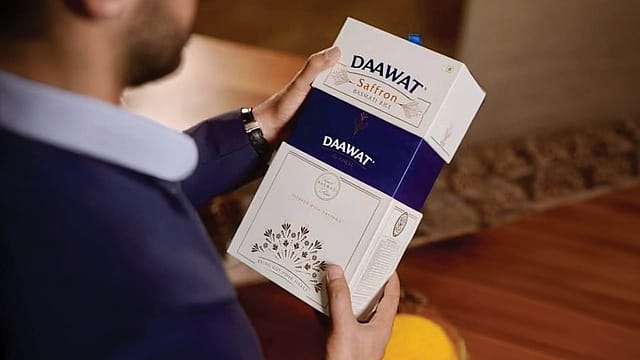
The ₹11,023 crore LT Foods’ (which owns the Daawat basmati rice brand) recipe for scale is not as much to enter into adjacent categories of staples, but to premiumise the branded rice market by launching regional specialities. The company’s most recent launch is limited edition Daawat Saffron Basmati rice priced at ₹3,000 per kg. Grown in a tiny village on the banks of the Chenab river in Jammu, it is supposed to be the finest varieties of basmati rice which is infused with saffron. Saffron rice, claims Ritesh Arora, CEO (India and far east), LT Foods, makes the perfect biryani or beri pulav.
The rice manufacturer’s portfolio has a host of regional specialities – Govindbhog from Bengal, Assam’s black rice, red rice from Uttarakhand, Sona Masuri from Tamil Nadu and Kolam from Maharashtra. Priced between ₹200-400 per kg, Arora claims the regional portfolio is growing twice more than the company’s regular basmati rice portfolio. Even within basmati rice, it is the speciality products such as Daawat Super and Daawat Pulav which are growing faster. The company has also entered into organic basmati rice. “As the per capita income is increasing, people are becoming more aware about food and its long-term impact on nutrition. Therefore, there's lot of premiumisation,” Arora explains.
Black rice, for instance, is high on antioxidants and protein, while red rice is rich in fibre and has zero cholesterol. “Regional rice last year was around a ₹200 crore business for us. Both mass variants such as Sona Masuri and Kolam as well as the premium red and black rice contributed to the growth. We want to double this growth every year.”
Arora is also excited about his ready-to-cook rice business (biryani kit, cuppa rice) which currently contributes just 2% to the overall business, but he considers it a high growth category. As far as pulses are concerned, LT Foods has chosen to play only in organic. “There's lot of regional competition in this space, so we are focussing on premiumising here as well.”
Arora sees a lot of room to grow in basmati rice itself. “Branded basmati rice penetration across price-points is not more than 20%, as opposed to branded atta, whose penetration is at 40%. We have identified price-points and white spaces within our core category where we expect to see an over 15% plus CAGR growth for the next 5 years.”