
Luxury shift drives 17% jump in average home sizes across top cities; NCR leads with 30% surge
ADVERTISEMENT
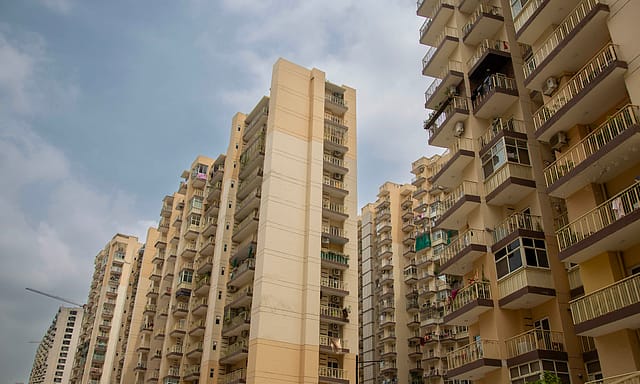
Average apartment sizes across India’s top seven cities have risen 17% over the past two years, indicating a clear structural shift towards larger homes and premium housing, according to the latest data from ANAROCK Group. This was also attributed to a surge in luxury housing launches in the last few years.
The average flat size increased from 1,420 square foot in 2023 to about 1,676 sq. ft. in 2025. In the last one year alone, average sizes expanded 8%, with the figure at 1,540 sq. ft. in 2024, the data showed.

"Despite relentless price growth in high-demand corridors, our latest data shows that the average sizes of homes across the top 7 cities together saw a steep 17% jump in the last two years – from 1,420 sq. ft. in 2023 to approx. 1,676 sq. ft. in 2025,” said Anuj Puri, Chairman - ANAROCK Group.
NCR logs the highest growth of 30%
National Capital Region (NCR) emerged as the standout performer, recording the highest growth among the top seven cities. Average flat sizes in NCR jumped 30% in two years, from 1,890 sq. ft. in 2023 to around 2,466 sq. ft. in 2025.
As per the ANAROCK report, the sharp rise is closely linked to a surge in luxury housing launches. In 2023, luxury homes priced above ₹1.5 crore accounted for 40% of the 36,735 units launched in NCR. By 2025, out of 61,775 units launched, the luxury segment’s share had climbed to 80%, significantly lifting overall average sizes.
“Large 3 to 4BHKs and homes with added study rooms have now become mainstream in many of the top seven cities, and buyers of such units remain unfazed by higher price tags,” said Anuj Puri, Chairman of ANAROCK Group.
"This trend either flies squarely in the face of rumours around a cooling residential market or defines where the demand actually exists. Luxury housing is firmly in the driver's seat," he added.
Hyderabad leads in average home size
Hyderabad reported the highest average flat size at 2,600 sq. ft. in 2025, up 13% from 2,299 sq. ft. in 2023. Notably, it was the only city to record double-digit growth of 24% in average flat sizes between 2024 and 2025.
Chennai and Bengaluru also posted strong growth. While Chennai reported a 24% increase in average sizes to 1,561 sq. ft. from 1,260 sq. ft., while Bengaluru recorded a 21% rise to 1,790 sq. ft. from 1,484 sq. ft. over the same two-year period.
Mumbai Metropolitan Region (MMR), despite remaining the city with the smallest average apartment size among the top seven, saw a 12% increase , from 810 sq. ft. in 2023 to 904 sq. ft. in 2025.
Kolkata and Pune witnessed relatively muted growth. Pune’s average flat size rose 5% to 1,119 sq. ft., while Kolkata saw a marginal 2% increase to 1,151 sq. ft. Pune was the only city to record a slight 1% decline in average flat sizes over the past year.
Home sizes swell 45% post Covid
A longer-term comparison highlights the scale of change. Between 2019 and 2025, average home sizes across the top seven cities have risen 45%, from 1,140 sq. ft. to around 1,656 sq. ft.
NCR saw the steepest six-year growth at 97%, nearly doubling its average apartment size since 2019, while Hyderabad recorded a 53% increase during the same period.
According to Puri, the Covid-19 pandemic has left a lasting psychological imprint on homebuyers, permanently reshaping preferences toward bigger, better-designed homes that offer enhanced comfort and functionality.
He said that luxury residential real estate today is no longer driven merely by the need for shelter or investment returns, but increasingly by lifestyle aspirations and social signalling.
“It has become a definitive expression of personal success and social mobility. Even ‘regular home’ buyers are entering the market with expectations of larger spaces, better layouts, and upgraded living standards,” he added.