
Nikhil Kamath, Kishore Biyani launch The Foundery to build new-age entrepreneurs
ADVERTISEMENT
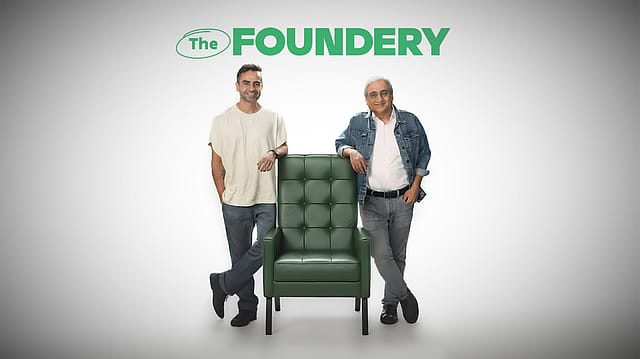
India’s startup ecosystem is getting a new, experimental addition with the launch of The Foundery, a residential business launchpad co-founded by Nikhil Kamath, co-founder of Zerodha, and Kishore Biyani, founder of the Future Group. The initiative is positioned as a co-founder factory aimed at shortening the early-stage startup journey and producing investment-ready ventures in a tightly structured 90-day programme. The initiative is part of the WTF x Think9 collaboration.
Kamath represents India’s tech-driven startup wave, while Biyani is synonymous with the retail boom of the 1990s and 2000s. Their presence in a single frame suggests an attempt to bridge two phases of Indian entrepreneurship. Biyani, often described as the architect of modern Indian retail, built brands such as Big Bazaar and Pantaloons before the Future Group’s decline amid e-commerce disruption. His involvement adds a layer of legacy—and credibility—for founders who value operating experience over hype.
The Foundery blends elements of a school, accelerator, and venture studio, but its founders are careful to distance it from conventional incubation models. Instead of classroom-led instruction, participants are expected to build businesses in real time—testing ideas, iterating quickly, and learning through execution. The programme targets aspiring entrepreneurs, mid-career professionals, and early-stage founders looking to move from concept to company.
Kamath has been vocal about the limitations of traditional business education. “MBAs create managers,” he said, arguing that India needs more builders who are comfortable with failure and reinvention. Biyani echoed that view, describing The Foundery as a live operating environment rather than an academic institution.
A key differentiator is the programme’s equity-linked structure. Participants can retain up to 25% equity in the ventures they help create, while successful startups are eligible for seed funding of up to ₹4 crore, along with continued strategic support after the programme ends. Each cohort concludes with a Demo Day, where founders pitch to a curated group of investors.
The selection process is designed to prioritise founder potential over polished pitch decks. Applicants are evaluated through problem-solving exercises, idea articulation rounds, and interviews that assess creativity, resilience, and decision-making ability. The goal, according to those involved in designing the programme, is to identify founders who can grow into operators, not just presenters.
Mentorship is another pillar of the model. The Foundery’s mentor network includes founders and executives such as Vijay Shekhar Sharma, Kunal Bahl, Mithun Sacheti, Varun Berry, and Rama Bijapurkar, among others. Mentors will support founders across opportunity identification, validation, execution, and scaling.
Beyond business fundamentals, The Foundery also includes a parallel “School of Life” track focussed on the psychological and emotional demands of entrepreneurship, including resilience, curiosity, and purpose—areas that founders often grapple with but rarely receive structured support for.
The launch comes at a time when India’s startup ecosystem is maturing, with capital becoming more selective and investors placing greater emphasis on execution quality and sustainable business models. By compressing the startup learning curve into an intensive residential format, The Foundery is positioning itself as a high-touch alternative to traditional accelerators—one that seeks to produce fewer, but more durable, companies.
Whether the model can consistently generate scalable ventures remains to be seen, but the involvement of Kamath and Biyani signals growing interest in rethinking how India trains and backs its next generation of entrepreneurs.