
Ninth year, nine challenges: N Chandrasekaran takes tough issues head-on
ADVERTISEMENT
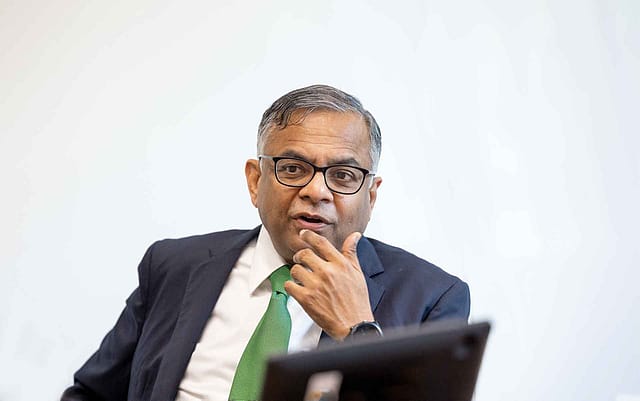
In July 2025, the Tata Trusts board cleared a third term for N Chandrasekaran as chairman of the $180-billion Tata Group, cementing his leadership well into the next decade. The decision was rooted in continuity. Chandrasekaran had begun modernising the 150-year-old conglomerate with a steady hand, and under the new leadership of Noel Tata, the promoter trusts showed little appetite to disrupt that momentum.
Just as importantly, a fresh crop of complex challenges had emerged—ones that demand experience, institutional memory and crisis-management skills.
The extension means Chandrasekaran will remain at the helm until 2032. The Trusts expect him not merely to consolidate past gains, but to resolve a set of unresolved and newly emerging issues that continue to test the Tata Group’s balance sheet, reputation and strategic direction. As he steps into his ninth year as chairman, these are the nine defining challenges before him:
Air India turnaround
Just as Air India was settling into its long-term transformation plan, the aviation sector was jolted by fresh turbulence. The fatal Air India flight crash in Ahmedabad shook public confidence, followed by widespread disruptions triggered by IndiGo’s cancellation crisis and the tragic Bombardier Learjet crash that killed Ajit Pawar. Safety, governance and operational resilience have once again come under sharp scrutiny.
Air India’s revival is now central to restoring confidence in Indian aviation. Fleet renewal, aircraft refurbishment and system upgrades are no longer just efficiency projects—they are credibility tests. Recent reports suggest Chandrasekaran is exploring leadership changes, including the search for a new CEO to succeed Campbell Wilson. More significantly, the Tata chairman has become personally involved in critical aspects of the airline’s restructuring, with renewed emphasis on safety culture, operational discipline and organisational systems. For him, Air India has moved from being a turnaround story to a reputational imperative.
Reimagining TCS in the age of AI
Artificial intelligence is reshaping the global IT services industry, and even a giant like Tata Consultancy Services is not immune. The warning signs are visible. TCS shares fell nearly 8% in a week when the Nifty rose 3.4%, triggered by global excitement around Anthropic’s AI breakthroughs. Once India’s most valuable listed company, TCS now trails Reliance Industries, HDFC Bank and Bharti Airtel, with ICICI Bank and SBI poised to overtake.
Behind the market jitters lies a deeper transformation. By early 2026, TCS is undergoing one of the most intense restructuring phases in its history. Reports point to a net reduction of over 30,000 employees in the six months ending December 2025, alongside tighter performance management and an accelerated pivot to AI-led delivery models.
Tata Motors' PV portfolio expansion
Chandrasekaran has already overseen a sharp turnaround in Tata Motors ’ domestic passenger vehicle business, lifting it from irrelevance to market leadership in electric vehicles. The next phase is more complex. Tata Motors is being split into two listed entities—commercial vehicles on one side, and passenger vehicles, Jaguar Land Rover and EVs on the other— for sharper strategic focus. Competition, however, is intensifying. Tata Motors enjoys a first-mover advantage in EVs, but Mahindra’s new launches, JSW-MG Motor’s aggressive expansion, and the plans of global players such as Tesla, BYD and VinFast threaten to erode that lead. Simultaneously, JLR is preparing for its own electric transition across global markets.
Tata Steel’s UK green steel
Tata Steel ’s UK operations have long been a financial drag on the group. The long-awaited reset is now underway. The company is investing £1.25 billion to convert its Port Talbot plant from blast furnaces to electric arc furnace technology, a move that will cut emissions and allow greater use of scrap steel. The UK government has committed £500 million to support the transition.
Operation of the EAF is expected to begin by 2027.
Scaling up new-age businesses
Under Chandrasekaran, the Tata Group has placed big bets on future-facing sectors—semiconductors, EV ecosystems, batteries, nuclear energy and digital platforms. Initial result is impressive. Tata Electronics, founded around 2020, clocked revenues of over ₹66,000 crore in FY25, though it still posted a loss of ₹1,000 crore. Tata Digital, which houses Tata Neu, BigBasket and 1mg, reported revenues of ₹32,188 crore but incurred losses of ₹4,610 crore.
The ambition behind Tata Neu was bold, but execution faltered. Acquisitions like BigBasket and 1mg were meant to build e-commerce scale, yet the rise of quick commerce has changed consumer expectations entirely. Reviving this business will be an uphill task for Chandrasekaran. Meanwhile, Agratas, the group’s battery arm, is building gigafactories in India and the UK, demanding both capital discipline and technological depth.
Pending legacy problems
Several legacy businesses are still searching for scale. Tata Realty has struggled to build momentum, while telecom equipment maker Tejas Networks moved into red due to delays in BSNL orders. Tata Chemicals and Tata Teleservices Maharashtra require clear growth roadmaps to justify continued capital allocation.
Global footprint
At the same time, the Tata Group’s global footprint has expanded more cautiously under Chandrasekaran. In an era of shifting supply chains, trade treaties and geopolitical realignments, the next phase may demand a more outward-looking posture. Balancing domestic consolidation with renewed global ambition could define the final chapter of his chairmanship.
Negotiating SP Group exit
The Shapoorji Pallonji Group, led by Shapoor Mistry—brother-in-law of Noel Tata—holds an 18.4% stake in Tata Sons, the unlisted holding company of the group. Ever since the dramatic removal of Cyrus Mistry as chairman in 2016, the relationship has remained strained. After years of courtroom battles, the SP Group has made its intention to exit Tata Sons clear, driven largely by mounting debt and liquidity constraints. The challenge, however, lies in valuation. The Mistrys expect valuation of about ₹1.5 lakh crore for their stake, a number that would place significant financial strain on Tata Sons if funded through buyback or structured payouts. Chandrasekaran must engineer an exit that is fair, legally watertight and financially prudent—without destabilising Tata Sons or opening the door to another prolonged dispute.