
PM Modi, Elon Musk talk tech, innovation; Tesla CEO announces upcoming India trip
ADVERTISEMENT
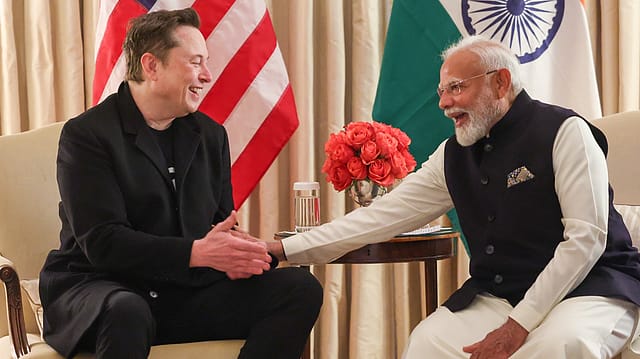
Prime Minister Narendra Modi and Tesla CEO and mega billionaire Elon Musk held a conversation today, and spoke on technology and innovation partnership opportunities between India and the United States.
Sharing on X, Prime Minister Modi said they both talked about several issues, including the topics they covered during their meeting in Washington, DC earlier this year. "Spoke to @elonmusk and talked about various issues, including the topics we covered during our meeting in Washington, DC earlier this year. We discussed the immense potential for collaboration in the areas of technology and innovation. India remains committed to advancing our partnerships with the US in these domain."
Responding to PM Modi, Musk said he's looking forward to visiting India later this year. "It was an honor to speak with PM Modi. I am looking forward to visiting India later this year!"
PM Modi, during his two-day official visit to the U.S. in March this year, had met with the tech mogul at the historic Blair House, where they discussed key aspects of innovation, space exploration, electric vehicles, and India’s tech ecosystem.
Musk has long expressed interest in expanding Tesla’s footprint in India, with the country emerging as a major hub for electric mobility and aerospace advancements.

January 2026
Netflix, which has been in India for a decade, has successfully struck a balance between high-class premium content and pricing that attracts a range of customers. Find out how the U.S. streaming giant evolved in India, plus an exclusive interview with CEO Ted Sarandos. Also read about the Best Investments for 2026, and how rising growth and easing inflation will come in handy for finance minister Nirmala Sitharaman as she prepares Budget 2026.
Just last month, India's two biggest telcos, Bharti Airtel and Reliance Jio, announced tie-ups with Elon Musk’s SpaceX to offer Starlink’s broadband internet services in India. Starlink offers satcom services using a constellation of over 7,000 low Earth orbit (LEO) satellites that offer low latency (time delay between a request and response measured in milliseconds) globally. These satellites orbit the Earth at 550 kilometres as opposed to 36,000 kilometres for geostationary satellites.