
US-India trade deal: New Delhi’s oil refining dynamics set to change if country ditches Russian crude
ADVERTISEMENT
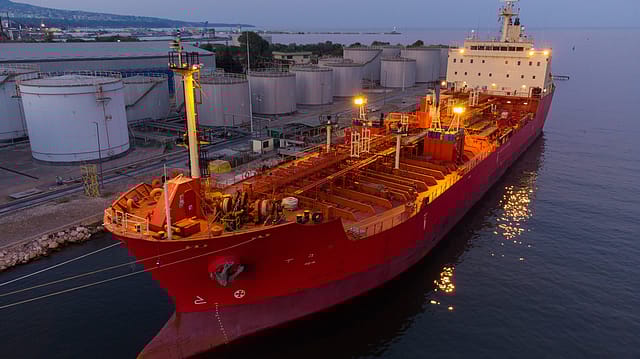
Indian oil refiners—state-owned giants such as IOC, BPCL, and HPCL, and private players, including Reliance Industries and Nayara Energy —may be compelled to fundamentally alter their crude sourcing strategies if the India–US trade deal requires India to completely halt purchases of Russian crude oil. A complete exit from Russian crude would not create a supply crisis—but it would reshape India’s refining economics. Higher input costs, tighter margins and greater exposure to market-priced crude would replace the windfall gains Indian refiners enjoyed over the past three years, say sources.
US President Donald Trump said on Wednesday that the upcoming bilateral trade agreement would slash US tariffs on Indian goods to 18% from 50%, contingent on India stopping Russian oil imports and instead buying more crude from the US and potentially Venezuela. New Delhi has so far made no official comment on the proposal to completely halt buying Russian oil.
A Sudden Shift, Hard to Execute
Industry and trade sources caution that such an abrupt realignment is operationally impractical. Indian refiners operate largely with long-term supply contracts and forward purchases rather than spot buying—often locked in one to two months in advance—based on specific refinery configurations.
“While public sector OMCs are technically free to source crude in the national interest and at the best price, in practice these decisions are also closely linked to foreign policy and geopolitical considerations,” said a senior OMC executive who declined to be named.
Over the past two to three years, Indian refiners have largely sourced Russian crude through intermediaries following Western sanctions, drawn primarily by price advantages. Russia’s Urals blend—a heavier, sour crude priced against Brent—has historically traded at a deep discount. In the immediate aftermath of the Ukraine war, discounts ranged from $8–10 per barrel. Although the spread has since narrowed to $2–3 per barrel, the savings remain material.
A Kotak Institutional Equities report (October 2025) estimated that since April 2022, Russian oil imports have saved Indian refiners nearly $16.7 billion, with average discounts of $4.7 per barrel in FY2026 alone.
A pre-2022 scenario emerging
Before the Russia–Ukraine war, India sourced less than 2% of its crude from Russia. Between January and September 2025, that figure surged to an average of 1.73 million barrels per day—around 30–35% of total imports—making Russia India’s largest supplier.
In December 2025, India was the world’s third-largest buyer of Russian fossil fuels after China and Turkey, importing €2.3 billion worth of hydrocarbons, according to the Centre for Research on Energy and Clean Air. Crude oil accounted for 78% of this value. However, under US pressure—including a tariff hike on Indian exports to 50% in August 2025—Indian refiners have already begun cutting direct Russian purchases and diversifying supply.
Replacing Russian barrels with US crude will have an impact on the performance of the Indian refiners, say sources. US oil is generally lighter and higher in sulfur—less compatible with many Indian refineries that are optimised for heavier, cheaper grades. Logistics further complicate matters: longer shipping distances mean higher freight costs and longer transit times, eroding refining margins.
“Unless US crude is offered at steep discounts, large-scale imports are economically unattractive,” said industry executives.
Venezuelan crude, however, presents a different equation. “Venezuelan grades are heavy and sour, making them cheaper and more suitable for Indian refineries,” said Prashant Vasisht, Senior Vice President and Co-Group Head, Corporate Ratings at ICRA. He noted that before FY2023, Russian crude accounted for less than 2% of India’s imports, and replacing discounted Russian barrels with market-priced crude would increase India’s import bill by less than 2%.
India, the world’s third-largest crude consumer after the US and China, accounts for 4.8% of global oil consumption. With refining capacity of 5.4 million bpd and domestic production meeting just 13–14% of demand, the country remains heavily import-dependent.
Approximately, Russia now accounts for over 30% of India’s crude import bill by value, followed by the UAE (15%+), Iraq (13%), Saudi Arabia (11%), and Qatar (7%).
The Economic Survey released last week shows that diversification is underway. Between April and November 2025, the US share of India’s crude imports rose to 8.1% from 4.6% a year earlier. Supplies from the UAE, Egypt, Nigeria and Libya have also increased.