
As WTO Ministerial enters final day, civil society groups fear end of moratorium on 'non violation complaints' under WTO's IPR rule
ADVERTISEMENT
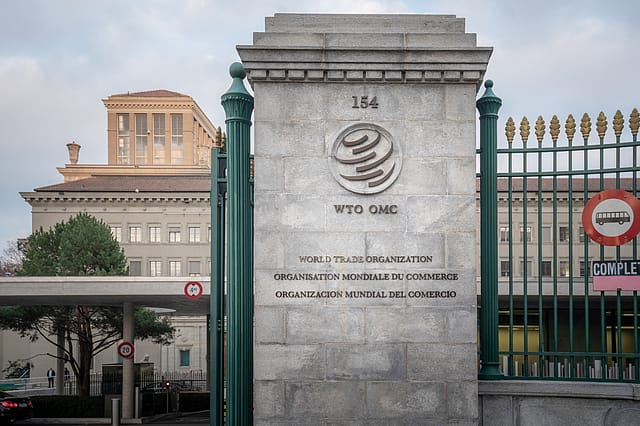
As the 14th Ministerial Conference (MC14) of World Trade Organisation (WTO) enters the third day on March 29, civil society groups are worried if a longstanding moratorium on so-called “non-violation complaints” under the WTO’s intellectual property rules, a mechanism that has been quietly extended at successive ministerials for nearly three decades, will continue or not. If not renewed, the moratorium expires on the concluding day of MC14 thereby threatening the ability of developing countries to use the flexibilities offered under WTO’s Agreement on Trade-Related Aspects of Intellectual Property Rights (TRIPS) to issue compulsory licenses to produce live saving medicines that are under patented protection.
“The stakes are higher than the obscure terminology suggests. The TRIPS requires its members to enforce 20-year patent monopolies across everything from veterinary vaccines and tractors to pharmaceuticals and medical devices. But the Agreement also contains flexibilities: provisions allowing governments to refuse patents on minor reformulations of existing products, or to issue compulsory licences for cheaper life-saving generic alternatives. These are not loopholes; they are features of the Agreement, hard won in negotiations”, civil society group Third World Network (TWN) notes.
TWN points out that the difference these flexibilities make is tangible. “In India, generic liver and kidney cancer drugs can cost up to 97 per cent less than their patented equivalents. In Malaysia, cheaper generic enabled the government to provide free HIV and hepatitis C treatment; in Thailand, a government programme using generics for seven patented medicines saved $370 million over five years and treated an additional 84,158 patients. Compulsory licensing made all of this possible. Without the moratorium, any country issuing such a licence would be inviting a legal challenge”, the civil society group states.
TWN also points out that the United States has repeatedly flagged India’s Section 3(d) as a trade irritant in its annual National Trade Estimate reports. “The Trump administration’s Agreement on Reciprocal Trade with Argentina goes further, requiring Buenos Aires to “expeditiously” repeal its own equivalent. Novartis already tried to argue before Indian courts that Section 3(d) breached TRIPS. It failed. If the moratorium lapses, such challenges could migrate from national courts to the WTO, where enforcement carries the weight of trade sanctions”, it says.
MC14 began in Yaoundé, Cameroon on March 26 and is set to conclude on March 29.