
Budget 2026-27: No change in tax slabs, new waterways and high-speed rails- Key highlights
ADVERTISEMENT
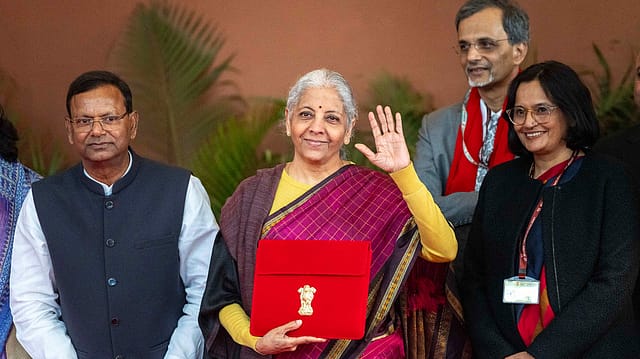
Finance Minister Nirmala Sitharaman on Sunday presented her ninth consecutive Budget 2026 in Parliament for the financial year 2026-27. The minister announced a 9% increase in capital expenditure to reach a staggering ₹12.2 lakh crore. In a big push to railway, Sitharaman announced an allocation of ₹2.78 lakh crore to the sector with new seven-high speed rail corridors across the country. Highways were not left leave behind as it received an allocation of ₹3.09 lakh crore, an 8% year-on-year hike. Notably, there is no change in the tax regime, while the Centre will provide ₹1.4 lakh crore to states as tax devolution in the next financial year.
Infrastructure and capital expenditure
Capital expenditure targeted at around ₹12.2 lakh crore, an increase of around 9% over the previous year’s capex target. This is a continuation of the emphasis on roads, railways, waterways, and freight corridors. The previous year’s capex target was lower, at around ₹11.2 lakh crore.
Defence
Allocation of ₹7.84 lakh crore, up from around ₹6.81 lakh crore in Budget 2025-26. This is an increase of over 15% year-on-year. This allocation also includes an increase in capital expenditure, which is used for modernisation, aircraft, and naval systems.
Health
The Health and Family Welfare sector received around ₹1.05 lakh crore, an increase of around 9-10% over last year’s allocations. Other programmes, such as the Ayushman Bharat infrastructure and primary health care, received even more substantial increases.
Education
The Ministry of Education received ₹1.39 lakh crore, an increase of 8.3% over Budget 2025-26. Both school and higher education received an increase, with new institutions and hostels being planned.
“The Budget's focus on instilling future-ready skills and the integration of emerging technologies like AI into the services sector offers a chance to align design education more closely with employability and shifting consumer demands. This holds special significance as design, technology, and services converge increasingly in India's expanding urban and semi-urban markets,” Srikanth Iyer, CEO & Co-founder, HomeLane, said.
Transport (roads, highways, rail)
Funding for the transport sector was large (around ₹5.99 lakh crore), marginally higher than the defence budget when compared across ministries. This indicates an increase in spending on highways, rail, and infrastructure development over the last year’s budget allocations.
Agriculture, rural & allied
Funding for rural development and agriculture increased over the last budget, although not as dramatically as infrastructure and defence budgets. Details (such as ₹2.73 lakh crore for rural development) indicate a moderate increase.
“The formal recognition of the orange economy in this Budget signals a clear shift in how India views its digital creative exports. With gaming and interactive media expected to grow to $ 8 bn dollars by FY2030, the emphasis on AVGC XR reflects a serious intent to build scale and productivity in this sector,” Kartik Narayan, CEO- Jobs Marketplace, Apna.co, said.
Energy and other sectors
Energy budgets crossed ₹1 lakh crore, while home affairs budgets stood at around ₹2.55 lakh crore. These indicate stable to moderate increases over last year’s budget.
"The Union Budget 2026 signals a deliberate strategy to anchor India’s next phase of services-led growth in digital infrastructure, cloud, and artificial intelligence. The move to assess AI’s impact on the services sector reflects a clear recognition that value creation will increasingly come from scaled AI adoption within core enterprise operations. The 9% increase in capital expenditure to ₹12.2 lakh crore further strengthens the physical and digital backbone required to enable this shift,” Pratap Daruka, CFO, Tredence, said.
The Budget 2026 reflects a clear trend in the allocation of funds. The sectors that registered the highest growth in allocation of funds are capital spending, defense, health, and education. The allocation of funds and connectivity also registered a sharp increase, which reflects the government’s sustained focus on roads, railways, and logistics. The social sectors, particularly health and education, registered a steady increase in allocations compared to the previous year. However, the allocation of funds for agriculture and rural development registered a relatively modest increase.