
Budget 2026 lays out AI roadmap for agriculture with ‘Bharat Vistaar’
ADVERTISEMENT
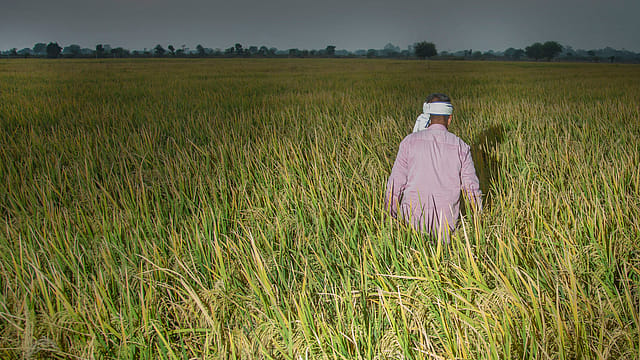
In a decisive push to modernise Indian agriculture, finance minister Nirmala Sitharaman on Sunday announced the launch of Bharat Vistaar (Virtually Integrated System to Access Agricultural Resources), a multilingual, AI-driven digital platform aimed at transforming how farmers access information, manage risks, and take on-ground decisions.
The platform will integrate the government’s agristack portals with the Indian Council of Agricultural Research’s package of agricultural practices with advanced AI systems. “Bharat Vistaar will enhance farm productivity, enable better decision-making for farmers, and reduce risks by providing customised advisory support,” Sitharaman said.
AI at the core of farm decisions
The platform is designed as a single digital interface where farmers can access crop-specific advisories, weather-linked insights, soil and input recommendations, and region-specific best practices—delivered in multiple Indian languages. By embedding AI into the agristack, the government aims to move from generic advisories to hyperlocal, data-backed recommendations, particularly benefiting small and marginal farmers.
The initiative aligns with New Delhi’s broader vision of deploying AI across public digital infrastructure to boost efficiency, productivity, and inclusion, especially in agriculture, which employs nearly half of India’s workforce.
Parallel push for livestock and rural jobs
Alongside Bharat Vistaar, the Budget signalled strong support for animal husbandry as a driver of rural employment and income diversification. Sitharaman announced a credit-linked subsidy programme to scale up and modernise livestock enterprises, coupled with the creation of integrated value chains across livestock, dairy, and poultry sectors. The government will also encourage the formation and expansion of livestock-focussed farmer producer organisations (FPOs).
“Livestock contributes close to 16% of farm income, including for poor and marginal households,” the finance minister noted, underlining its role in boosting rural resilience.
Focus on high-value crops and regional strengths
The Budget also sharpened its focus on agricultural diversification through high-value crops tailored to regional strengths. Coastal regions will see support for coconut, sandalwood, cocoa, and cashew; the northeast for agar trees; and hilly states for almonds, walnuts, and pine nuts.
India, the world’s largest producer of coconuts, will get a dedicated coconut promotion scheme aimed at improving productivity through the replacement of unproductive trees and the adoption of superior planting material in key producing states. Nearly 30 million people, including about 10 million farmers, depend on coconut-based livelihoods.
Taken together, Bharat Vistaar and the allied measures mark a shift from input-heavy subsidies to technology-led productivity gains. By blending AI, digital public infrastructure, and targeted crop and livestock support, the government is betting on smarter farming as a pathway to higher incomes, lower risks, and more sustainable rural growth—at a time when agriculture remains central to both economic stability and political calculus.