
Middle East war: Energy crisis to cause wide-ranging consequences, warn S&P Global Energy experts
ADVERTISEMENT
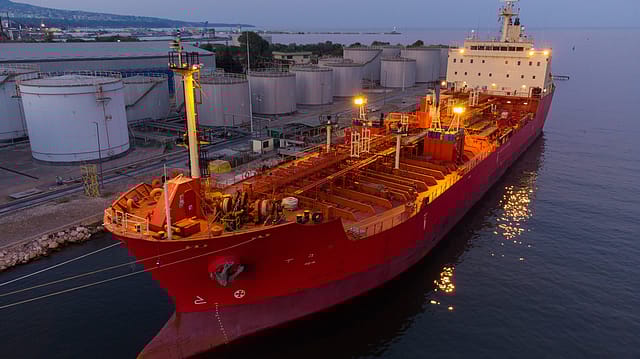
Escalating geopolitical tensions in West Asia and the disruption of the Strait of Hormuz—one of the world’s most critical energy corridors—will cause acute supply-side stress with far-reaching implications for India.
Constrained crude flows, rising LNG prices, shipping vulnerabilities, and tightening chemical supply chains are converging to create a complex risk environment, as India is heavily reliant on the Middle East for crude oil, LNG, and LPG. The disruption is triggering a strategic recalibration across sourcing, pricing, and logistics, while exposing structural dependencies in the country’s energy ecosystem, S&P Global Energy experts said in an interaction.
Since the start of the Middle East conflict, prices of key petrochemicals assessed by Platts have increased by around 31–67% in India, said Stuti Chawla, Associate Director for Chemicals Pricing (Middle East and India), S&P Global Energy. “There is further upside risk, as upstream supply remains constrained. The Indian petrochemical industry is experiencing a triple whammy: imports from the Middle East have ceased, imports from the Far East and Southeast Asia have drastically declined, with numerous producers in these regions declaring force majeure due to feedstock shortages, and domestic producers have curtailed petrochemical output to focus on LPG production,” she said.
S&P Global estimates that around 50–55% of India’s crude imports were transiting through the Strait of Hormuz before its closure, leaving the country exposed to both price shocks and logistical disruptions. Indian refiners have moved to diversify crude sources, increasing reliance on the Atlantic Basin as well as Russian barrels, but this comes at the cost of longer voyage times and materially higher freight.
“The Strait of Hormuz supplies about 17 million barrels per day of crude oil to global markets. Without it, oil markets have come under severe strain. Refining systems in India and across Asia have been attuned to an efficient supply chain, and any disruption creates a mismatch between demand and available crude supply,” said Pulkit Agarwal, Head of India Content, S&P Global Energy.
He added that India’s geographical proximity to the Arab Gulf means that energy flows from the region—be it crude oil, LNG, or LPG—are deeply embedded in the country’s energy system and play a critical role in meeting its growing demand. Any disruption, therefore, necessitates an immediate pivot to alternative sources, a process that is neither seamless nor without risk. For India, the situation highlights a familiar structural vulnerability.
“Shipping and energy markets are signalling that the risk of prolonged disruption is significantly higher than at any point in decades,” said Rahul Kapoor, Global Head, Shipping and Metals, S&P Global Energy.
Commercial shipping remains an easy target, and oil tankers are a vulnerable link in the global oil supply chain. Merchant vessels carrying oil are unequipped to handle geopolitical conflicts such as attacks on tankers or closure of key shipping lanes, and they rely on governments for safe passage. Currently, around 850 oil tankers are clustered in the Gulf, especially near the Strait of Hormuz, with only 2–3 transits per day compared to the usual 60 crossings.
India meets nearly 50% of its natural gas requirements through LNG imports, of which around 60% passes through the Strait of Hormuz. In April 2025, 21 cargoes from Qatar and the UAE were delivered to India. “This implies a large shortfall in LNG that India needs to bridge to meet its natural gas requirements,” said Suyash Pande, Senior Analyst, LNG Pricing, S&P Global Energy.
Global LNG spot prices have nearly doubled as end-users in Asia rush to secure cargoes. This has forced companies to explore alternative sources such as Oman, Africa, and the US. However, India is competing with other global buyers, while sellers assess arbitrage economics to maximise margins. While arbitrage for West African cargoes remains favourable for India, attracting US cargoes east of Suez is becoming costlier, with prices rising in line with Northeast Asian benchmarks, he added.