
India's over 1.7 million tonnes of oil, LNG, LPG stuck in Strait of Hormuz
ADVERTISEMENT
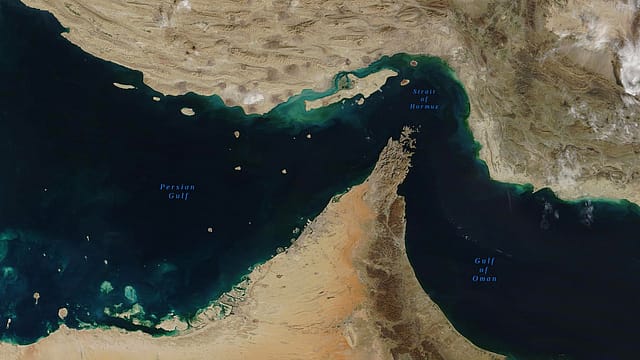
India's 1.67 million tonnes of crude oil, 3.2 lakh tonnes of LPG and about 2 lakh tonnes of LNG are stuck on the 22 Indian-flagged ships stranded in the Persian Gulf, waiting to transit through the Strait of Hormuz, Rajesh Kumar Sinha, Special Secretary in the Shipping Ministry, said Wednesday.
Originally, there were 28 Indian-flagged vessels in the Strait of Hormuz when the war in the Middle East broke out following US-Israel attacks on Iran. Of these, 24 were on the west side of the strait and four on the east side. In the last week, two vessels from each side have managed to sail to safety.
"All 611 seafarers on 22 vessels (on the west side of the Strait) are safe," he told a news briefing.
There are now 3 vessels on the east side after one more Indian-flagged ship joined them.
Of the 22 remaining Indian-flagged vessels on the west side of the Strait of Hormuz, six are LPG carriers, one is a liquefied natural gas (LNG) tanker, four are crude oil tankers, one is transporting chemical products, three are container ships, and two are bulk carriers.
Additionally, one vessel is a dredger, another is empty with no cargo, and three are in dry dock undergoing routine maintenance.
Sinha said efforts are on to secure passage of the Indian vessels through the war-hit strait.
The Strait of Hormuz, the narrow waterway that connects the Persian Gulf to the open ocean, has effectively been shut following the US and Israel attack on Iran and Tehran's sweeping retaliation.
Overall, close to 500 tanker vessels remain confined to the Persian (Arabian) Gulf. These include 108 crude oil tankers, 166 oil product tankers, 104 chemical/product tankers, 52 chemical tankers and 53 other tanker types.
Analysts say Iran may be allowing select vessels to transit the strait after verification. At least 4 vessels have transited outbound the Strait of Hormuz in the last couple of days with a short diversion via the Larak-Qeshm Channel.
This, they say, appears to be a verification process whereby Iran confirms the ownership, cargo and vessel are not US, or belong to those that Iran has permitted transit to.
The ships that have passed are 3 bulk carriers (2 Greek / 1 Indian) and one Aframax tanker (Pakistan).
India imports about 88% of its crude oil, 50% of natural gas, and 60% of LPG. Before the war broke out, more than half of the crude oil that India imported came from countries like Saudi Arabia, Iraq and the UAE, which use the strait for shipping.
As much as 85-95% of LPG and 30% of the gas came through the strait. While the disruption in crude oil has been partially offset through alternative sources, such as Russia, West Africa, the US and Latin America, gas and LPG supplies to industrial and commercial users have been curtailed.